In the 1910s, a family’s home could also be a workshop, a source of rent, or part of the conditions attached to a paycheck.
These documented households and local programs show the practical arrangements behind daily life, with different choices available in a New York flat, a farm kitchen, or a mining town.
A Bed Could Have a Daytime Tenant

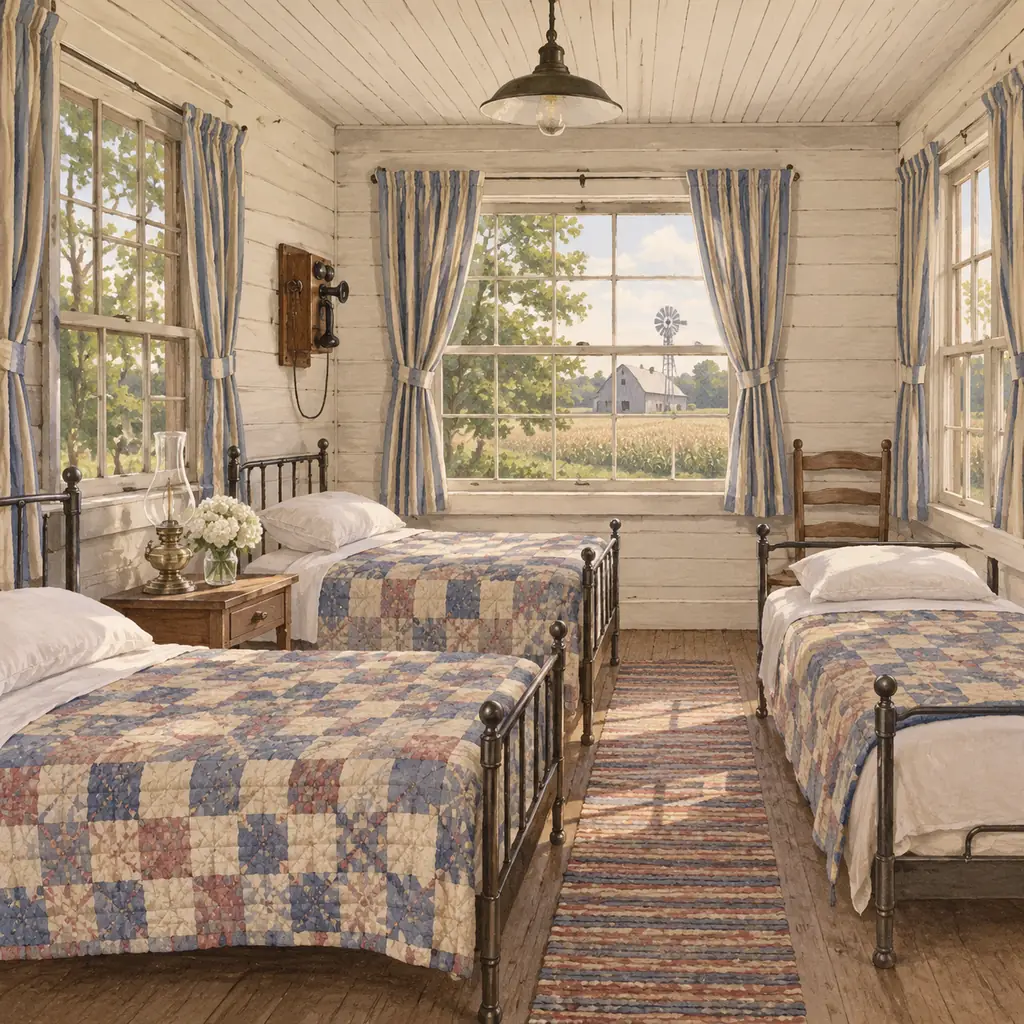
In a New York flat described in 1913, a boarder helped a family of nine pay the rent. He worked nights and slept in one of the beds during the day, fitting his rest around the household’s schedule.
Mabel Hyde Kittredge recorded this particular arrangement; it was not a rule for all families. In this home, even the hours when a bed stood empty had financial value.
The Bathtub Could Be Storage Space
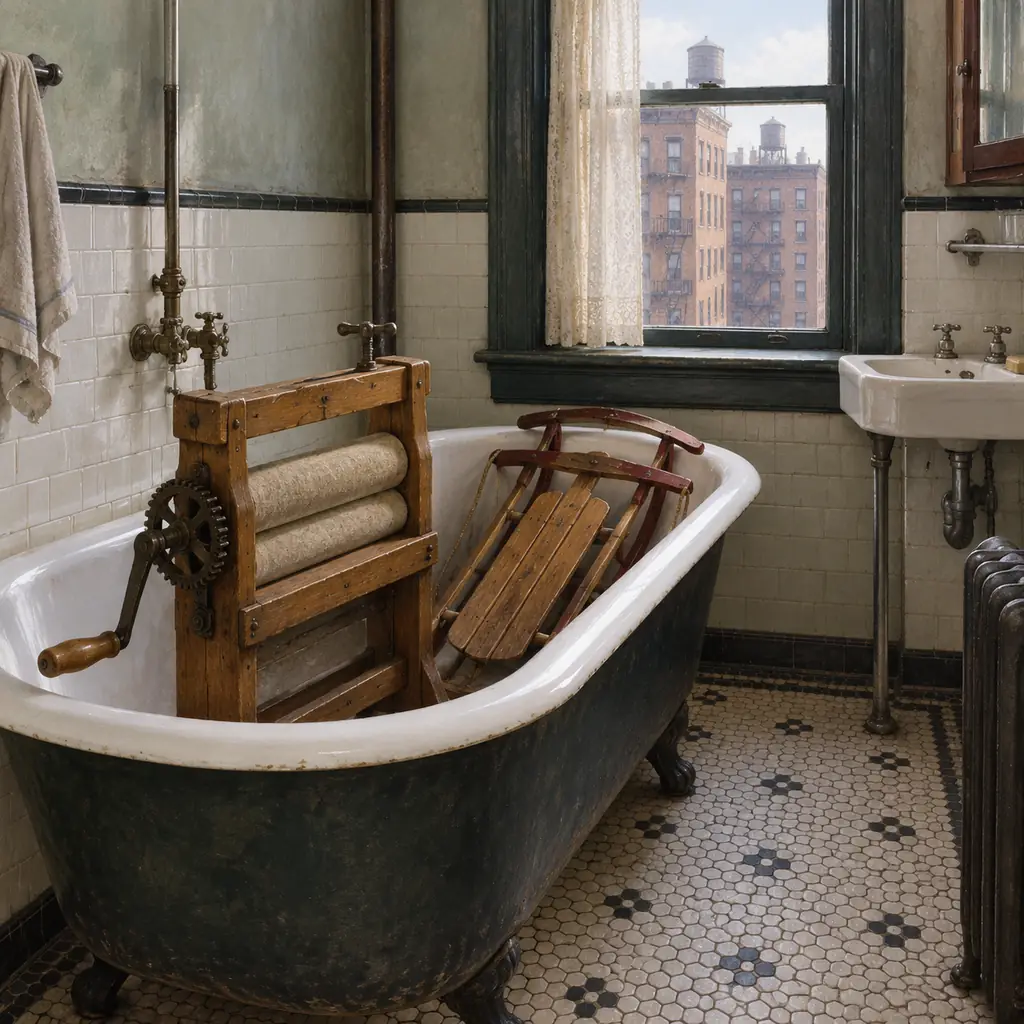
The same four-room flat had a bathtub, but Kittredge found a clothes wringer and the previous winter’s sleds stored inside it. Installing a fixture did not guarantee that a crowded family could keep it clear for its intended use.
This was a household with several sources of income, rather than her example of absolute destitution. Its stored belongings show a problem that running water alone could not solve: finding enough room.
After-School Work Could Cover the Table
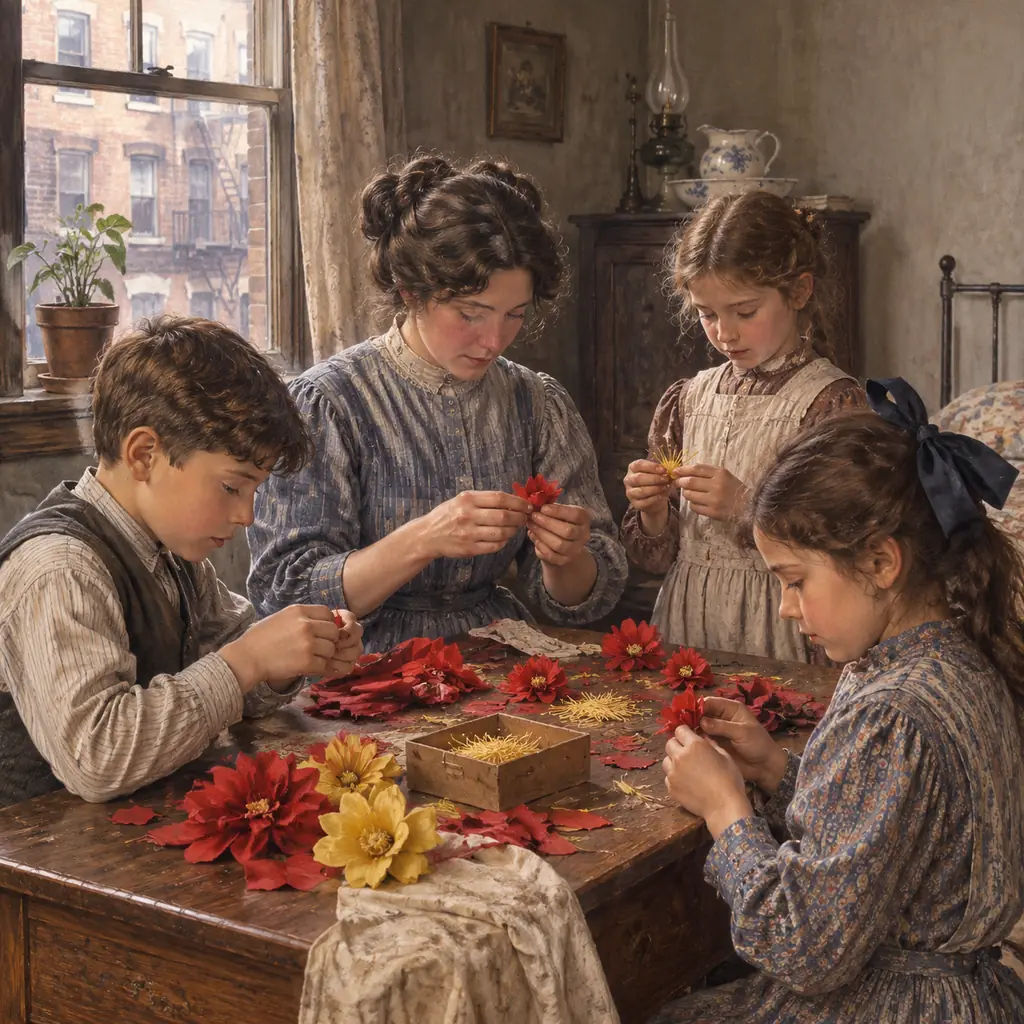
In that household, five children helped their mother make artificial flowers after school. The recorded payment was eight cents for a gross, meaning 144 flowers, with little leaves and stamens spreading through the flat.
The children’s work shared the family’s living space and followed them home from the school day. Their father’s wages and the earnings of two factory-working daughters did not remove the need for this additional income.
Your Employer Might Ask to Inspect Your Home
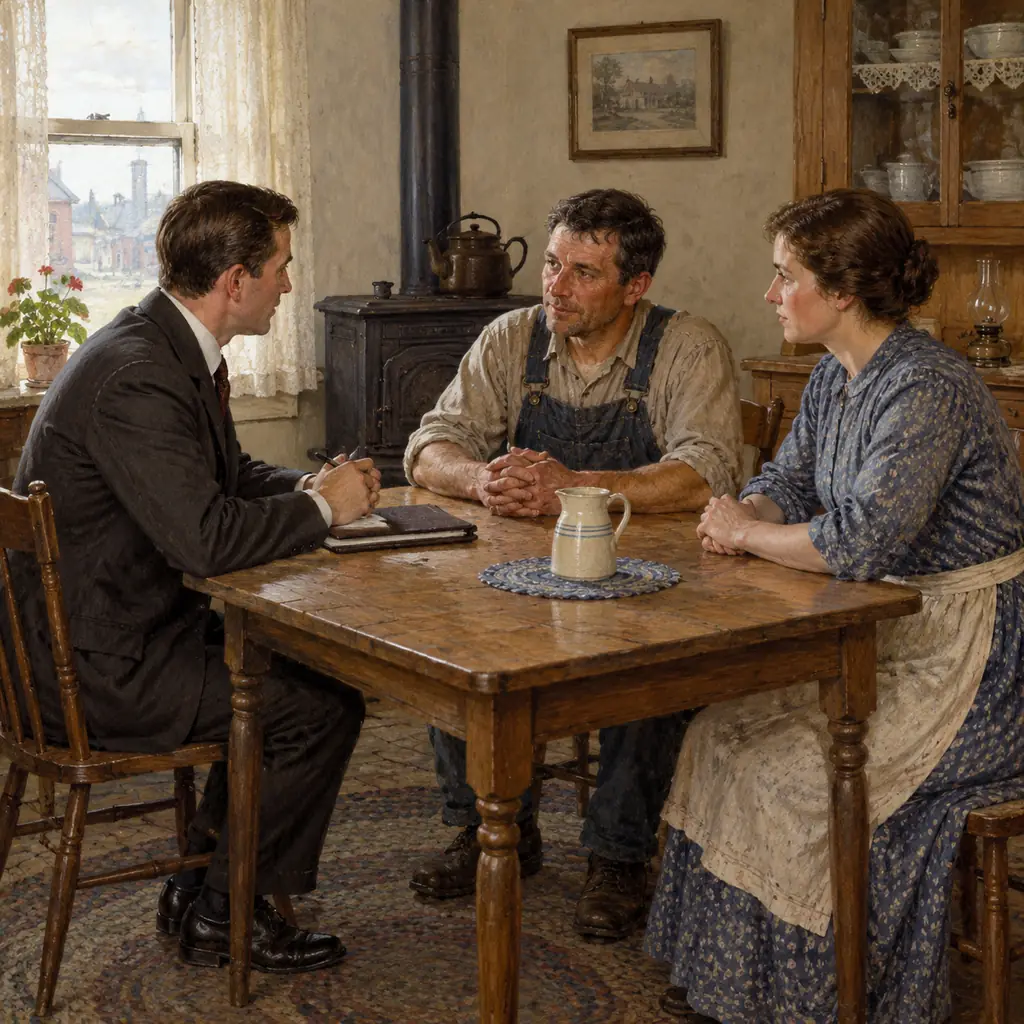
Ford’s celebrated five-dollar day came with conditions. After the company introduced the plan in 1914, its investigators visited workers’ homes to decide who qualified for the profit-sharing portion of their pay.
Records preserved in the James Couzens Papers describe questions about savings, debts, drinking, recreation, and family circumstances. A wife’s illness or a son’s unstable employment could enter an employer’s file. For these workers, the boundary between earning a living and living at home was unusually thin.
Food Processing Could Be Homework
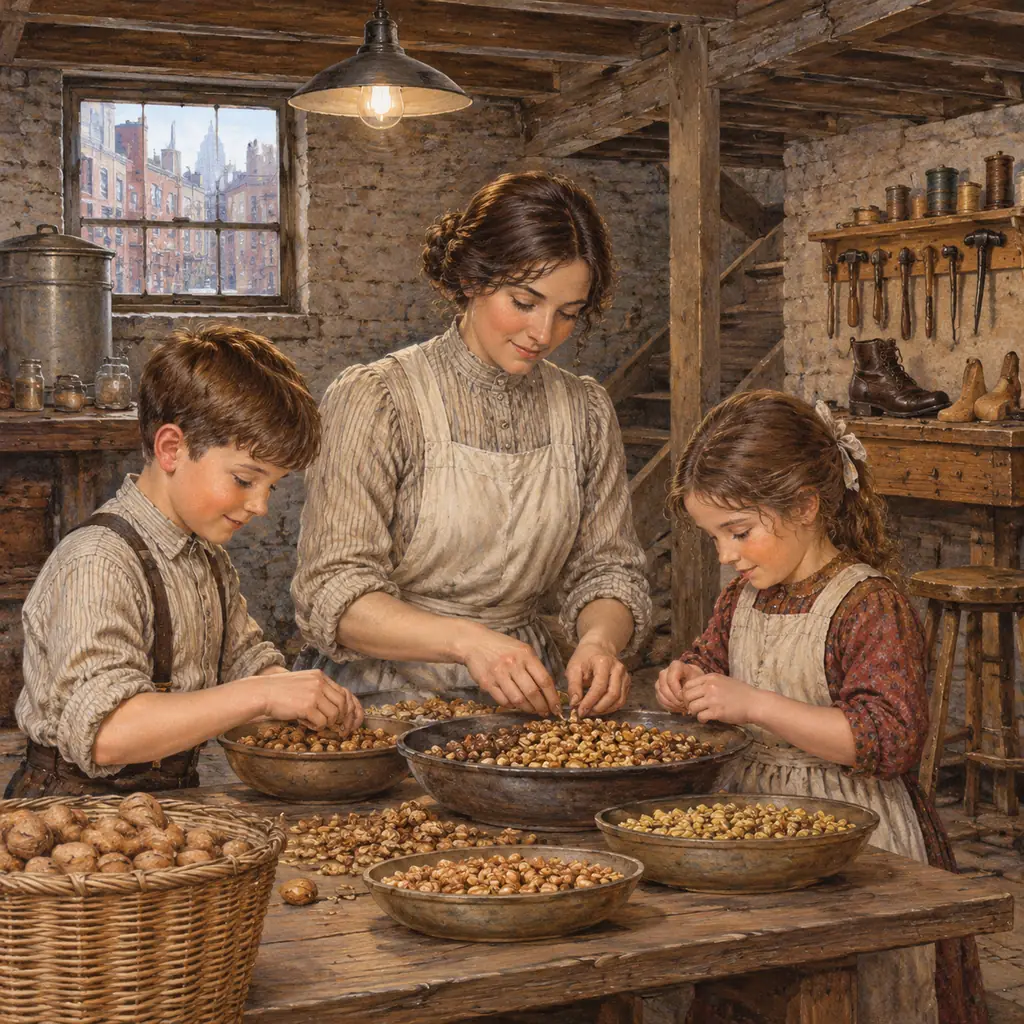
Lewis Hine photographed Lucy Libertine’s family picking nuts in a New York basement tenement in December 1911. His caption identified children aged four and six, with an older child’s age less certain, working beside their mother.
A cobbler’s bench occupied the same room. This was not simply a family preparing its own snack; Hine was documenting commercial home work for the National Child Labor Committee. Paid production could occupy the very space where a family also had to live.
Sources: Lewis Hine, Mrs. Lucy Libertine and family, December 1911 — Library of Congress
A Student Could Mail the Washing Home
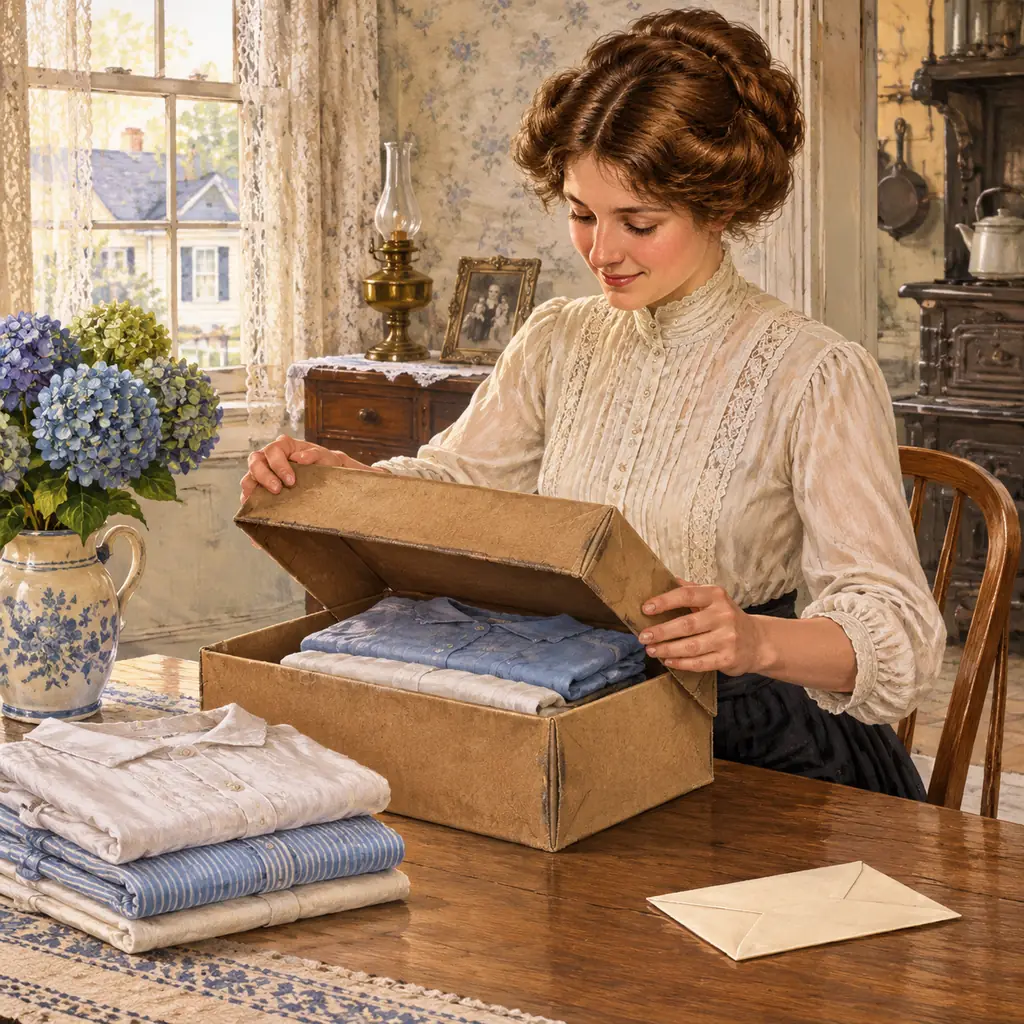
College did not always end a family’s laundry duties. From the 1910s onward, some students packed dirty clothes into reusable containers and sent them home through Parcel Post.
The National Postal Museum preserves boxes designed for repeated journeys, with places for address cards and postage. Sending washing home could cost less than paying a cleaner near campus, although someone at the other end still had to wash and press it. A letter tucked into the return parcel required its own postage.
Sources: Laundry Box — National Postal Museum
Farm Produce Could Travel Straight to a City Customer
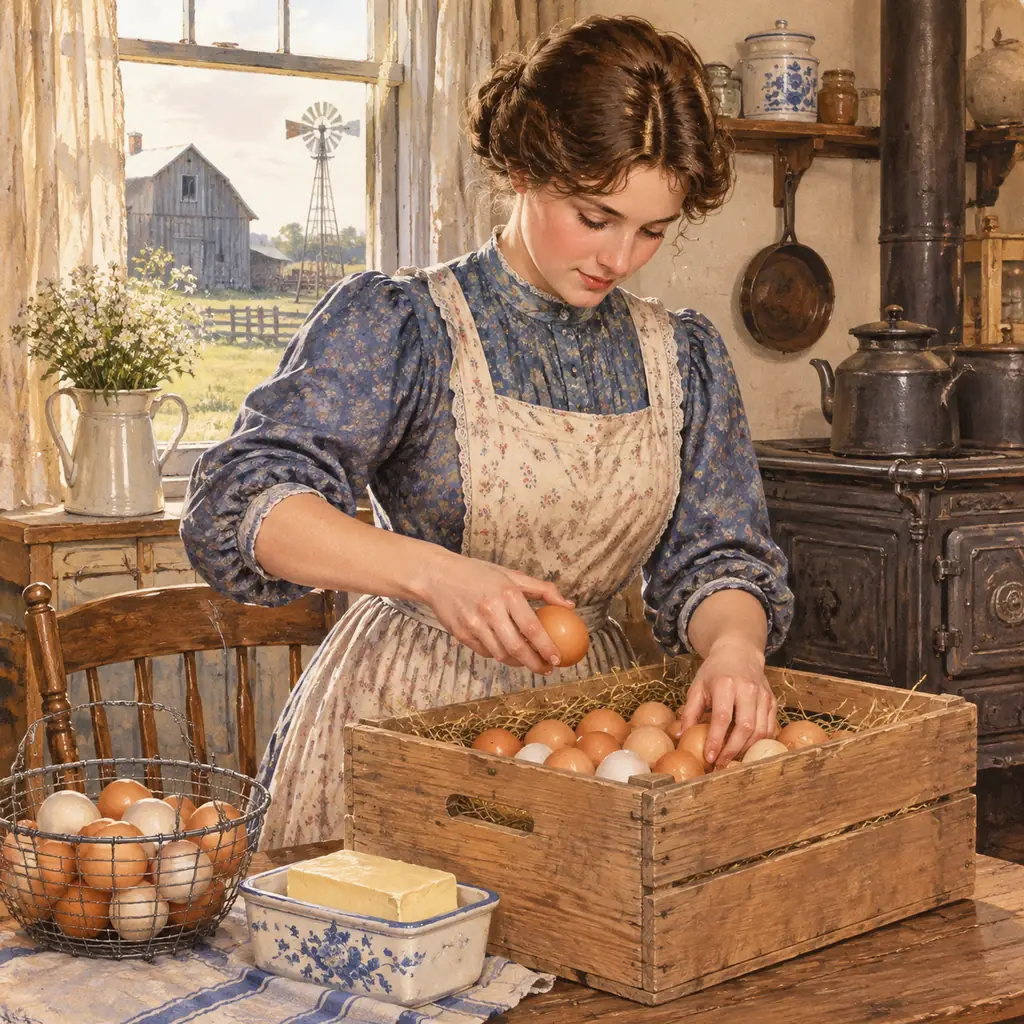
Parcel Post created another way for a farm household to sell what it produced. A farm-to-table postal program invited farmers to list their names, addresses, and available produce for city customers.
The lists appeared in post-office lobbies and newspaper advertisements. Specialized containers protected eggs, butter, and vegetables on their journey. The system did not guarantee a smooth business: poor packing and slow customer payments helped the program fade. Selling from home still meant solving the problems of transport and credit. Paid work also involved restrictions explored in the everyday choices American women fought for.
Housekeeping Classes Used Practice Flats
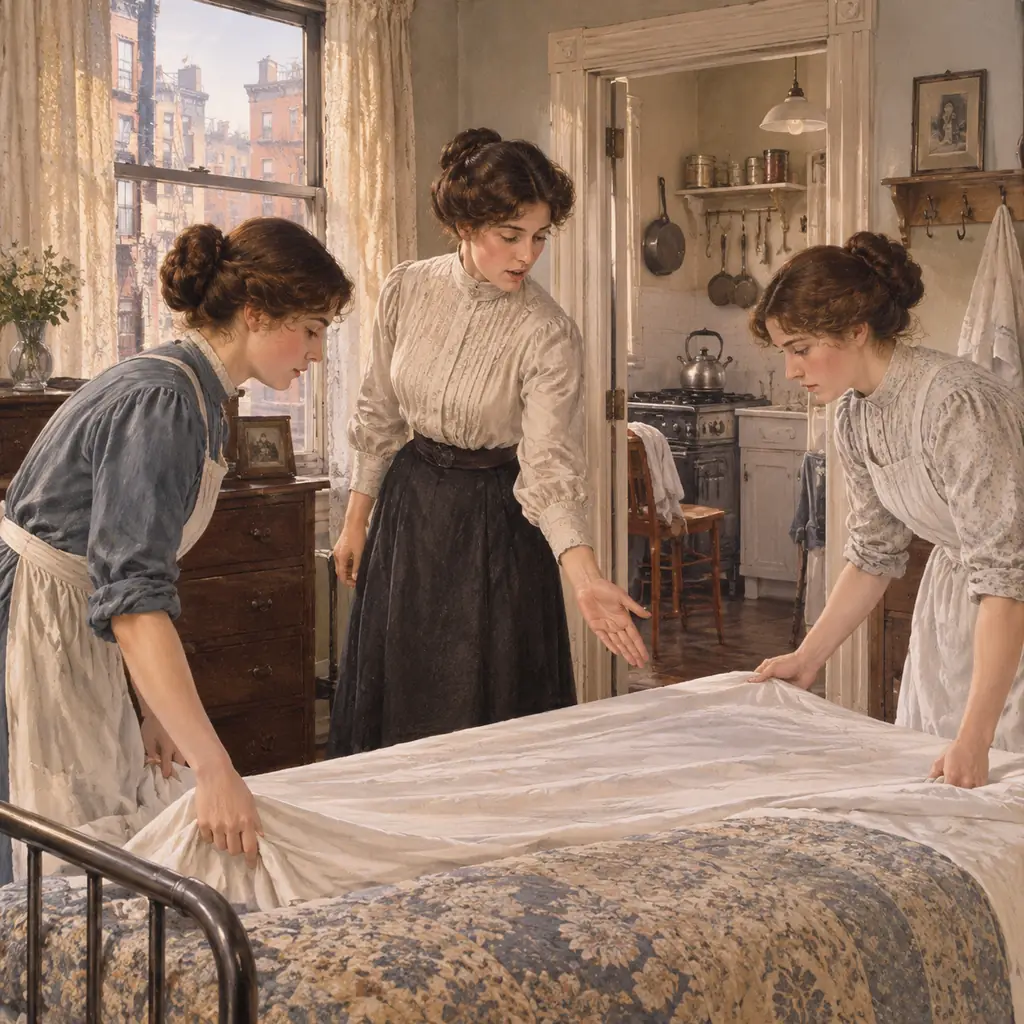
Housekeeping classes did not always take place behind school desks. In 1913, Kittredge described teaching centers arranged as modest furnished flats, where pupils could practice the same jobs they faced at home.
Lessons covered beds, floors, sinks, and inexpensive cooking. Working girls attended as well as younger pupils. The reformer’s belief that she could improve other people’s homes carried its own social judgments, but the practical setting recognized that reading a recipe was different from managing an entire room.
Sources: Mabel Hyde Kittredge, Housekeeping Centers in Settlements and Public Schools, The Survey, 1913
A Factory Worker Could Pay for a Bedbug Lesson
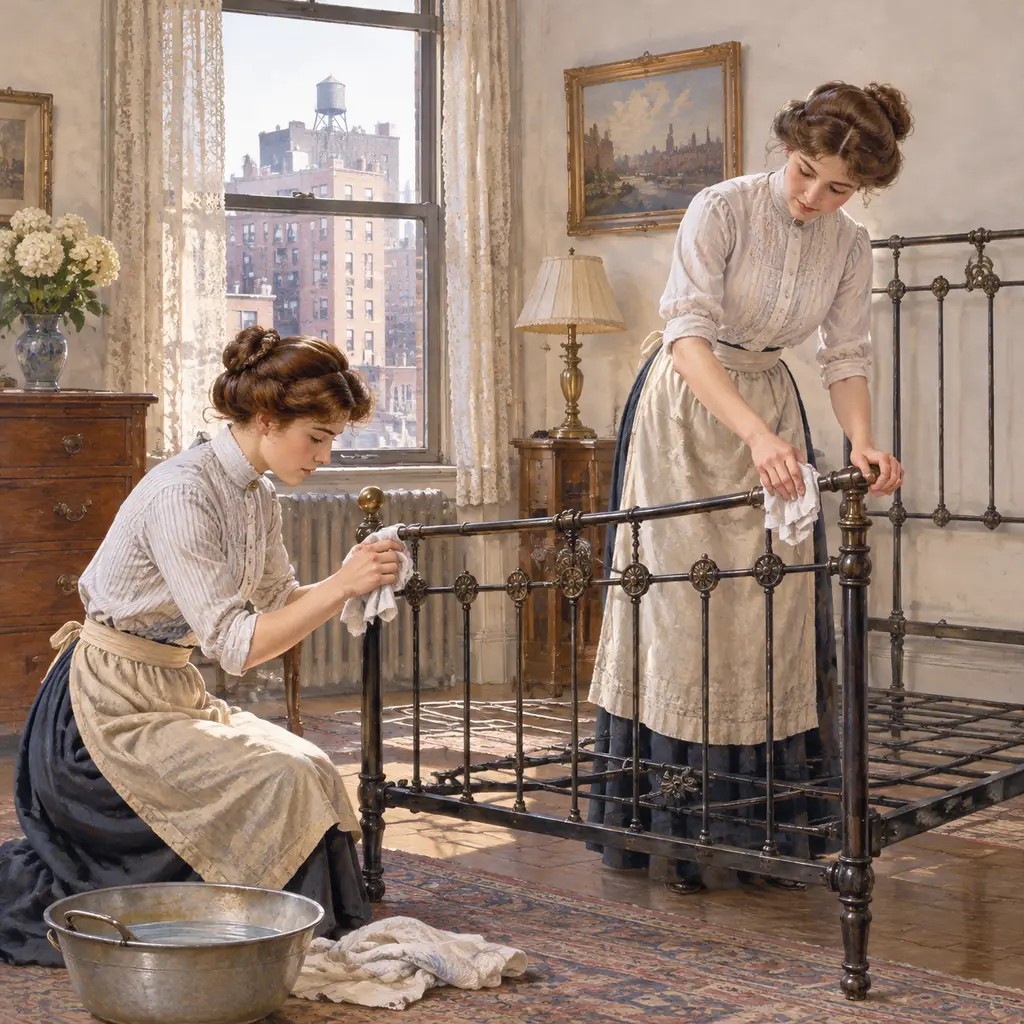
Kittredge also recorded a striking request from a class of working girls: they wanted a lesson on preventing bedbugs when the people upstairs moved out. Their concern was about protecting their own homes from a neighbor’s problem.
The lesson involved hands-on cleaning after a day in a factory or shop, rather than listening to a lecture. Pupils paid for this instruction. It is a reminder that maintaining a home could require extra work after paid employment, even before anyone cooked dinner. Other homes had to provide space for work and learning, as these accounts of frontier families show.
Sources: Mabel Hyde Kittredge, Housekeeping Centers in Settlements and Public Schools, The Survey, 1913
A New House Could Arrive as Building Parts
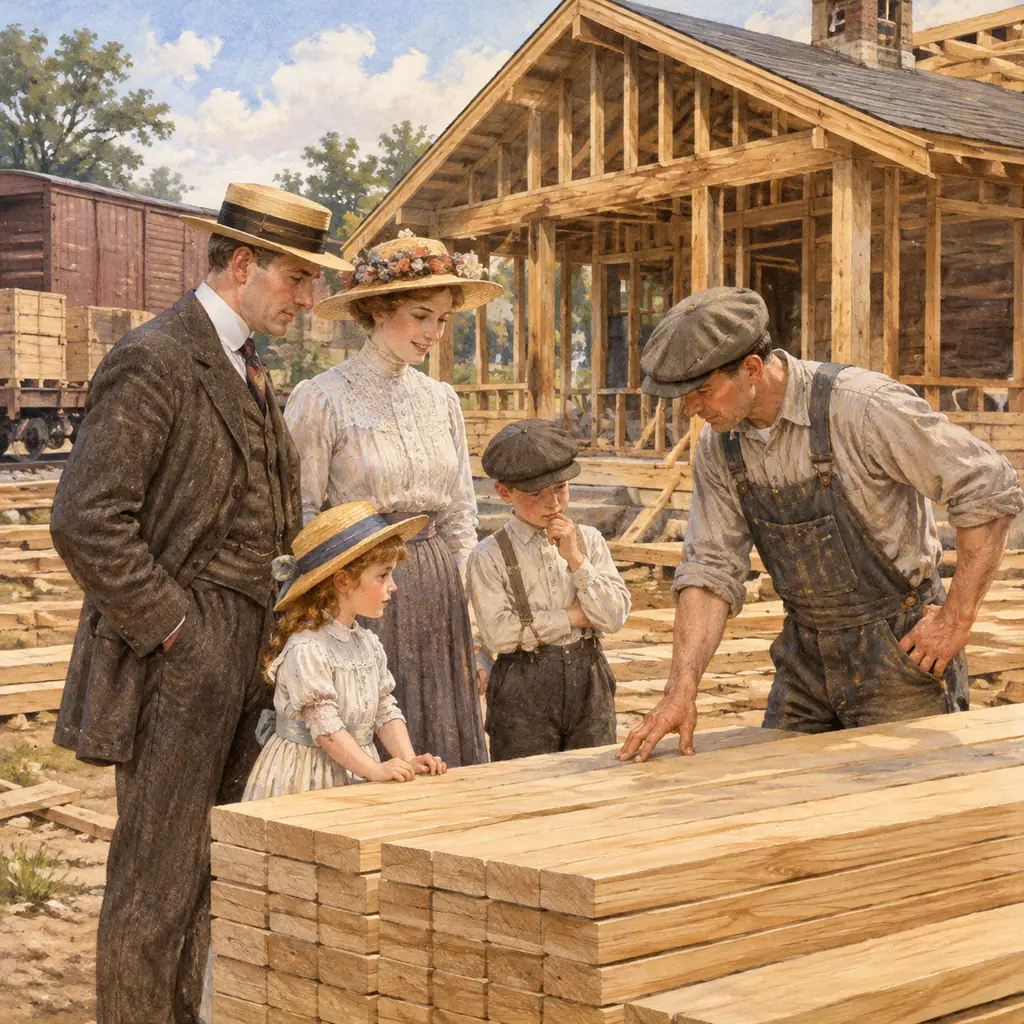
A family could choose a house from a catalog, but the delivery was not a finished home. Companies supplied the components for a selected design so that builders could assemble it on the customer’s land.
Sears advertised homes during the decade, and Frank Lloyd Wright began his own ready-cut designs in 1911. Foundations and masonry still had to be arranged locally. The catalog simplified buying materials; it did not remove the need for a site, construction labor, or the money to bring the pieces together.
Sources: Prefabricated Homes — National Park Service · 1910 Sears home builders catalog — Smithsonian Libraries
A Working Mother Might Rely on a Settlement Nursery

In Honolulu, then in the U.S. Territory of Hawaii, Palama Settlement provided a day nursery for children whose mothers worked. Its surrounding neighborhood included crowded tenements and families of several nationalities.
The nursery belonged to a wider network of local services, including public-health nursing and a milk depot. For a mother using it, earning outside the home depended on someone caring for her child during those hours. The arrangement made the family’s working day possible without making childcare disappear. New household arrangements appear in family life during the 1920s.
Dinner Could Require Its Own Daily Ledger
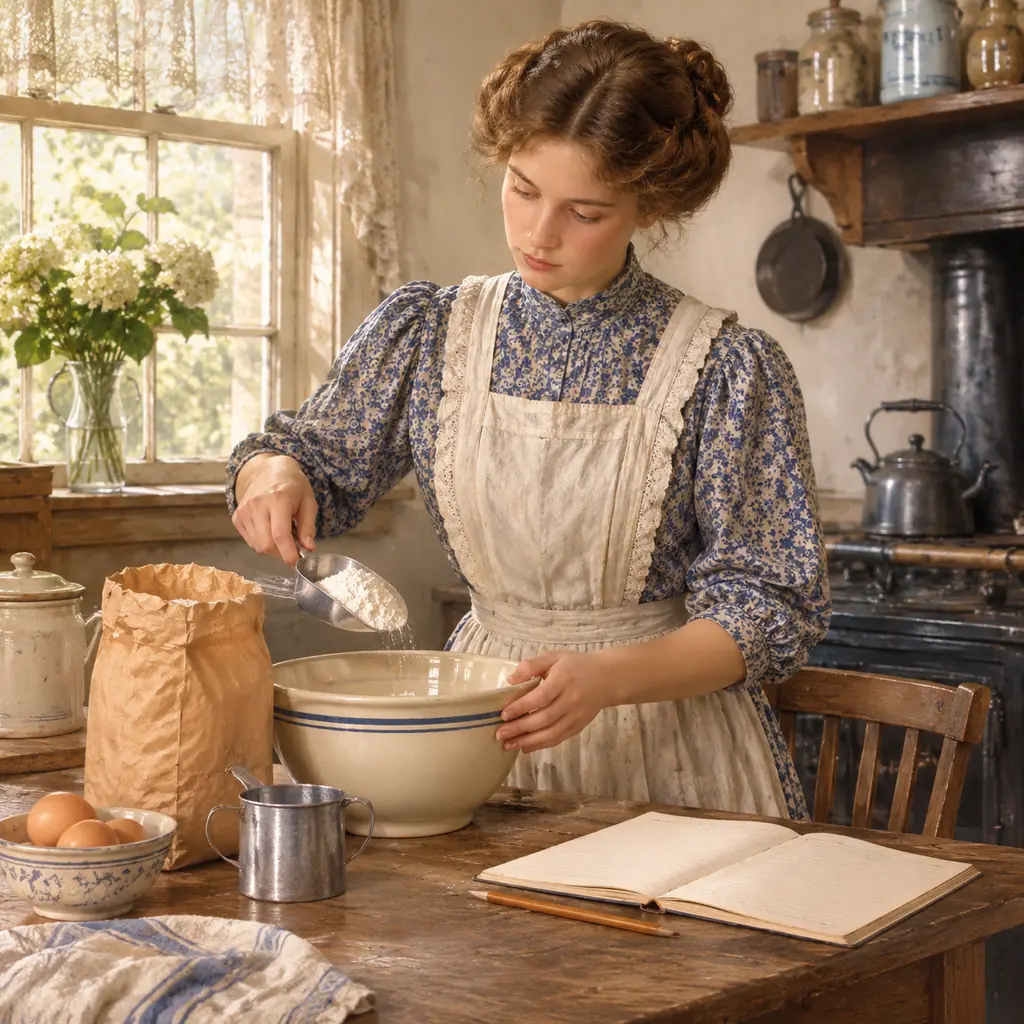
In a November 1917 speech, Jane Addams urged women to record the amounts and costs of the food they fed their families each day. She argued that saving flour meant little without knowing how much a household normally used.
This was a wartime appeal, rather than evidence that every kitchen kept such a book. It asked the person preparing meals to become a record-keeper too. The household’s smallest purchases were being drawn into a national effort to measure and conserve food. Another war placed its own demands on American households in the 1940s.
Sources: Jane Addams, Conservation of the World’s Food Supply, November 3, 1917 — Jane Addams Digital Edition
A Window Card Could Announce the Family’s Food Pledge
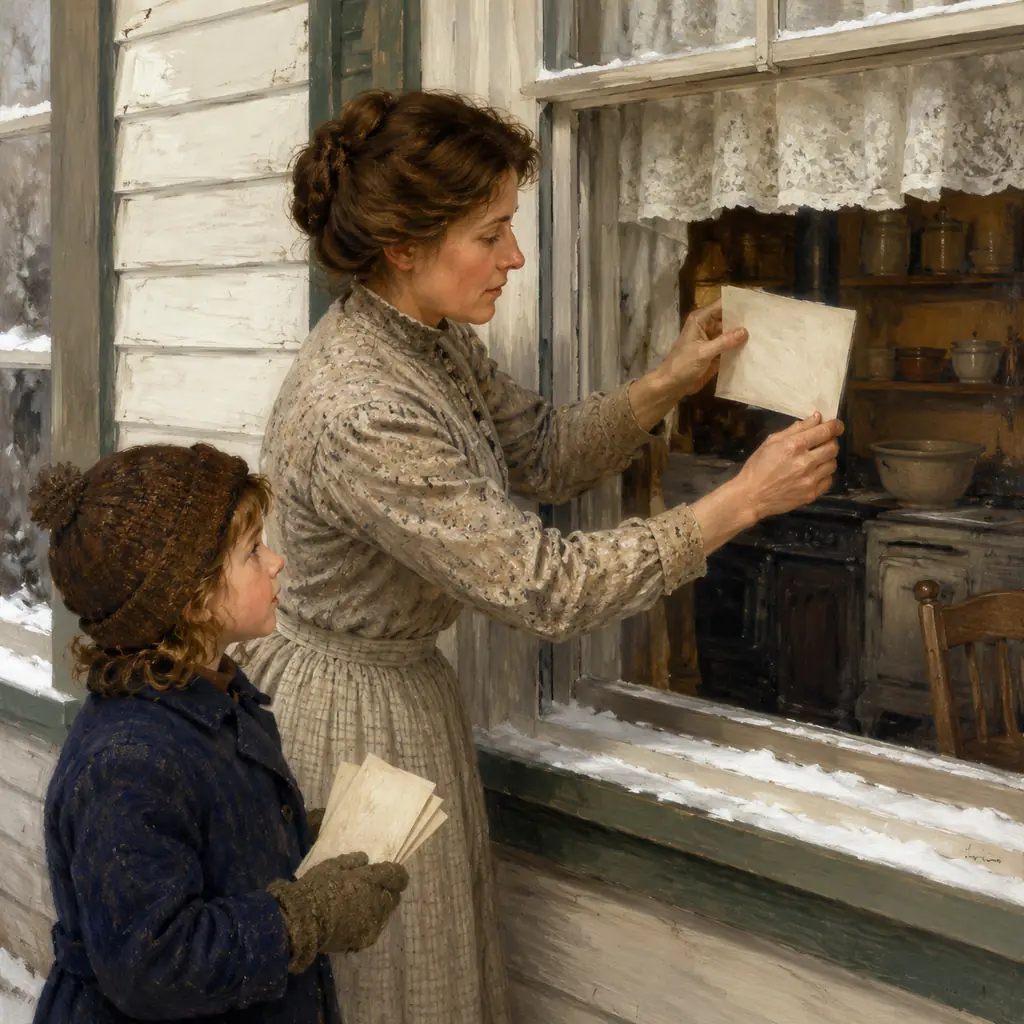
In Ann Arbor, volunteers went door to door with Hoover Food Pledge forms and window cards during 1917. Children later helped distribute the cards to their own households and neighbors.
Displaying a card turned private meal choices into a public statement about supporting the war effort. The campaign encouraged families to conserve scarce foods and join designated meatless or wheatless days. A passerby could see that a household had pledged, even though the actual decisions happened out of sight in its kitchen.
The Family Garden Could Be on Someone Else’s Land
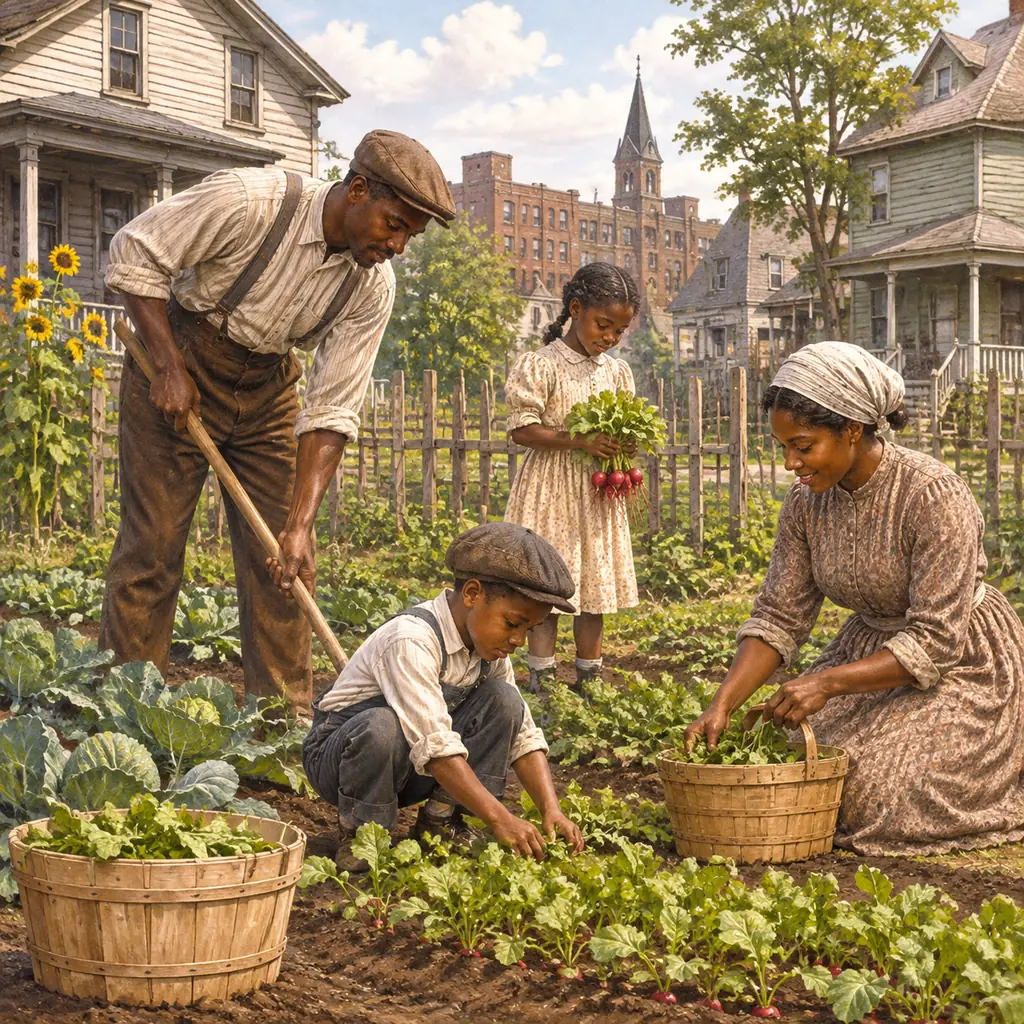
Wartime gardening did not always require a yard of your own. In 1917, organizers in Washtenaw County, Michigan, encouraged owners to lend unused land to people willing to cultivate it.
Some owners offered empty lots on the understanding that they would get the land back after the war. The arrangement gave household food production a temporary address beyond the home itself. A patch of borrowed ground could become part of the family’s yearly supply, provided someone had the time and strength to work it. For an earlier view of visitors, possessions and privacy, explore family life in the 1890s.
A Shelf of Jars Became a Public Goal

A wartime Department of Agriculture poster urged households to use backyards and vacant lots, raise chickens, and preserve food in jars. Its pictures joined home gardens, poultry, and stored produce into one domestic plan.
The poster is evidence of what officials asked families to do, not proof that every household could do it. Space, equipment, skill, and time still mattered. Canning demanded another round of work after growing or buying food, before the finished jars could stand ready on a shelf.
Losing Work Could Also Mean Losing the House
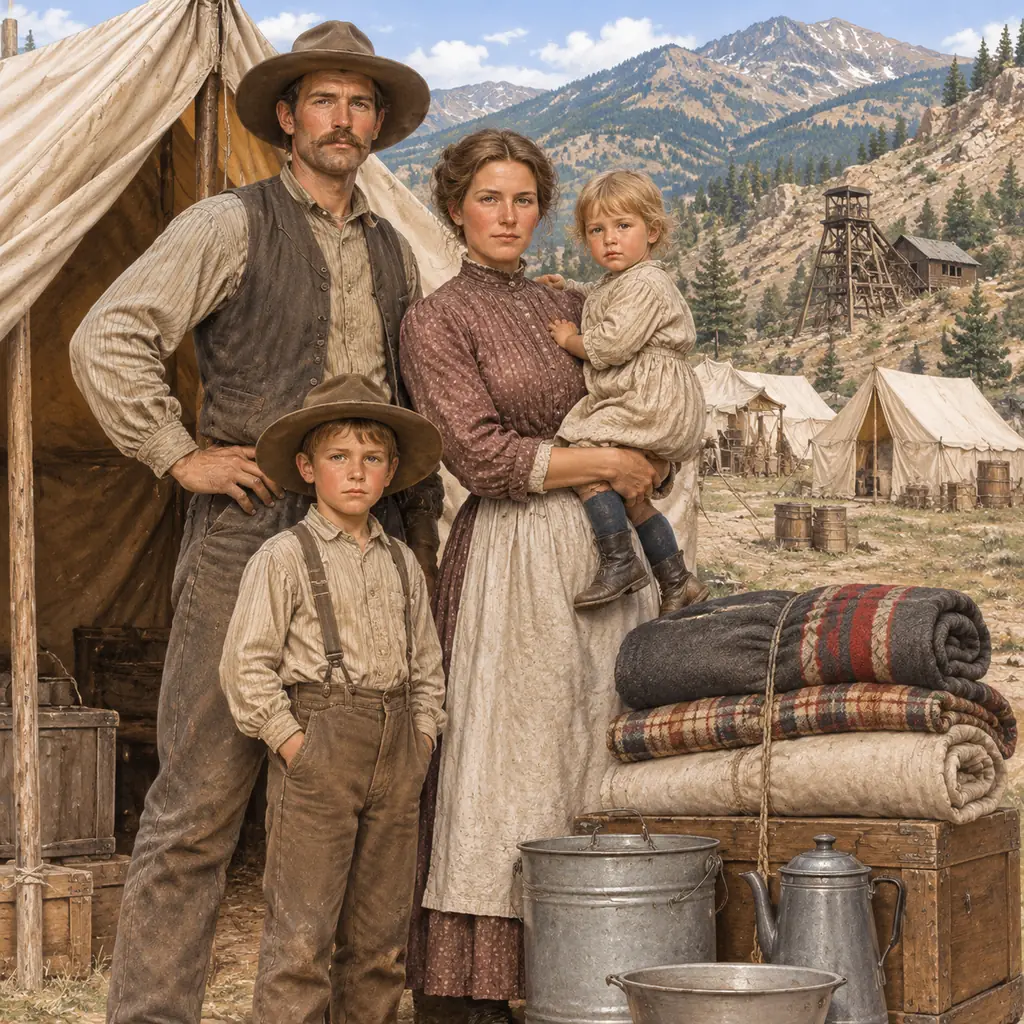
In Colorado’s coalfields, employment and housing could be controlled by the same company. When miners struck in 1913, families were evicted from company homes and moved into a tent colony at Ludlow.
The dispute included demands over working hours and the right to choose housing and doctors. For these households, a labor conflict immediately changed where children slept and meals were made. Their homes were not a refuge separate from the job; the employer’s control extended to the roof above them. Work at home also sits behind the familiar picture of the 1950s family.