A tavern bed might hold a stranger, while one household room could hold a meal, a day's work and a night's sleep.
These examples come mainly from eighteenth-century British colonial Virginia and New England, where wealth, region and enslavement shaped very different lives.
A tavern bed might come with another traveler
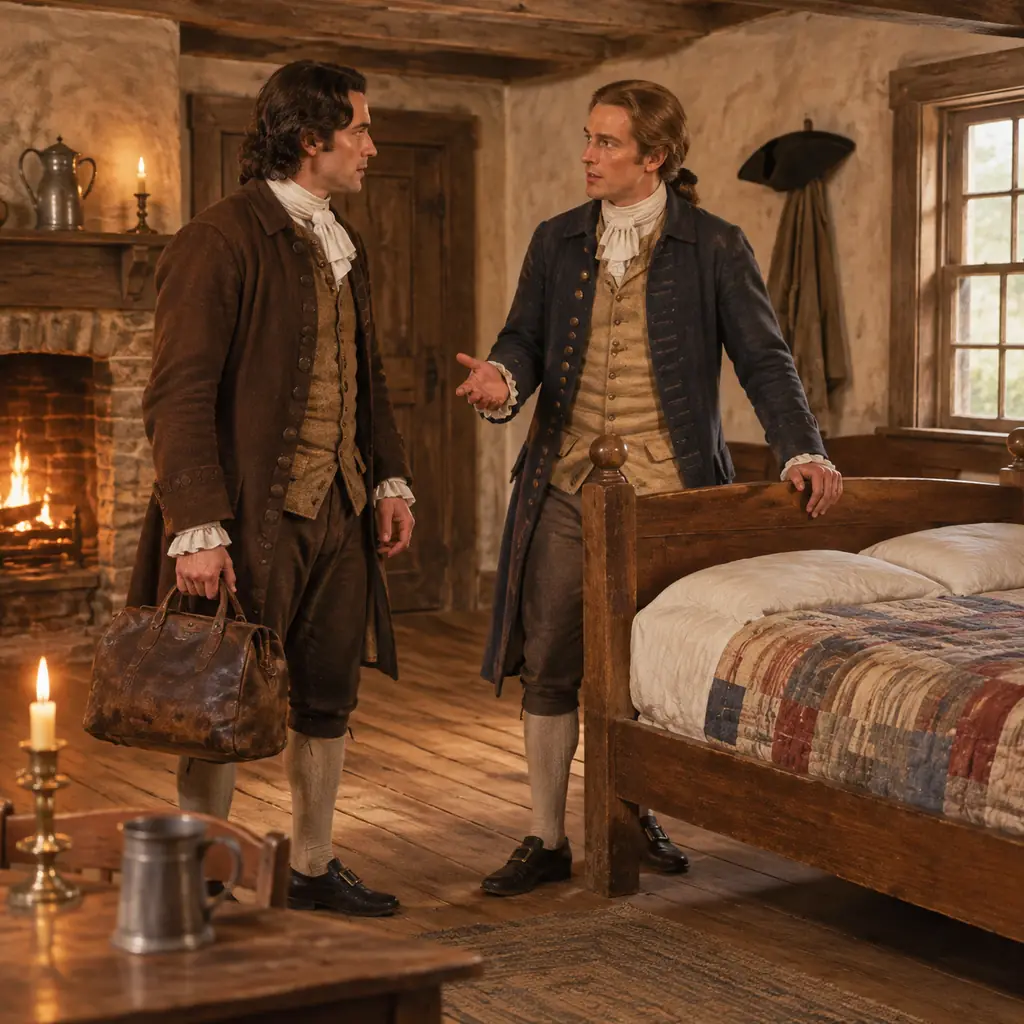
Paying for a night's lodging did not necessarily buy a bed to yourself. A traveler at an eighteenth-century tavern could share a sleeping room, or even the bed, with someone met on the road. The modern expectation of a private hotel room did not set the terms.
That arrangement belonged to travel lodging, not every family's sleeping routine. Wealth and the accommodations available changed the experience. For a tired guest, the immediate question could be where there was space to sleep, rather than whether the room offered privacy.
Sources: Colonial Williamsburg: What Was Travel Like in Colonial America? · Colonial Williamsburg: Our Ideas of Privacy and Their Evolution
A woman could carry her belongings beneath her skirt
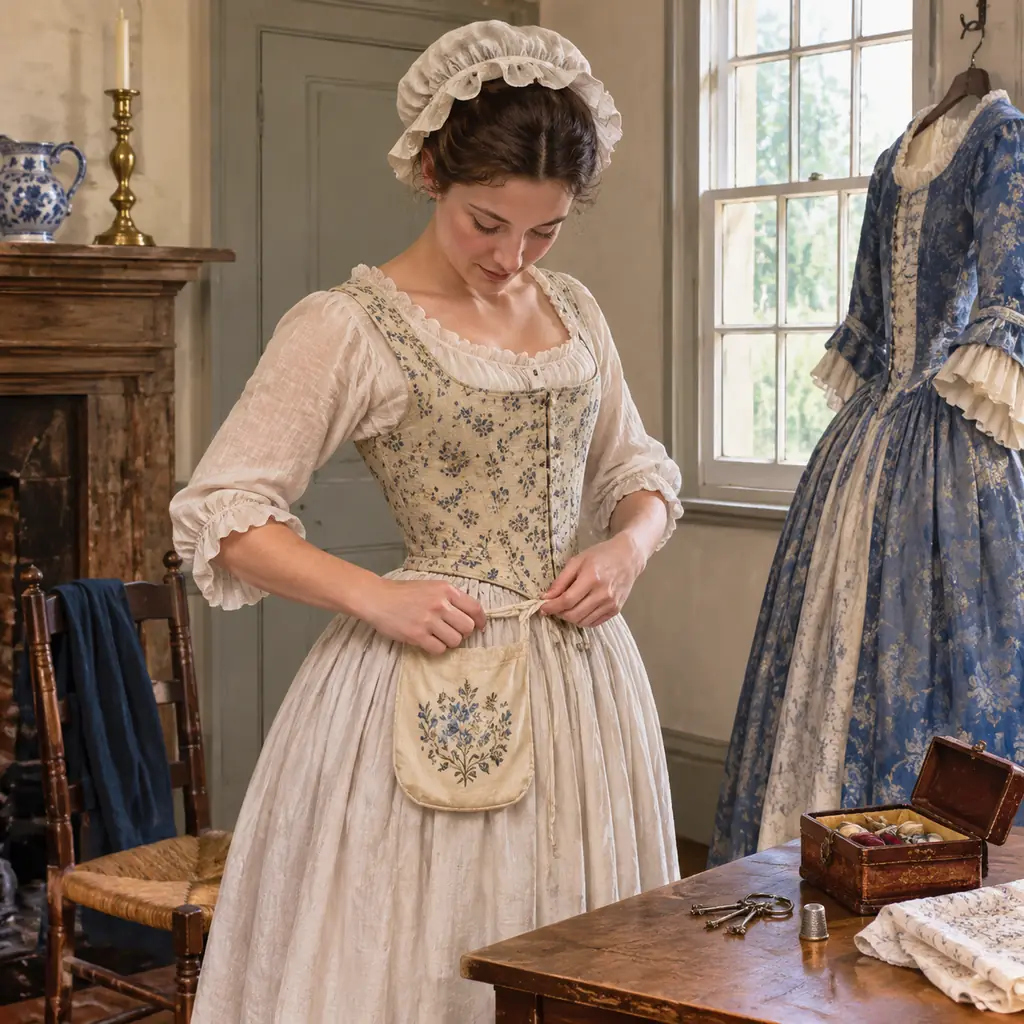
A woman did not need a modern handbag to keep keys, coins or sewing tools close. Separate fabric pockets could be tied around her waist beneath her skirt or apron. Openings in the outer clothing gave access to what she carried.
Colonial Williamsburg's clothing collection describes these pockets across social levels, sometimes worn singly and sometimes in pairs. The useful storage was part of the outfit even when the gown itself had no sewn-in pocket. A dress that looks pocketless in a portrait might conceal considerable space.
Sources: Colonial Williamsburg collection: Historic Threads, eighteenth-century pockets and clothing
Warming the bed could mean bringing coals near the sheets
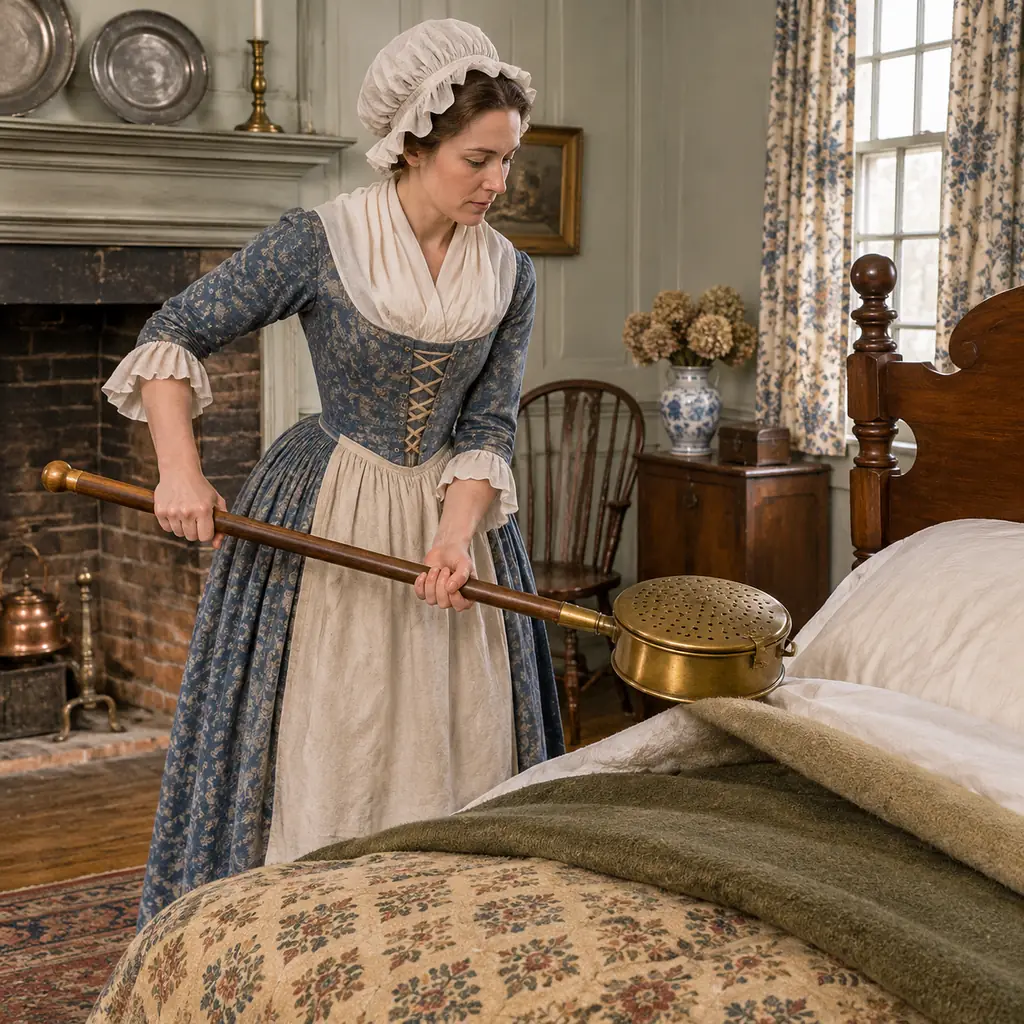
Abigail Adams received a brass bed warmer as a wedding gift in 1764. Its round covered pan and long handle were practical household equipment. Heat could be moved over the bed before someone settled down to sleep.
The National Park Service notes that the pan's holes released heat while limiting air around the coals. The handle kept the user farther from the hot metal. This was not a harmless decoration: sparks could start a bedroom fire. The surviving gift shows one New England household's way of dealing with cold bedding.
Sources: Adams National Historical Park: Abigail Adams's brass bed warmer
One room could hold several parts of the day
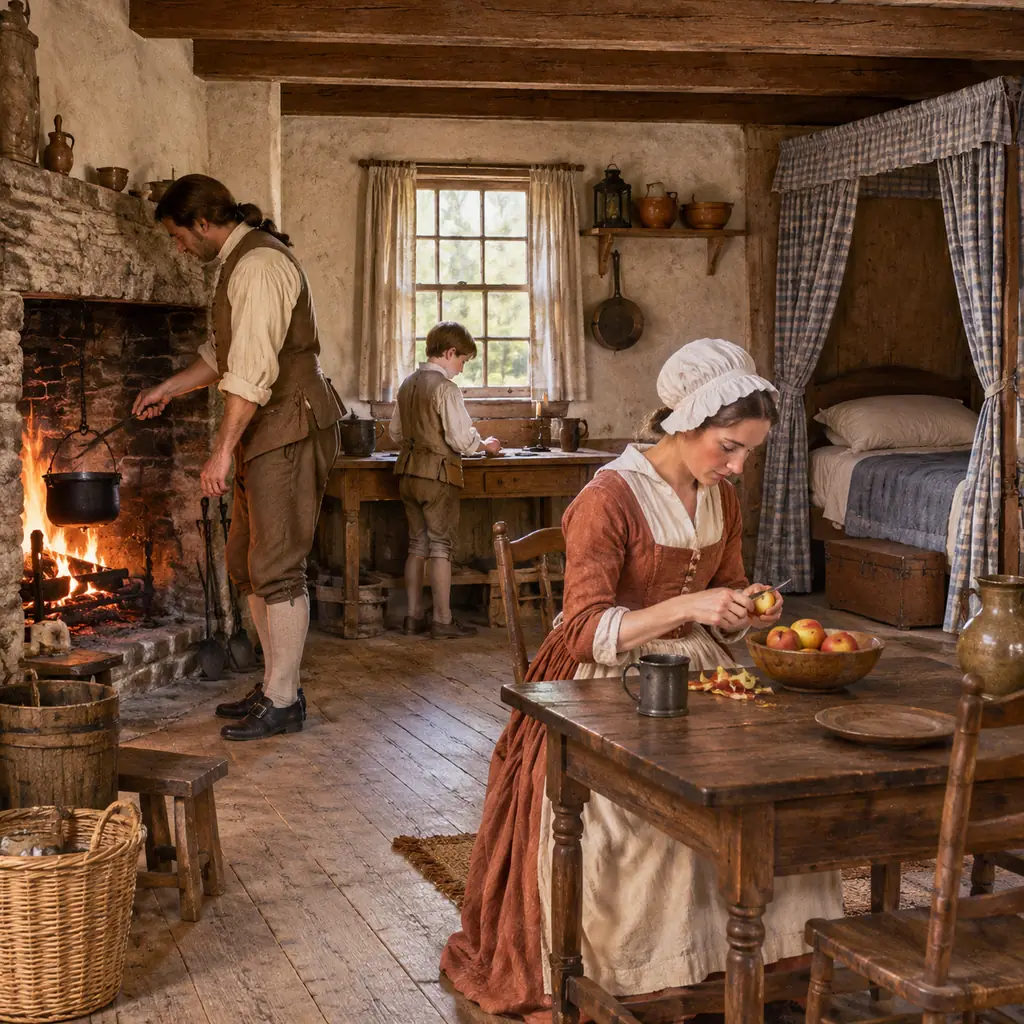
A room did not always have one fixed purpose. In a modest colonial dwelling, cooking, eating, work and sleep could take place within the same small interior. Daily life required other people's activities to fit around your own.
Larger houses offered more ways to separate people and tasks. Rooms designed for withdrawal and privacy became more important during the eighteenth century, but access depended on wealth and household position. The person serving a private room did not necessarily have a private room to return to.
Sources: Colonial Williamsburg: Our Ideas of Privacy and Their Evolution
A pot beneath the bed saved a trip outside
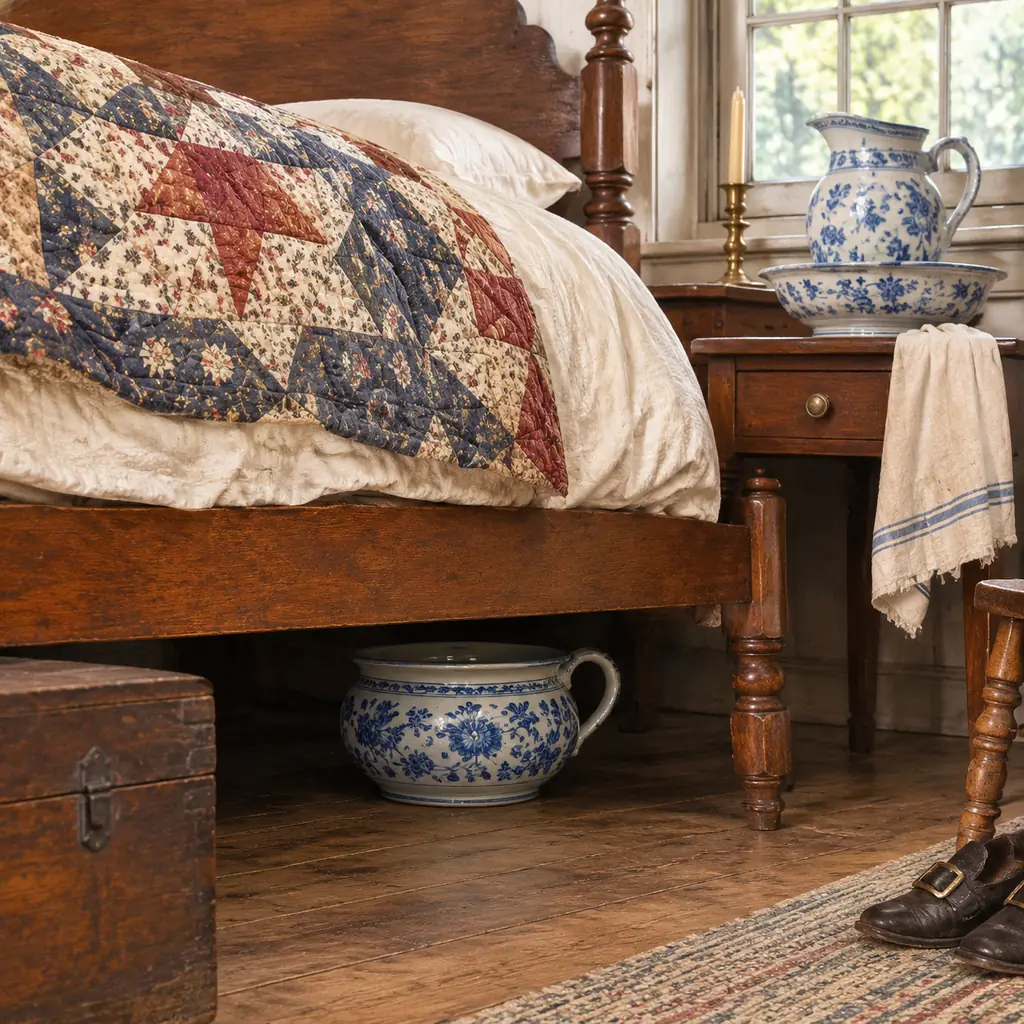
A stoneware chamber pot could wait under a bed for use at night. It avoided an immediate trip to an outdoor privy, but somebody still had to remove the contents and clean the vessel afterward. Indoor convenience did not remove the work.
Surviving pots were not always plain. Colonial Williamsburg holds a gray stoneware example decorated in blue. Archaeologists also found chamber pots with paint residue at a Williamsburg cabinetmaking shop. The familiar shape could end up serving a craftsperson as well as a bedroom.
Sources: Colonial Williamsburg collection: eighteenth-century chamber pot
A washable shift could do duty by day and night
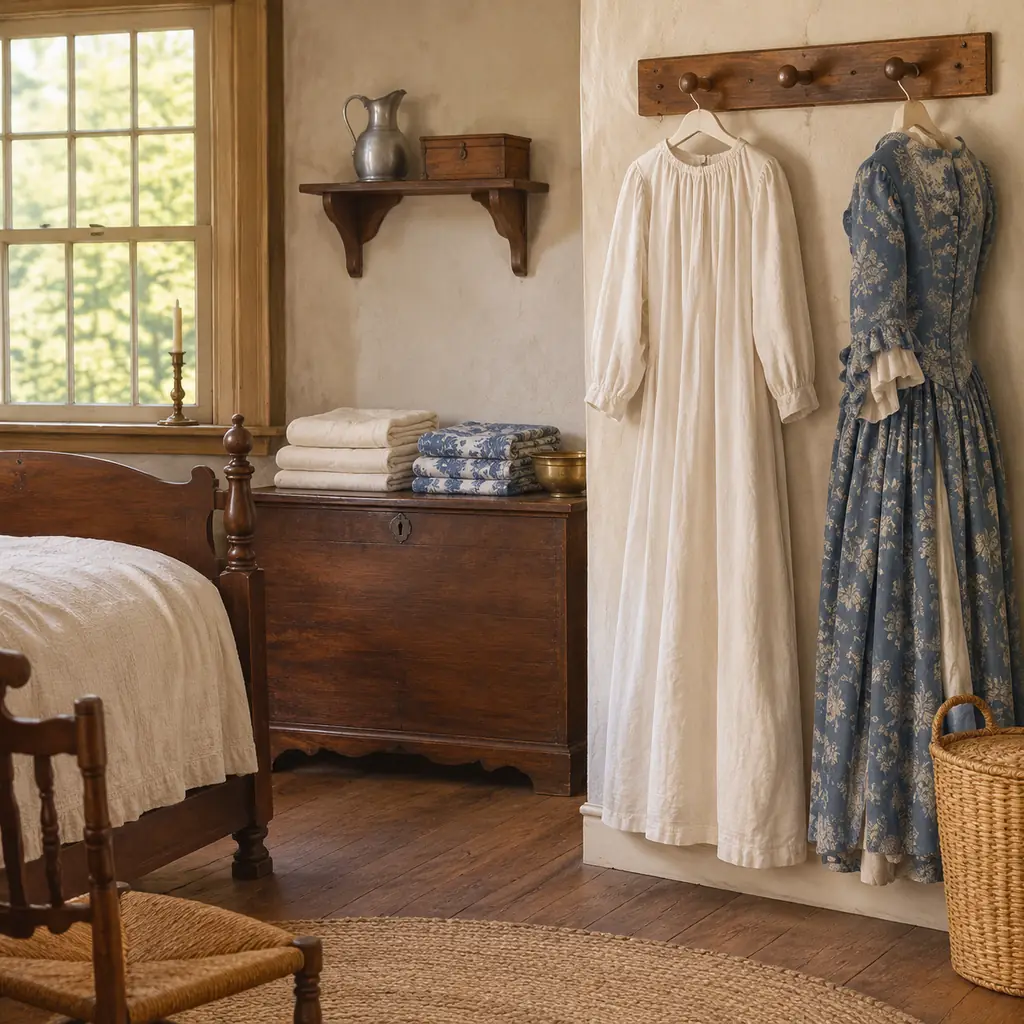
Beneath a woman's outer clothes was a shift, a loose garment usually made from washable linen or cotton. The shift took much of the sweat and dirt that otherwise would have reached an expensive gown. It also protected the skin from rough or stiff clothing layers.
Many women slept in the same shift they had worn during the day. A larger wardrobe could include separate night shifts. Clothing therefore reflected means in less visible ways than the quality of a coat or the trimming on a dress.
Sources: Colonial Williamsburg collection: linen shift and the uses of body linen
A clean sheet required much more than a washbasin
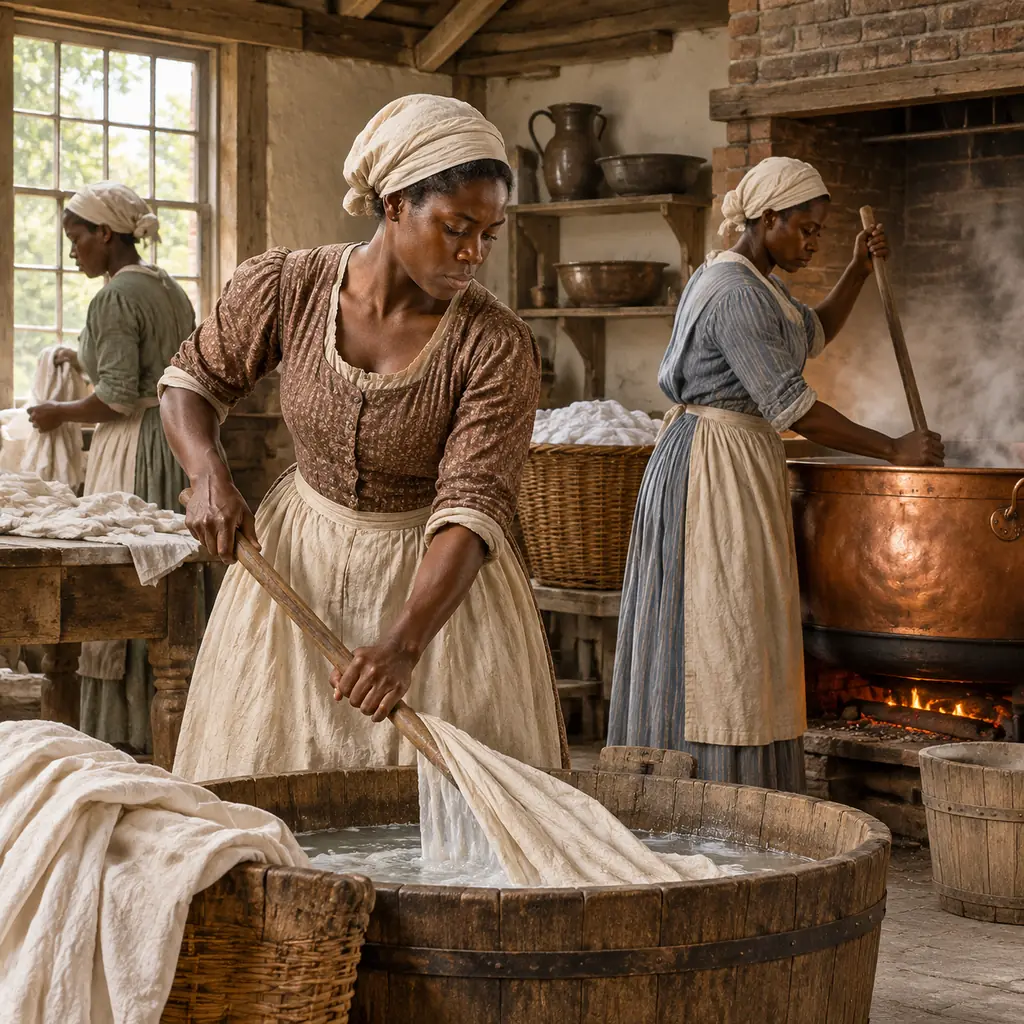
Large households needed tubs, fuel, water and people to maintain their linen. The Governor's Palace laundry inventory of 1770 lists washing tubs, rinsing tubs, a large iron pot and a boiling copper. Flatirons had to be heated, while box irons held a separately heated metal piece.
The clean tablecloth or smooth sheet in the main house hid this demanding process. In wealthy Virginia households, enslaved laundresses often performed the work. A separate laundry building spoke about the amount of linen owned as well as the people compelled to keep it clean. Property, work and marriage also shaped the everyday decisions American women fought to make.
Sources: Colonial Williamsburg: eighteenth-century laundries and clothing care
An expensive gown could be taken apart and made over
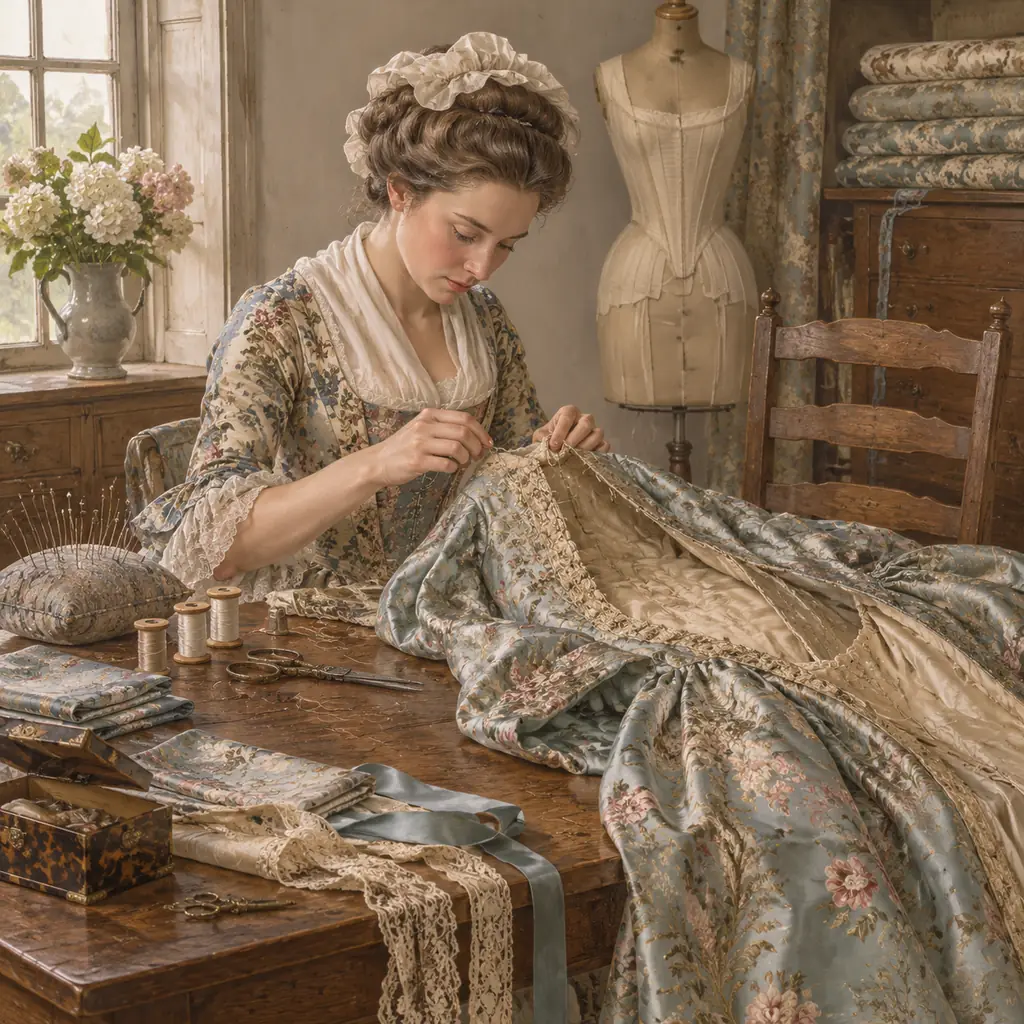
A fine silk gown was not treated like a cotton shirt. Cleaning could involve careful attention to individual stains rather than plunging the whole garment into a wash tub. The valuable fabric could remain useful after its original shape went out of fashion.
In 1763, one of Martha Washington's old dresses was sent to London to be altered into a newer style. Such an order belonged to a wealthy household with overseas connections. It shows why remaking could mean rebuilding a garment, rather than merely adding a patch.
Sources: Colonial Williamsburg: eighteenth-century laundries and clothing care
A full bath began with moving the water
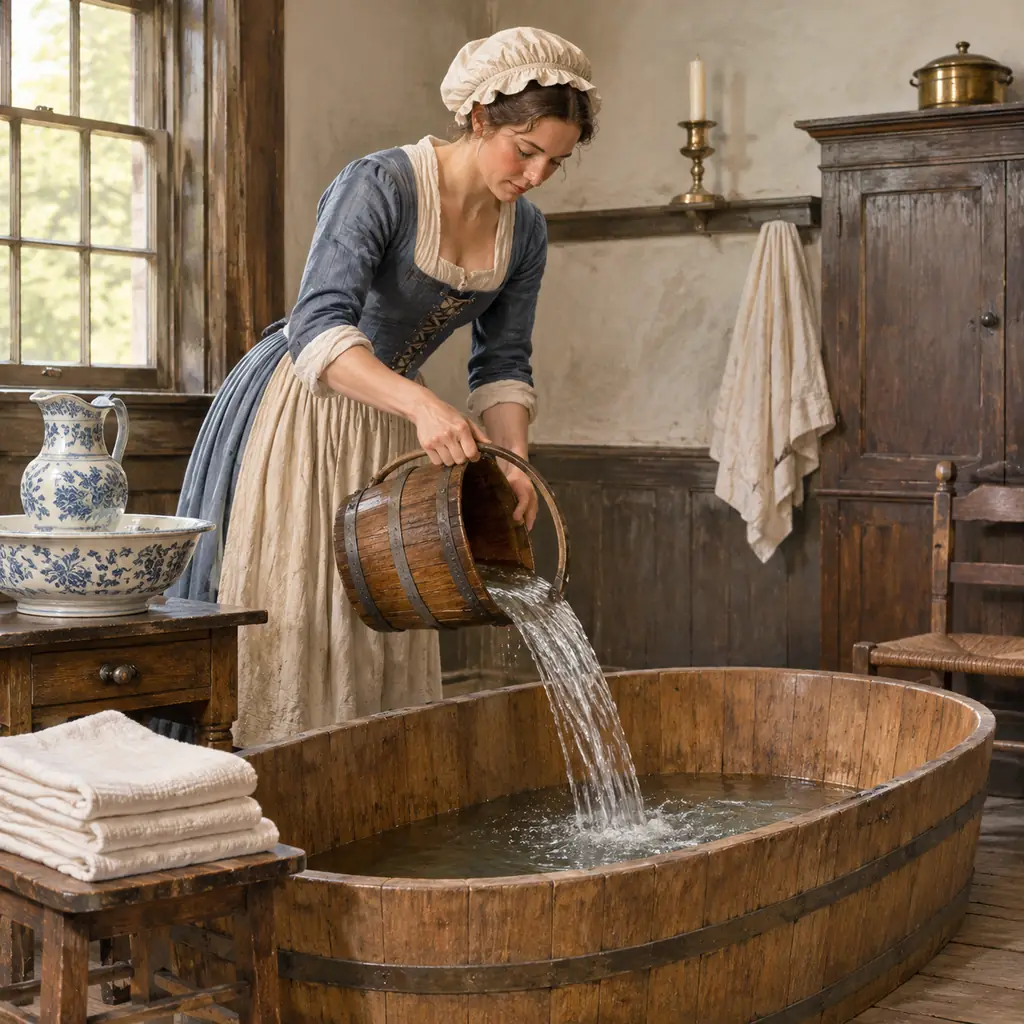
For a household without piped water, a bath was a project before anyone entered the tub. Water had to be drawn, carried and heated. A wooden tub also needed a place where washing could happen with some privacy.
A basin and cloth made washing the face and hands much easier to arrange. That difference helps explain why a full immersion bath was not the only measure of cleanliness. Practices varied; the claim that colonial people simply never washed leaves out the ordinary work of keeping skin and clothing clean. For another setting where shelter and space demanded hard choices, explore frontier family life.
The kitchen might stand apart from the people eating the meal
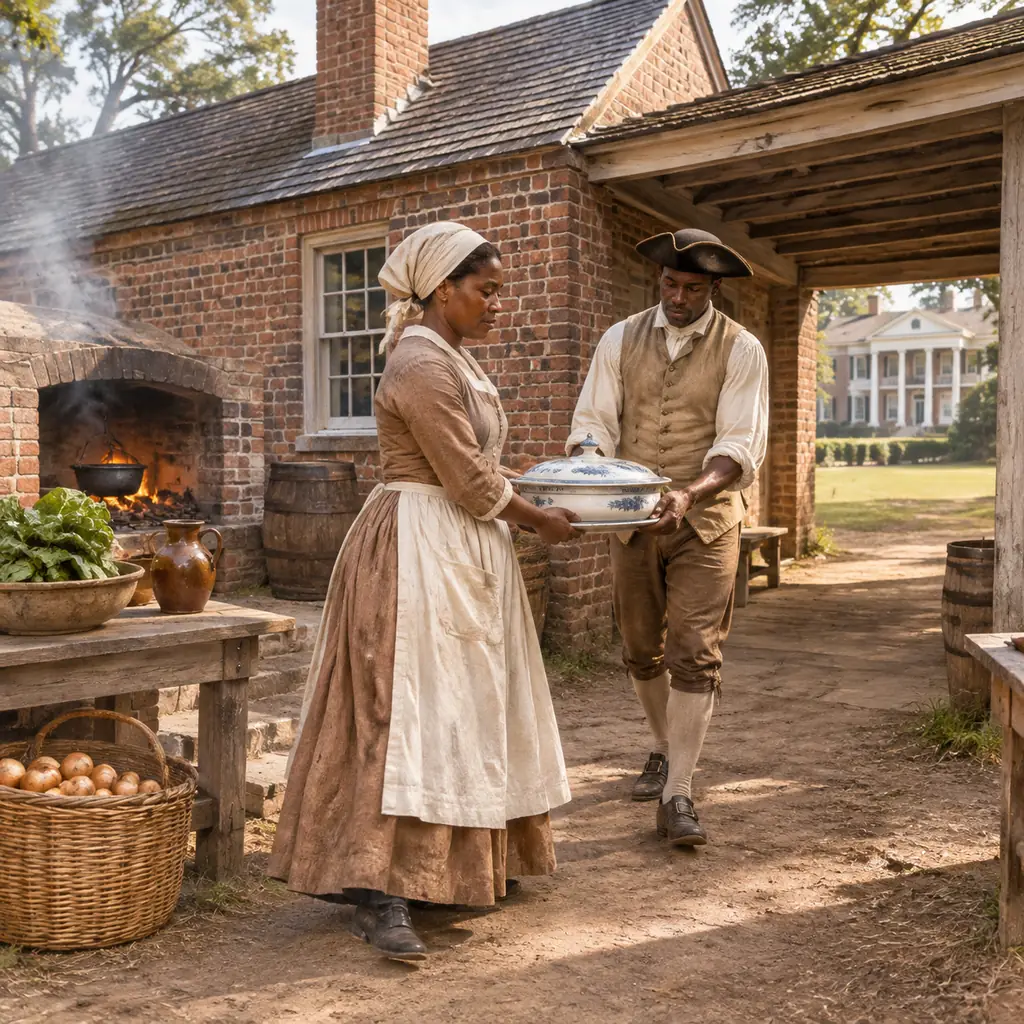
Mount Vernon had a separate kitchen before 1753, and a replacement was built in 1775. Keeping cooking away from the main house reduced heat, smells and the danger of fire. The arrangement also reinforced a social boundary between the Washingtons and the enslaved people who prepared their food.
Skilled cooks worked around a hearth and oven, while other workers moved food between buildings. This was one wealthy Virginia estate's arrangement, not the plan of every colonial home. The separation that increased the family's comfort added movement and labor to the working day.
Learning a trade could mean joining the master's household
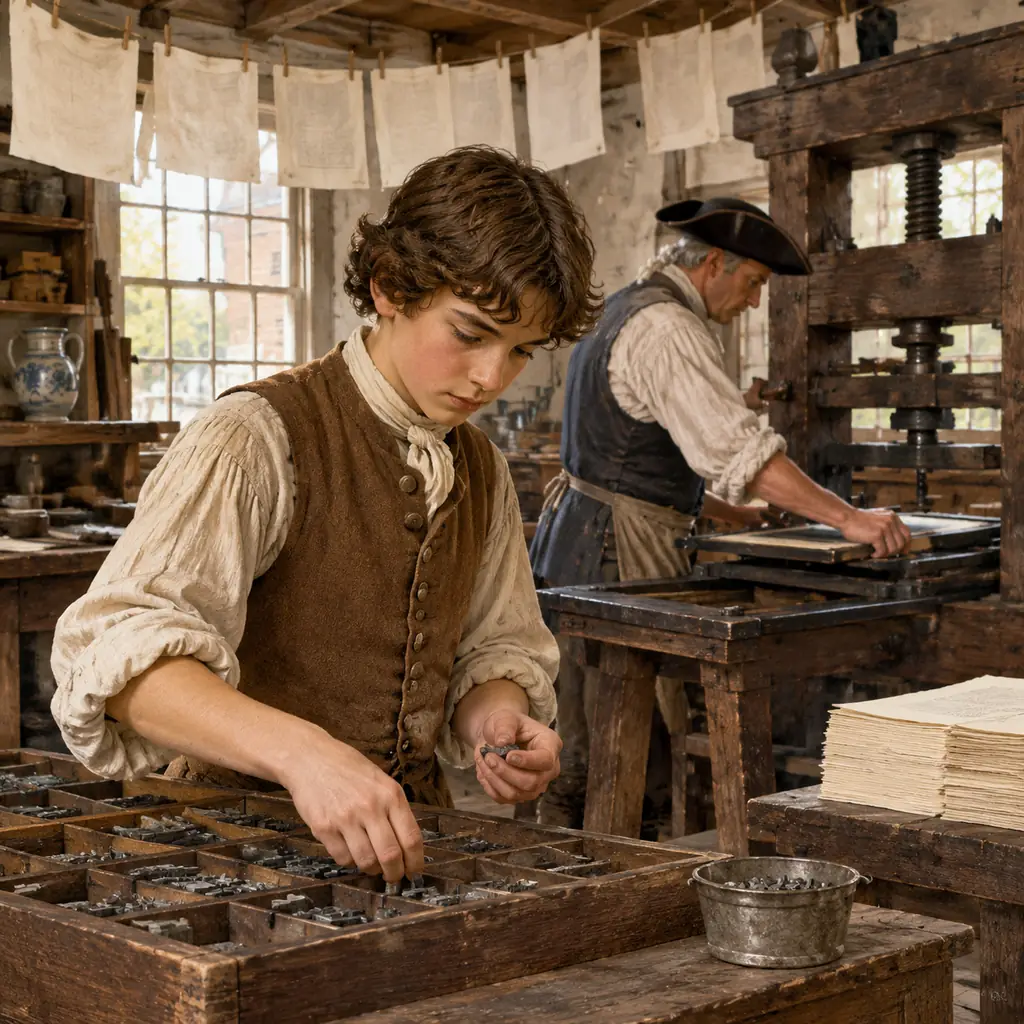
A printing apprentice did not simply attend lessons and go home. The arrangement could place a youngster inside the printer's household. The master supplied necessities and training; the apprentice supplied work in the shop and could be assigned household chores as well.
Many printing apprentices began around fourteen, although younger children were also bound out. Colonial Williamsburg's research records a runaway apprentice advertised in 1745. Apprenticeship offered a possible route to a skilled trade, but its binding terms and the master's authority made it very different from a modern class. Later customs around visitors and private rooms appear in family life in the 1890s.
The shopping trip could end with a debt in a ledger
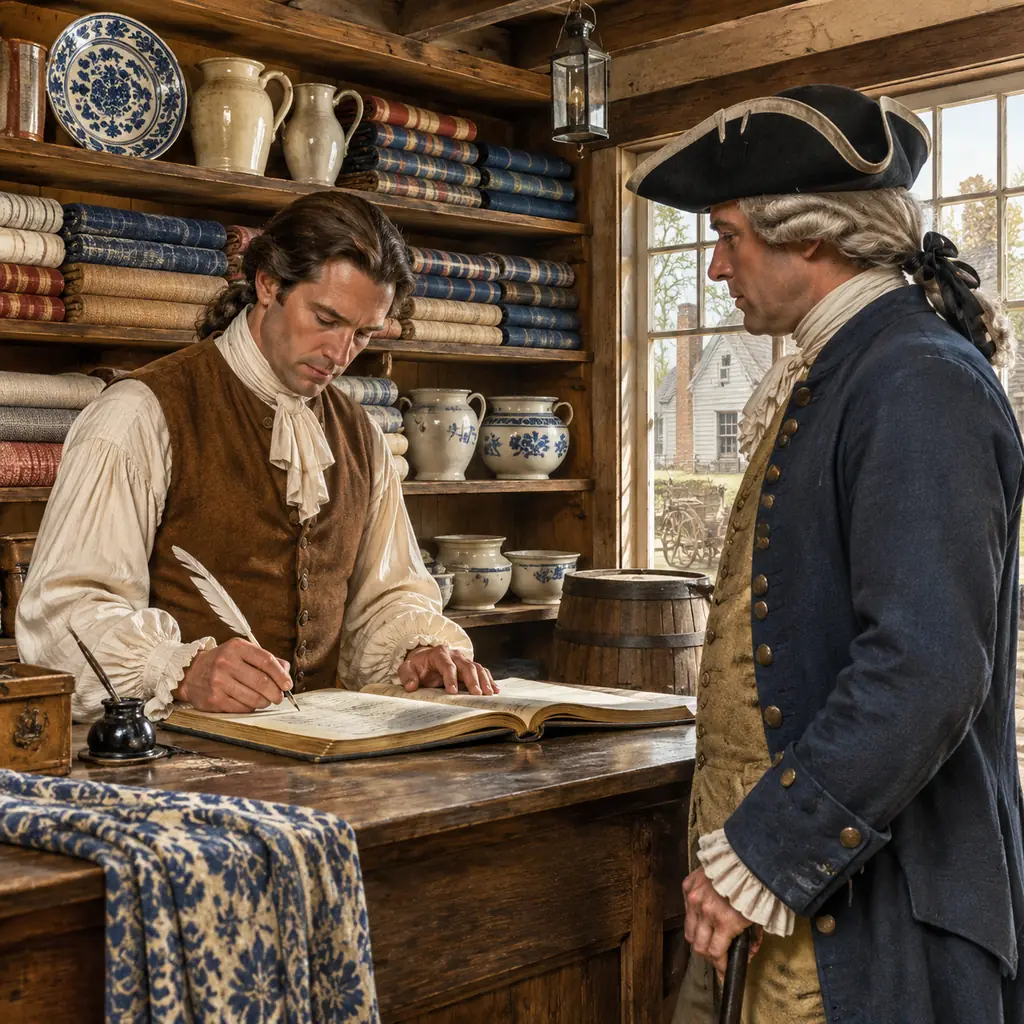
A colonial store was not always a place where each purchase ended with coins on the counter. Merchants extended credit, recording what customers owed. The store account could connect a household's immediate needs to payments expected later.
Williamsburg's Prentis store records show how important those debts were. In 1737, the business had more than £2,600 owed to it and only £10 in cash on hand at the accounting date. These are one company's figures, not a household budget, but they challenge the picture of a purely cash-or-barter economy. The overlap between living space and paid work continues in these accounts of 1910s households.
Sources: Colonial Williamsburg research report: The Economic Role of Williamsburg
Evening light needed a continuing supply of fuel
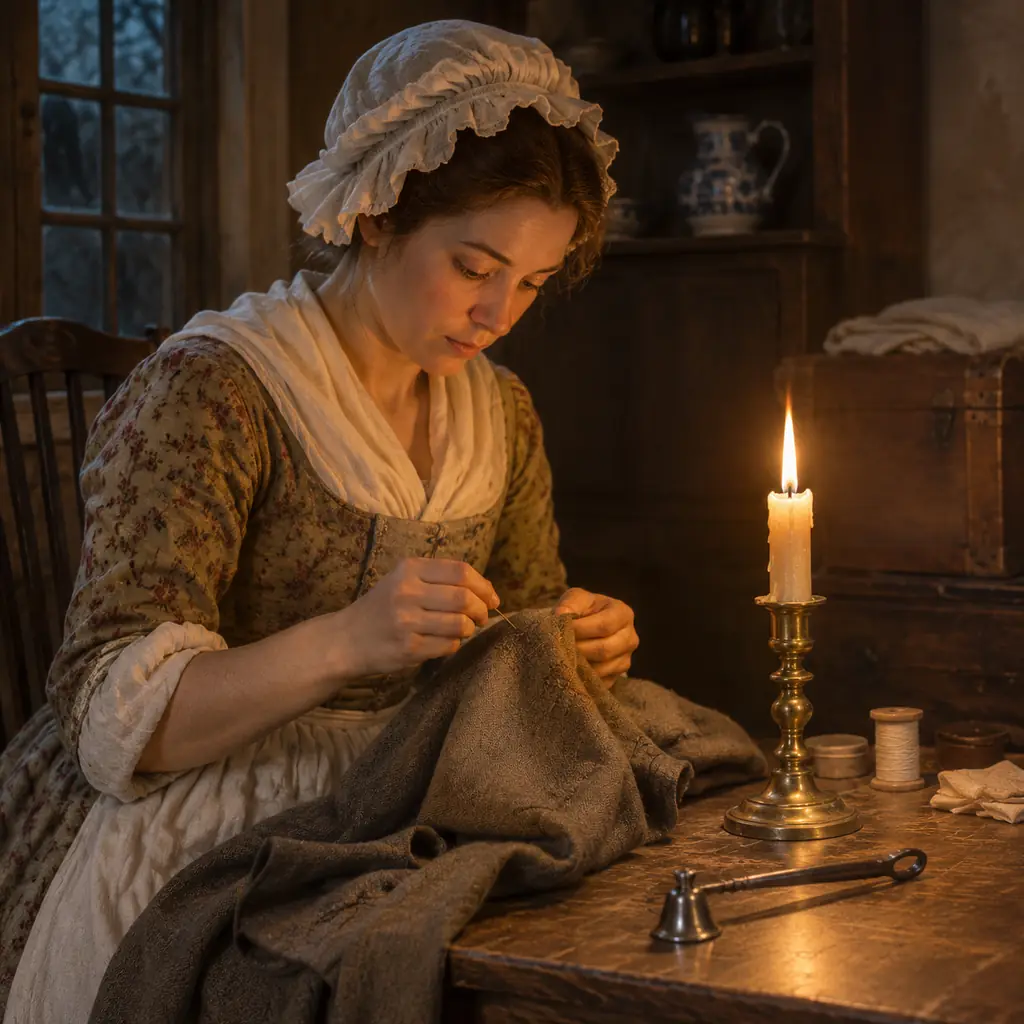
A candle was something being consumed while a person read, sewed or worked. Affordable tallow candles used rendered animal fat. Other households could afford brighter or cleaner-burning choices, while simple lamps burned oils or grease.
Wicks needed attention, and the light was limited compared with a modern room. Work that required seeing small details was harder after dark. This did not mean everyone went to bed at sunset, or that every family made its own candles. The practical question was how much useful light a household could maintain.
For an enslaved family, living together was not guaranteed
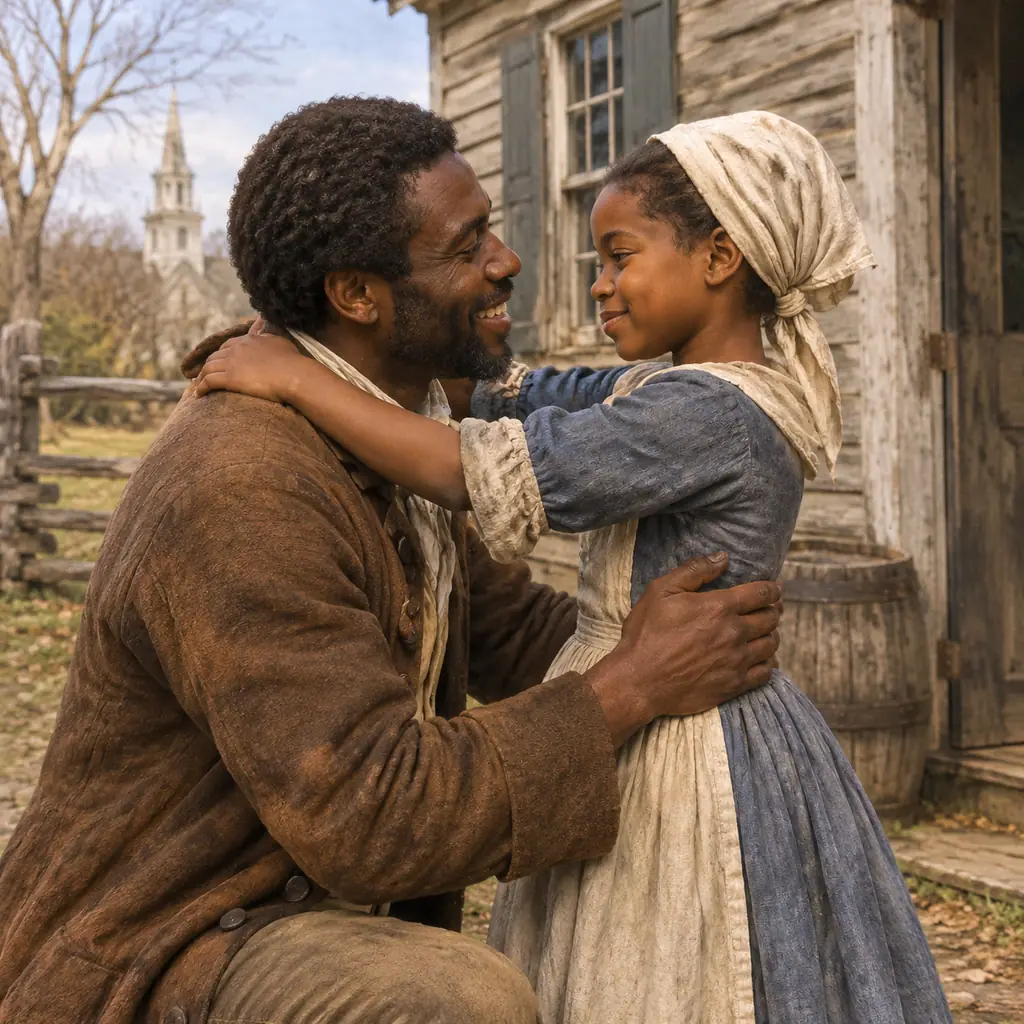
Cuba and Anthony Vassall raised children in colonial Massachusetts, but their enslavers separated members of the family. By the early 1770s, their young daughter Flora was living in another town. Parenthood did not give them the legal power to keep every child at home.
In December 1772, Anthony traveled to Billerica and delivered money to secure Flora's freedom. The National Park Service records the transaction and its role in reuniting the family. Their experience belongs alongside the comfortable colonial interiors, not outside the story of ordinary household life. A different period of household restrictions appears in wartime family life.
Sources: National Park Service: Though Dwelling in a Land of Freedom, the Vassall family
A child's lessons could serve very unequal purposes
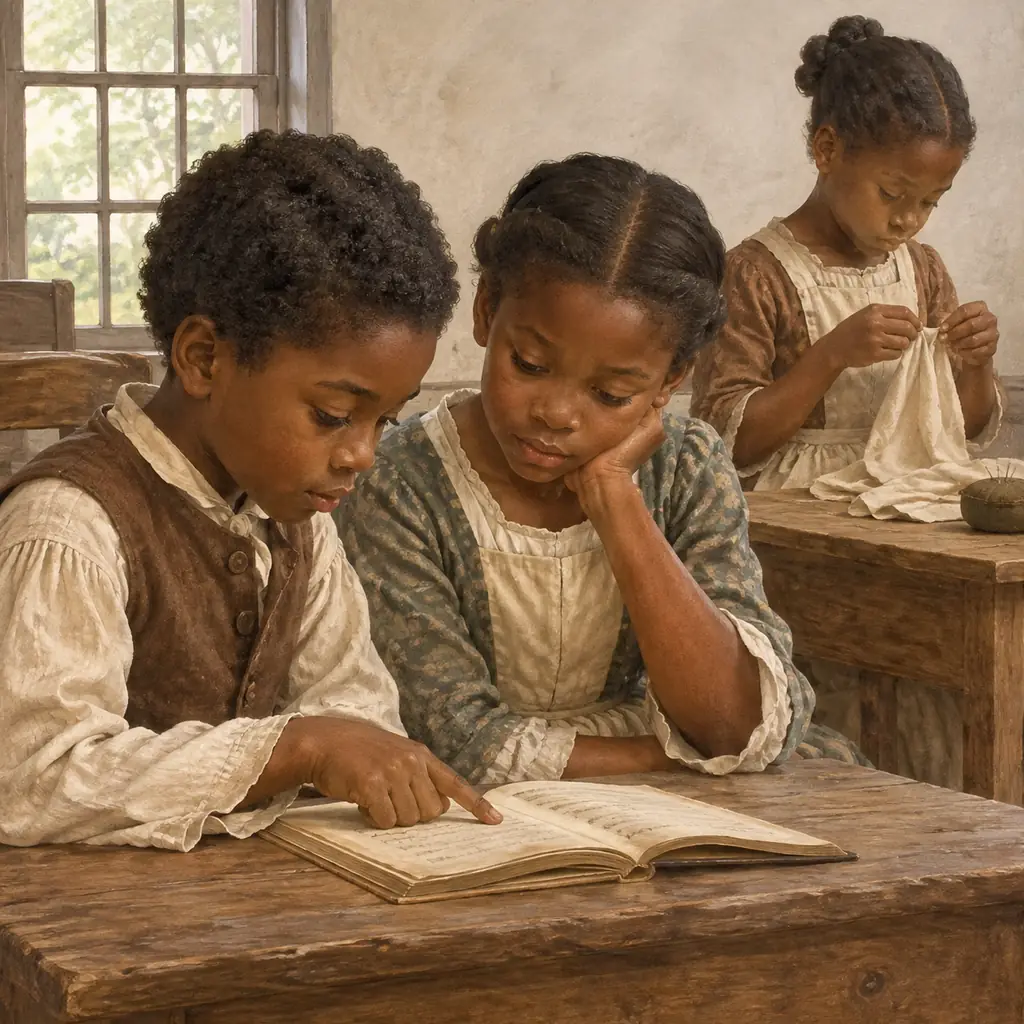
At Williamsburg's Bray School, free and enslaved Black children studied between 1760 and 1774. Surviving lists include children as young as three. Reading and Anglican religious teaching formed part of the curriculum, while girls also learned sewing.
The school was not designed to challenge slavery. Its supporters wanted enslaved pupils to accept their position as divinely ordained. Yet learning to read gave a child a skill that could matter beyond the classroom. This specific institution reveals both the possibility of learning and the unequal conditions under which it was offered.
Sources: Colonial Williamsburg: Williamsburg Bray School, 1760–1774
Dinner did not necessarily wait until evening
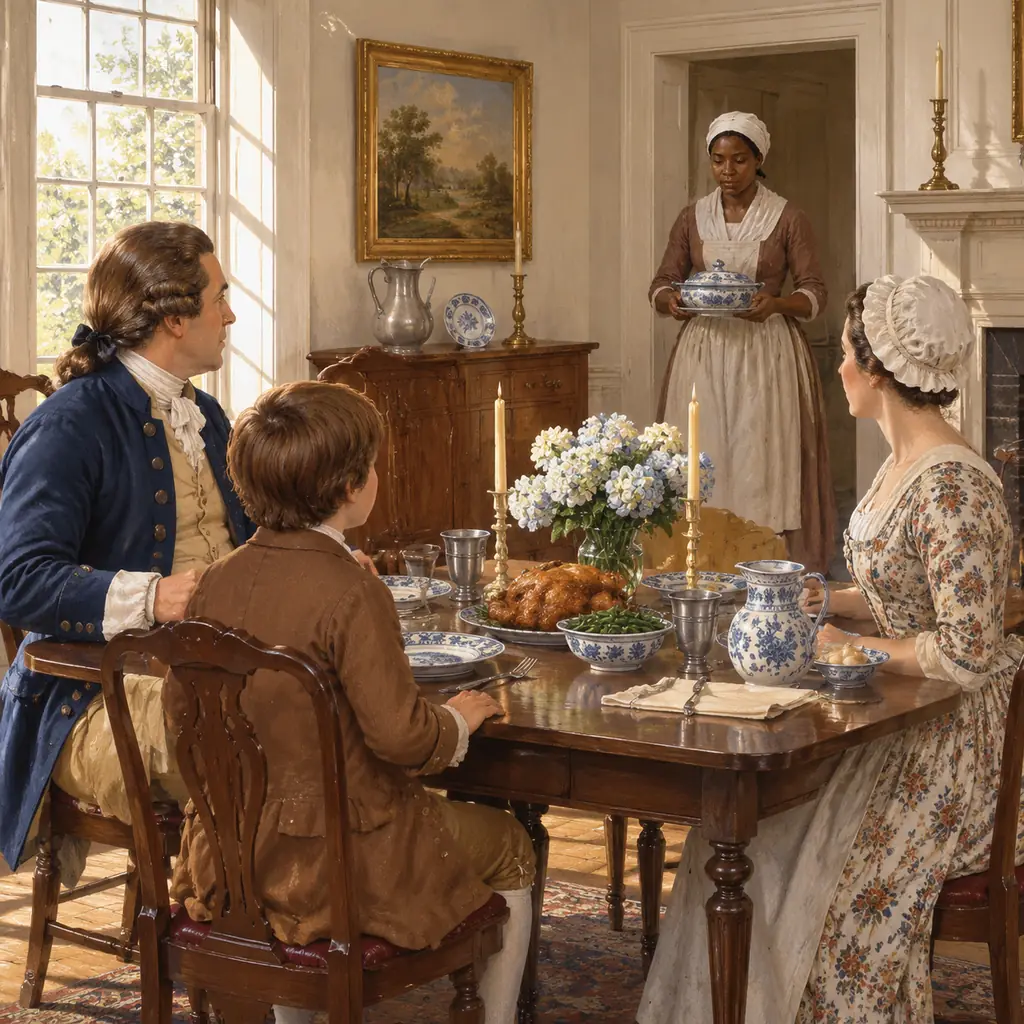
In the eighteenth-century Virginia dining practices described by Colonial Williamsburg, dinner was the main meal and came in midafternoon. A formal meal could unfold through two or three courses. The household's busiest meal therefore fell at a different point in the day from a modern evening dinner.
Such service depended on money, food supplies and the work of cooks and servers. It should not be mistaken for every laborer's daily meal. Even the familiar word dinner needs its household setting before it tells us what the family actually experienced. For the domestic world behind a more familiar public image, explore the family life of the Roaring Twenties.
Sources: Colonial Williamsburg: Food in eighteenth-century Virginia