A child’s blood type could become a tattoo in a few communities, while another household planned for two weeks in a basement.
These documented examples and everyday routines reveal a 1950s family world shaped by work, new purchases, private worries, and unequal access to opportunity.
Some schoolchildren received blood-type tattoos
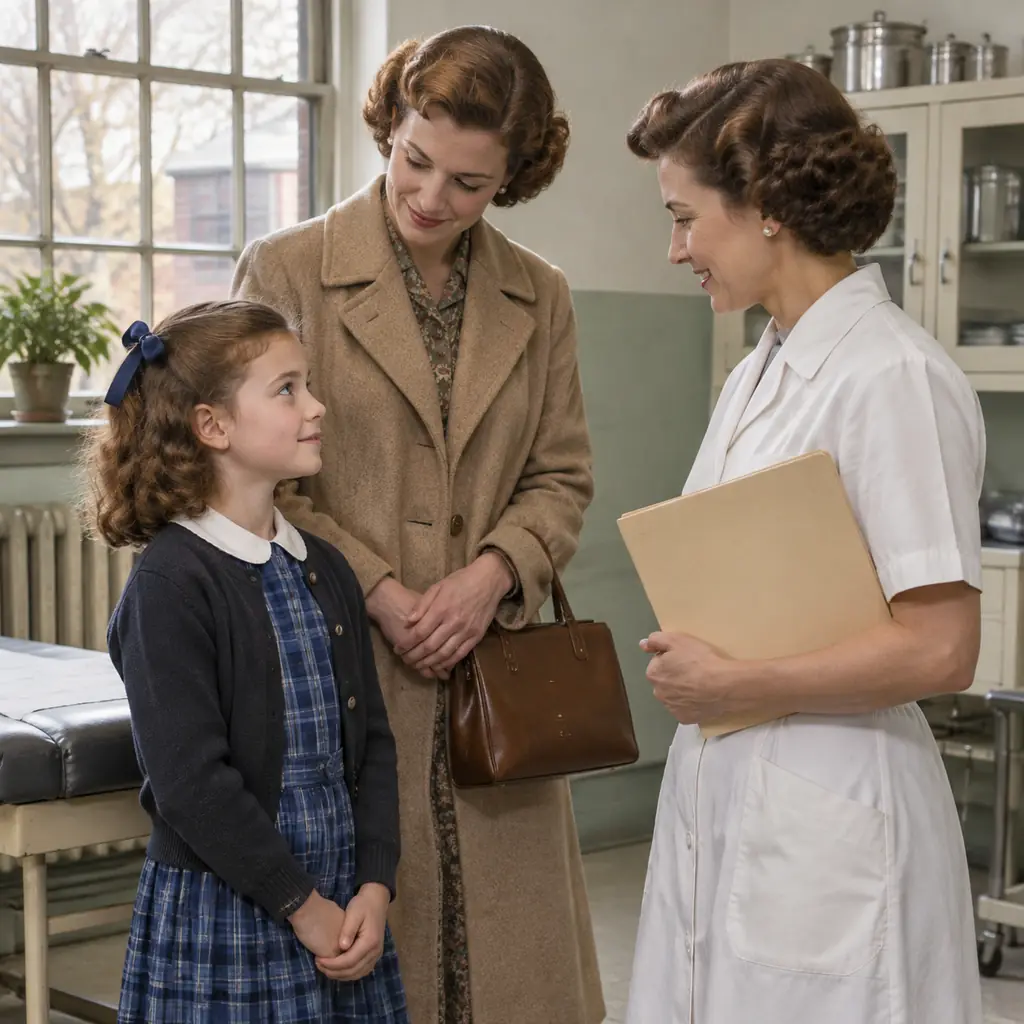
In 1951 and 1952, some schoolchildren in Lake County, Indiana, and Cache and Rich counties, Utah, received tattoos recording their blood type. The idea was to help identify potential blood donors after an atomic attack.
Researchers Elizabeth Wolf and Anne Laumann traced the short-lived programs through records and interviews. Their research distinguishes these local tattooing efforts from the much broader blood-typing campaigns of the Cold War.
This was an unusual local practice, not a normal step for every American child. The researchers report that the tattooing effort failed because physicians did not trust tattoos as medical information.
Sources: Wolf and Laumann: The Use of Blood-Type Tattoos During the Cold War,2008
A basement shelter could hold two weeks of supplies
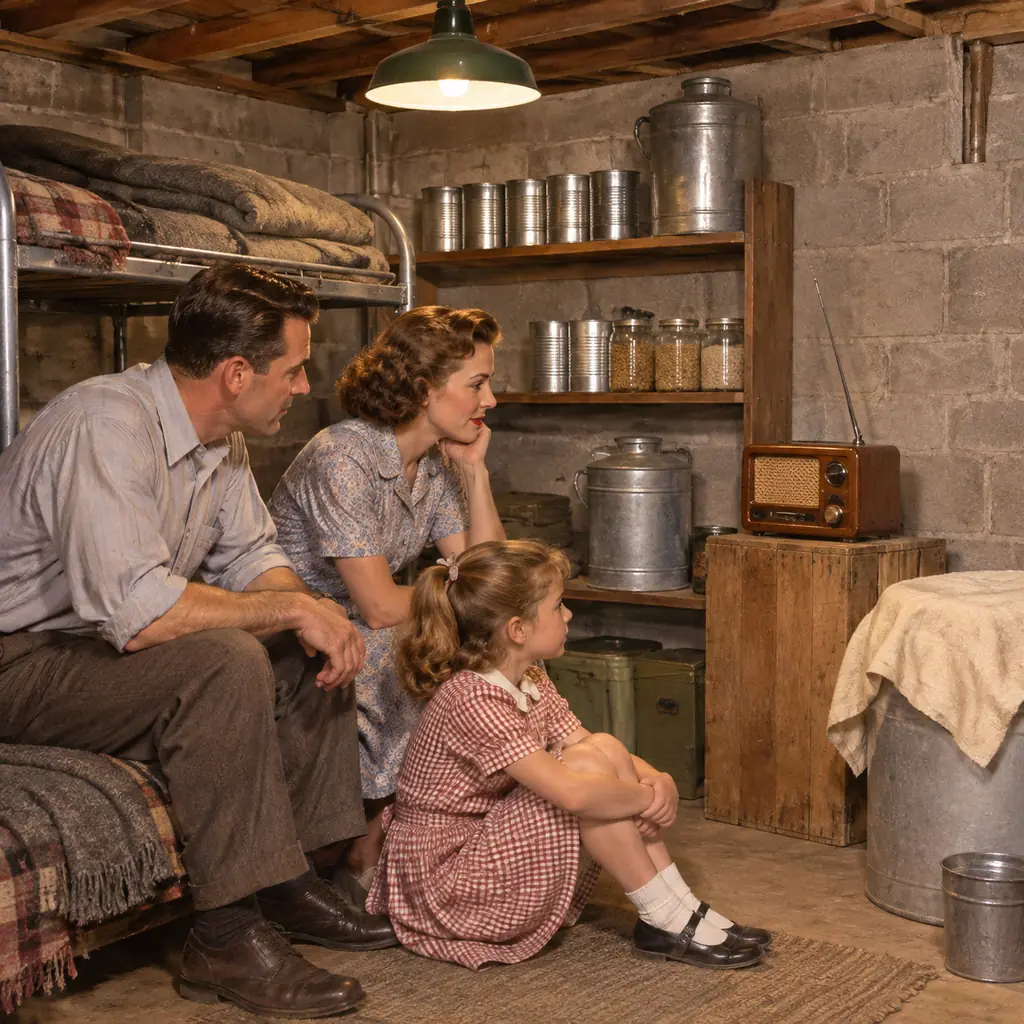
A National Archives photograph dated about 1957 shows a family fallout shelter stocked for an extended stay. Its supplies include food and water for two weeks, a battery radio, lighting, first aid, and sanitation equipment.
The ordinary basement had acquired another possible job. Space for cans and containers represented planning for a crisis that might keep the household away from the kitchen and bathroom.
The photograph documents one shelter and the civil-defense message around it. It does not show that most American families built or equipped a shelter.
Sources: National Archives: Photographs and Pamphlet about Nuclear Fallout
Friends could become customers in the living room
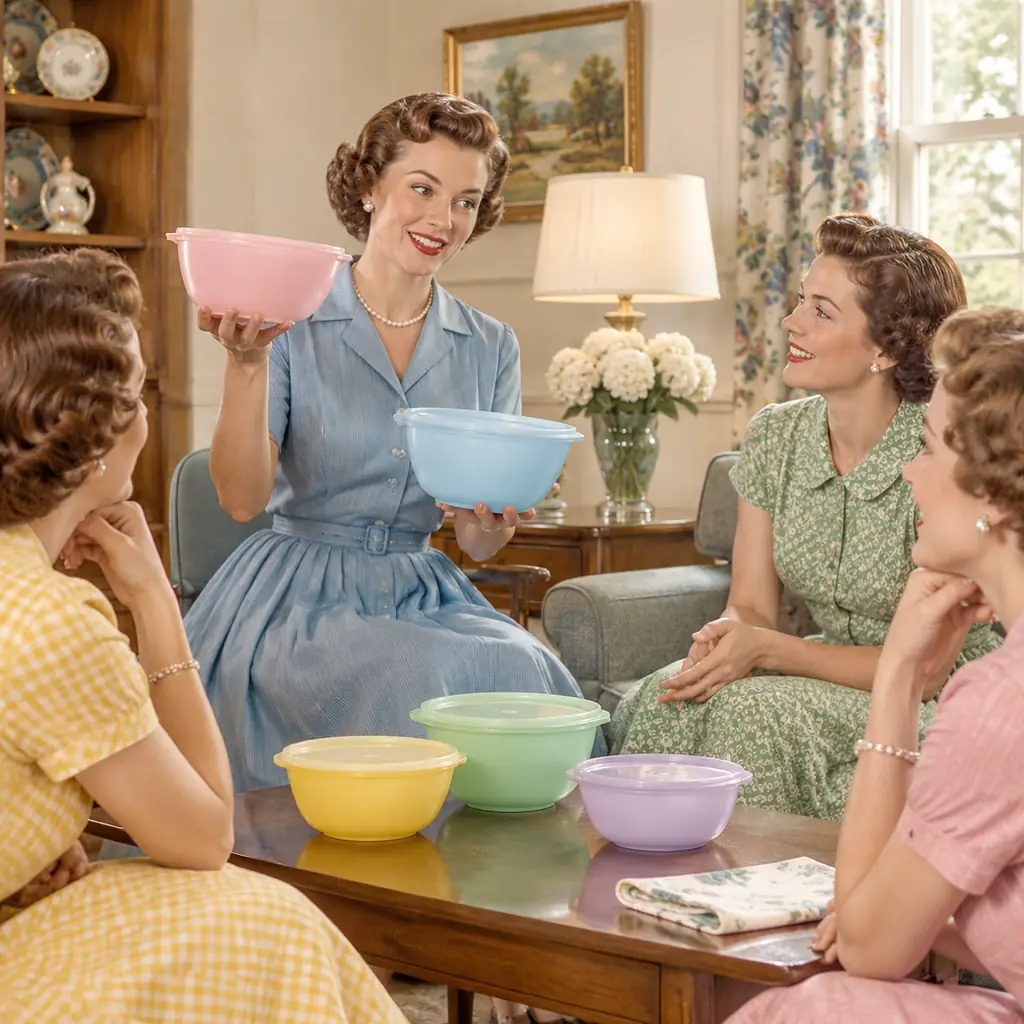
A Tupperware gathering brought a sales demonstration into a room normally used for visits. Guests watched flexible lids and containers being handled, then considered placing an order.
Brownie Wise helped build the company’s home-party system during the 1950s. The Smithsonian preserves her business papers and the history of women who used these networks to enter selling.
The invitation could therefore carry several purposes: friendship, an evening out, a product demonstration, and paid work for the seller. The bowls were part of a household business arrangement, not simply a new way to store leftovers.
Sources: Smithsonian: Parties for Plastic · Smithsonian Archives Center: Brownie Wise Papers
Polio worries belonged to the summer too
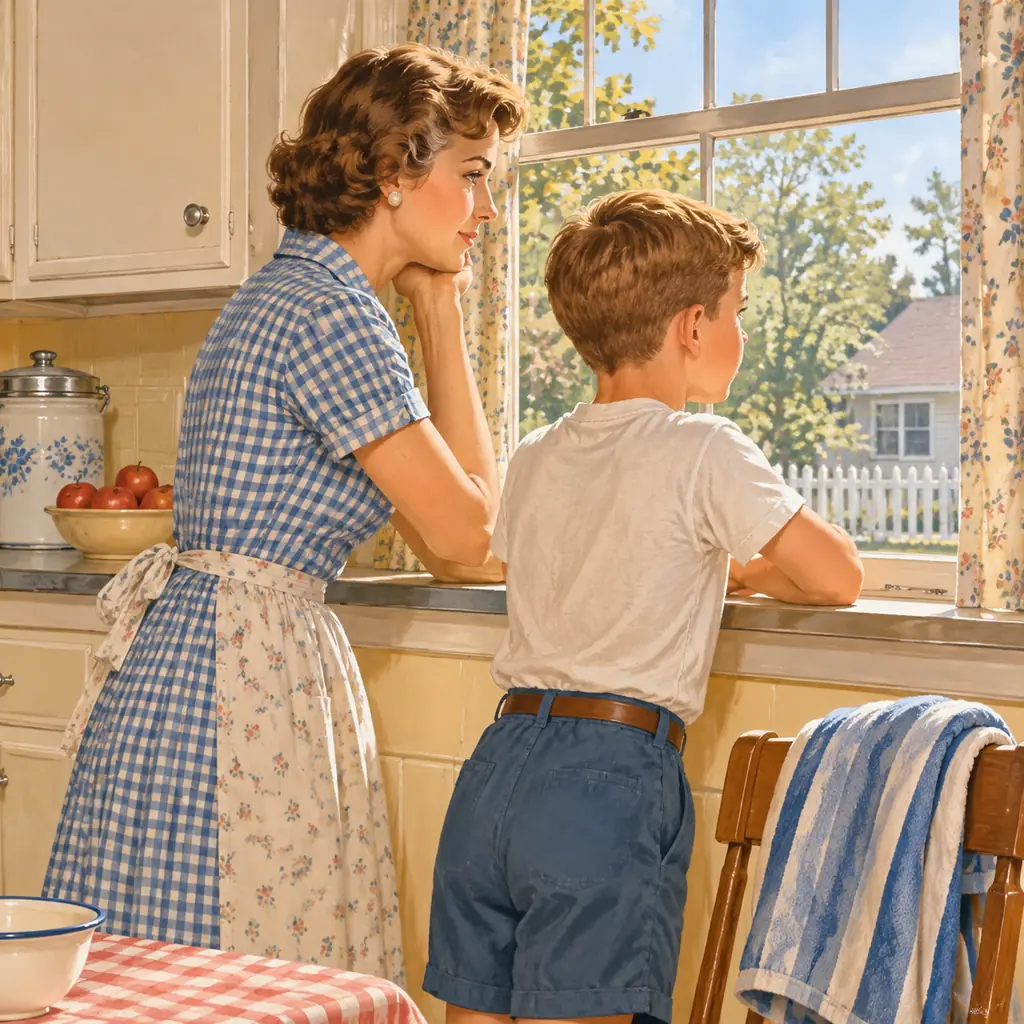
A childhood photograph can preserve a carefree afternoon while leaving out the worry felt by adults. Polio was part of that worry in the early 1950s, before the Salk vaccine’s introduction in 1955.
The National Park Service’s history of postwar play places the fear beside the decade’s toys and growing child-consumer market. Families did not experience the same risks or make identical choices.
That uncertainty is part of the private family story. A parent’s hesitation over an outing could sit behind a memory that a child later recalled mainly as a long summer at home.
Sources: National Park Service: Play in Post-World War II America
Dry laundry could need dampening before it was finished
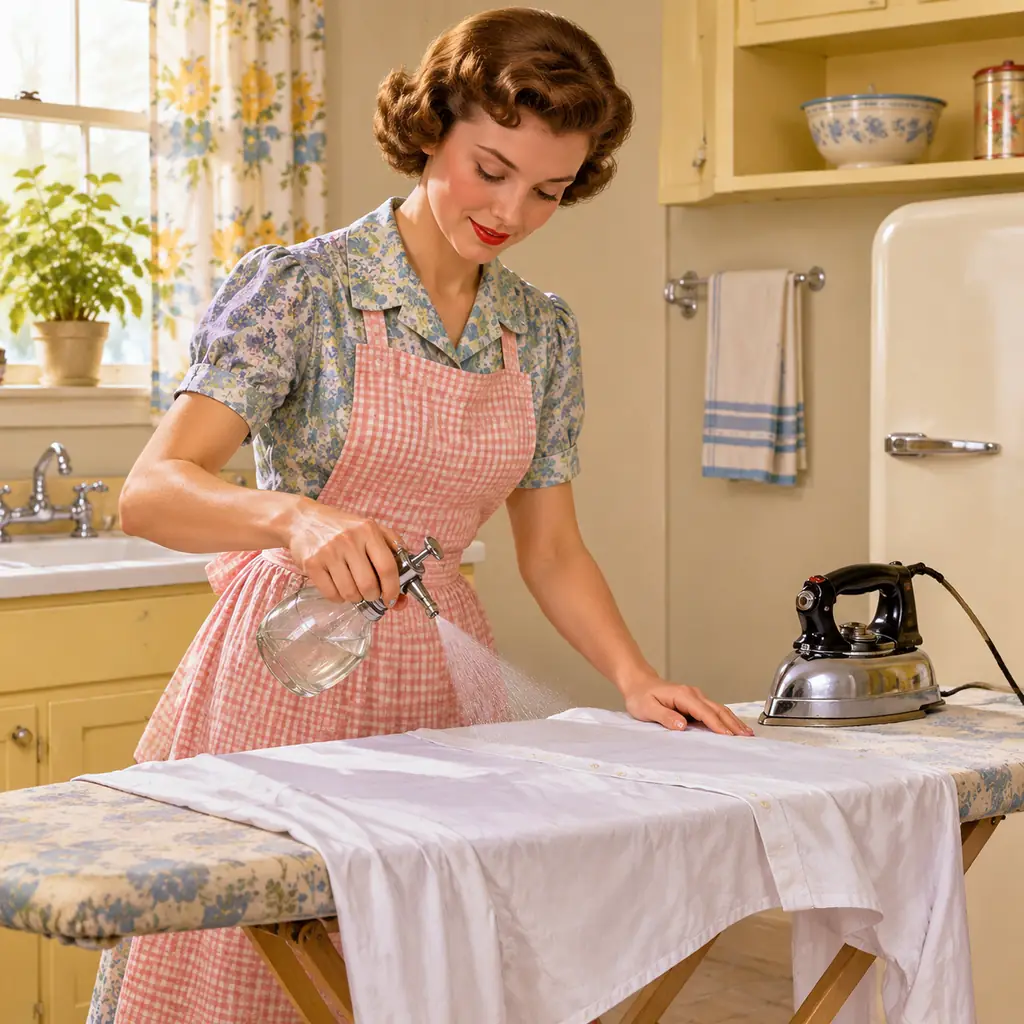
A 1955 patent for a clothes-sprinkling device describes a familiar extra step after washing: dampening fabric before ironing or pressing it. The proposed bottle spread water over the cloth rather than leaving one soaking patch.
The detail helps explain why a clean shirt was not necessarily ready to wear. Someone still needed to prepare the fabric and work across it with an iron.
Western Kentucky University also preserves a 1953 home-washing guide with ironing advice. Clean, pressed clothes represented a sequence of jobs, even in a home with newer equipment.
Sources: Laura A.Mauzy: Clothes Sprinkling Devices, US Patent2727787,1955 · Western Kentucky University: Complete Home Washing Guide,1953
A grocery trip could start a second kind of saving
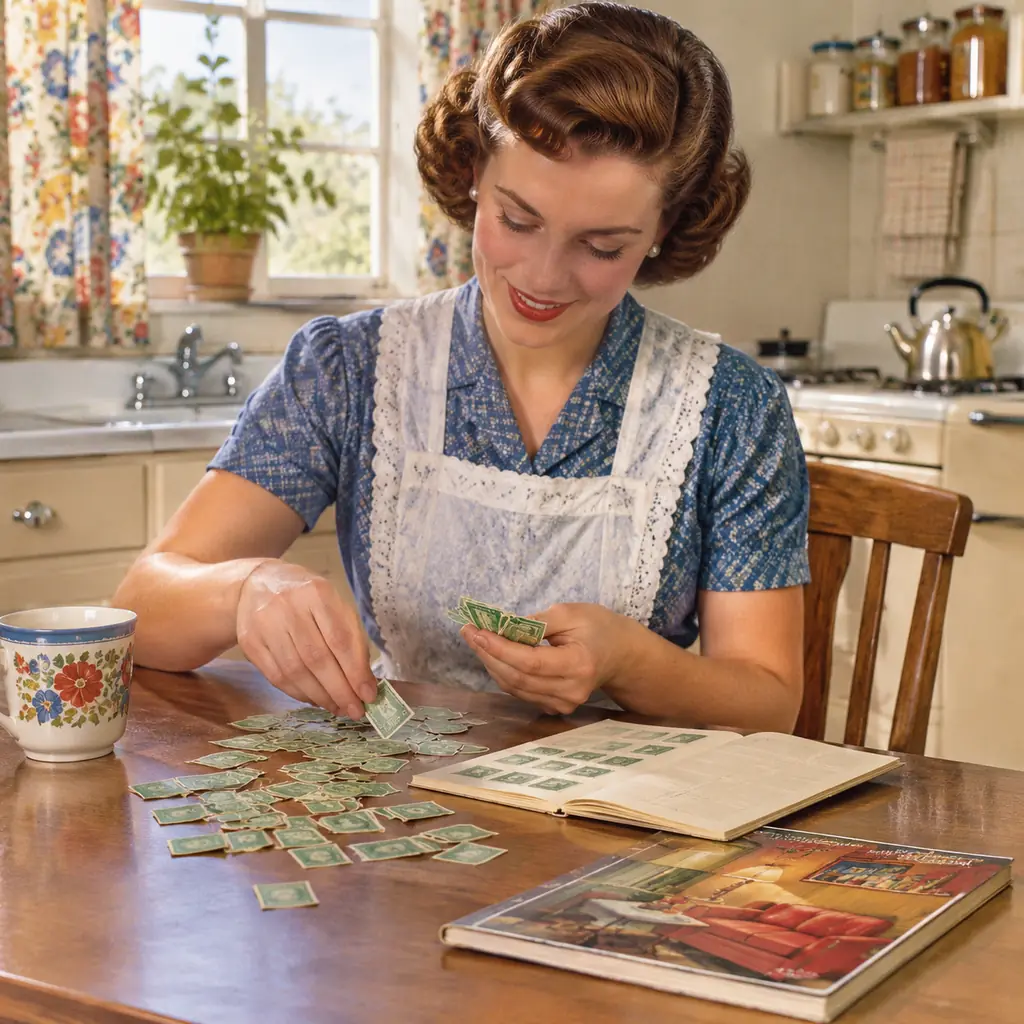
In February 1950, a Piggly Wiggly advertisement in Haskell, Texas, announced S&H Green Stamps with cash purchases. Shoppers were invited to obtain a merchandise catalog and collect toward rewards.
The shopping therefore continued after the bags reached home. Stamps needed keeping, and a household could compare what had been collected with the goods offered in the catalog.
The rewards did not appear without spending. The original advertisement shows how a store linked an ordinary food purchase to the prospect of a later household item.
Sources: The Haskell Free Press, February23,1950: S&H Green Stamp advertisement · Getting Something for Nothing: The History of Trading Stamps in the United States
Dinner could arrive in its own divided tray
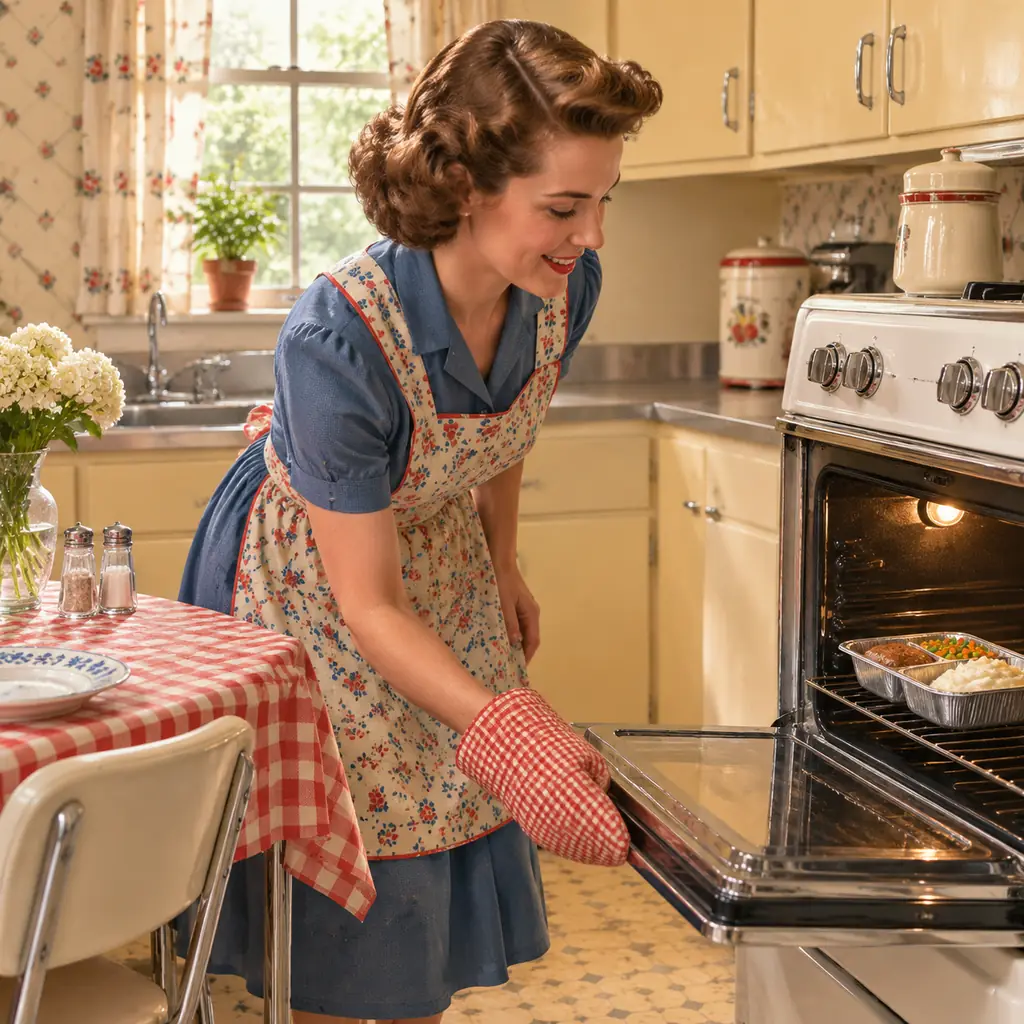
The compartments of an aluminum frozen-dinner tray kept the different foods apart while they heated together. The package supplied a prepared portion and a different sort of cleanup from a meal cooked in several pans.
Swanson helped make the TV dinner a mass-market success in 1954. The Library of Congress explains that earlier frozen meals existed and that accounts of a single inventor are disputed.
The important household change was practical. A freezer and oven could turn a packaged meal into dinner, while the family decided where and when to eat it. The previous decade’s shortages shaped a different set of wartime household decisions.
The car could become the family’s theater seats
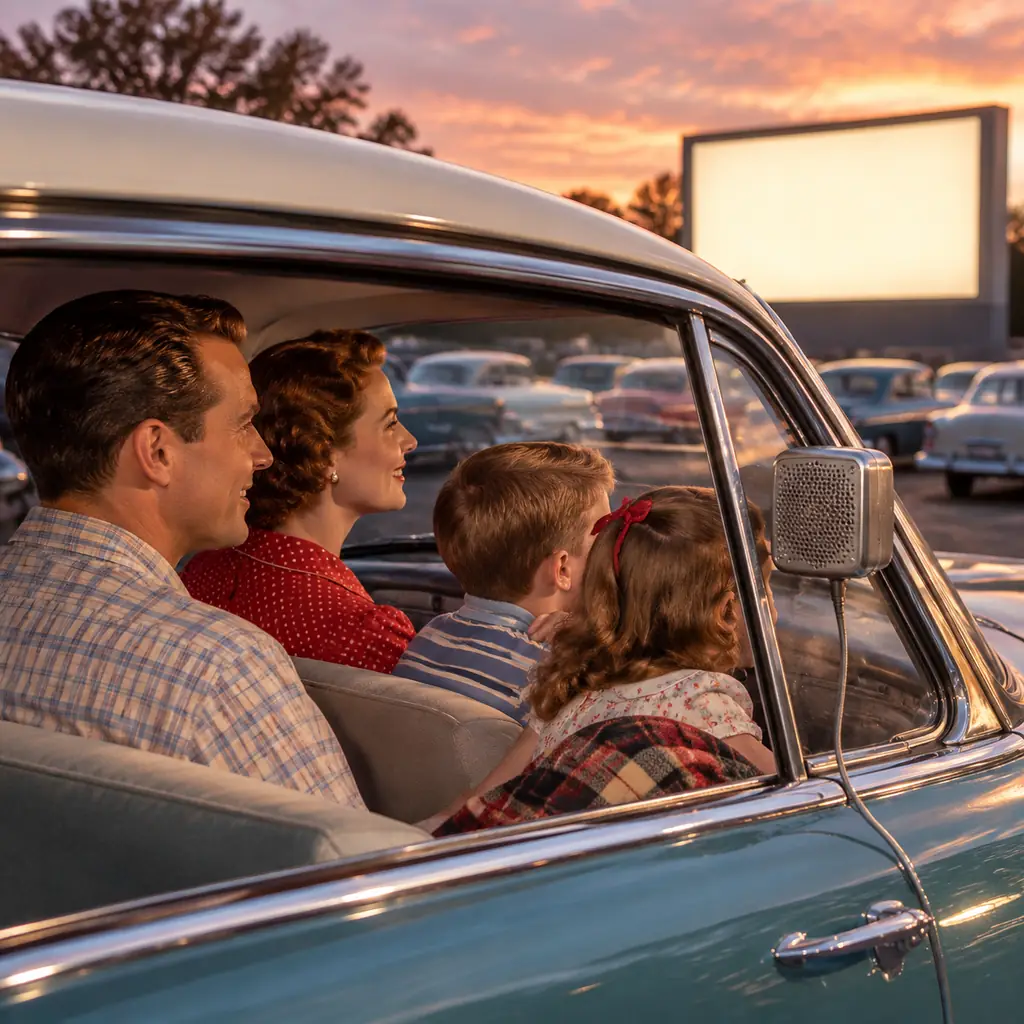
A drive-in outing began with the seats the family already owned. A car faced the screen, and a small wired speaker brought the soundtrack to the people inside.
The Henry Ford preserves drive-in speakers made between 1950 and 1965. Their metal housing and cable belong to an entertainment system built around parked vehicles rather than rows of indoor seats.
The arrangement still required household planning. Younger children might need blankets, the weather could change the evening, and someone had to remember the speaker before driving away.
Sources: The Henry Ford: Drive-in Theater Speakers,1950–1965
A pocket radio could create a little distance from the family
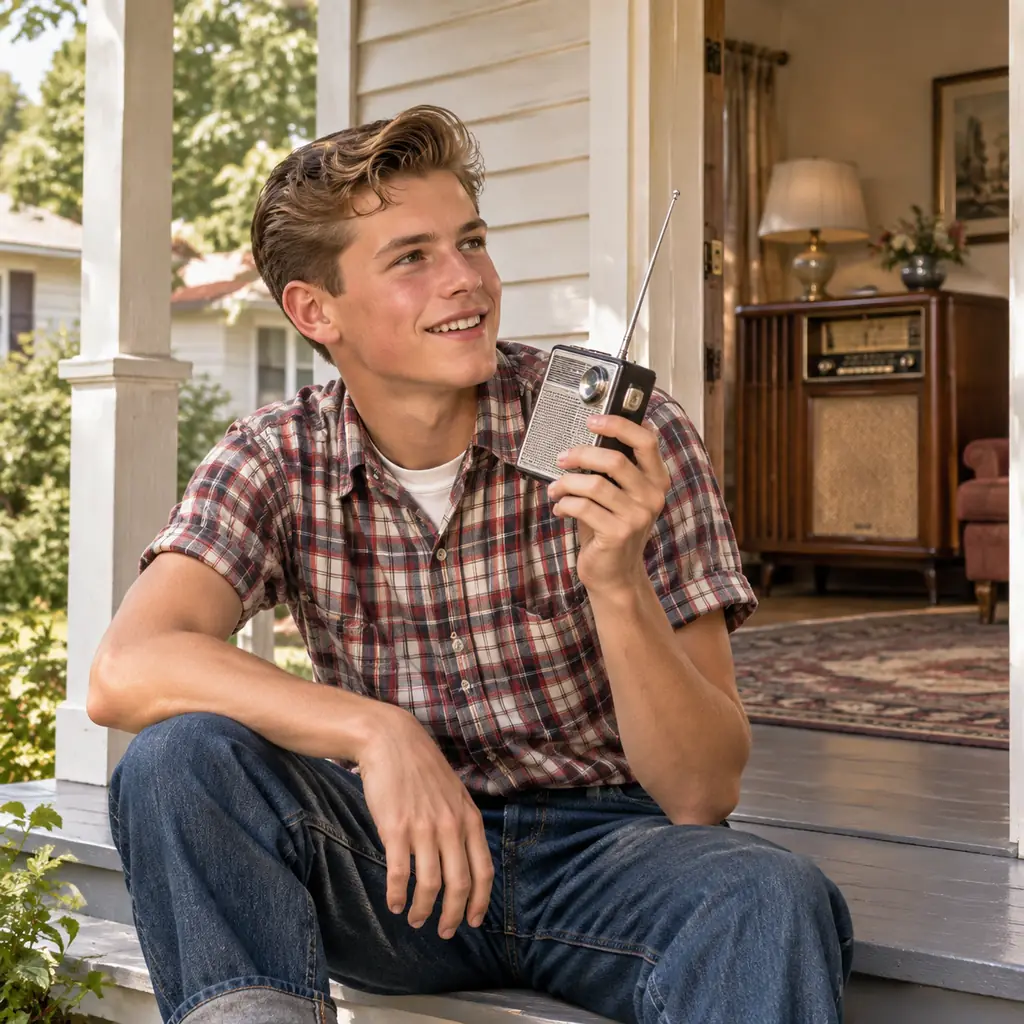
A small transistor radio let a listener carry a program away from the main household set. Music no longer had to come from one large cabinet in the shared room.
The Smithsonian’s Regency TR-1 dates to 1954, when the early commercial model reached stores. The object is small enough to make the change visible: a radio could travel with its owner.
It was not an instant purchase for every teenager or family. Where a portable set arrived, however, choosing what to hear could become a more personal decision. The ability to make personal choices also depended on the rules explored in American women’s everyday lives.
Sources: Smithsonian: Regency Model TR-1 Transistor Radio,1954
Library day could depend on a vehicle’s next visit
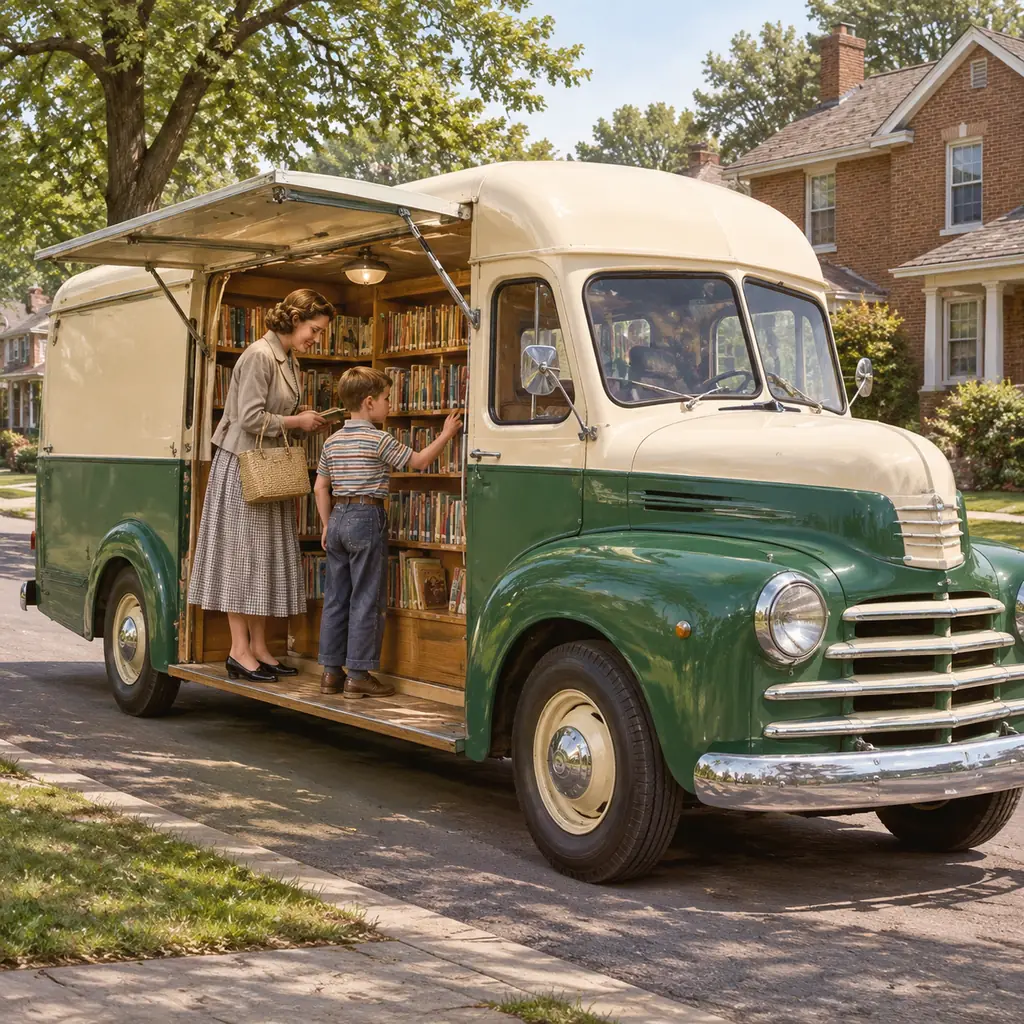
A family did not always travel to a library building to choose books. A bookmobile brought shelves and a small browsing space to scheduled stops.
Lorain Public Library preserves an early 1950s photograph of its green-and-cream vehicle. The library identifies it as most likely the bookmobile bought in 1951, rather than claiming that identification with complete certainty.
For the reader, access had a timetable. A book taken home needed to last until it could be returned or exchanged on another visit, and the available collection had to fit inside the vehicle.
Sources: Lorain Public Library System: Bookmobile in the 1950s
A television could reorganize the shared room
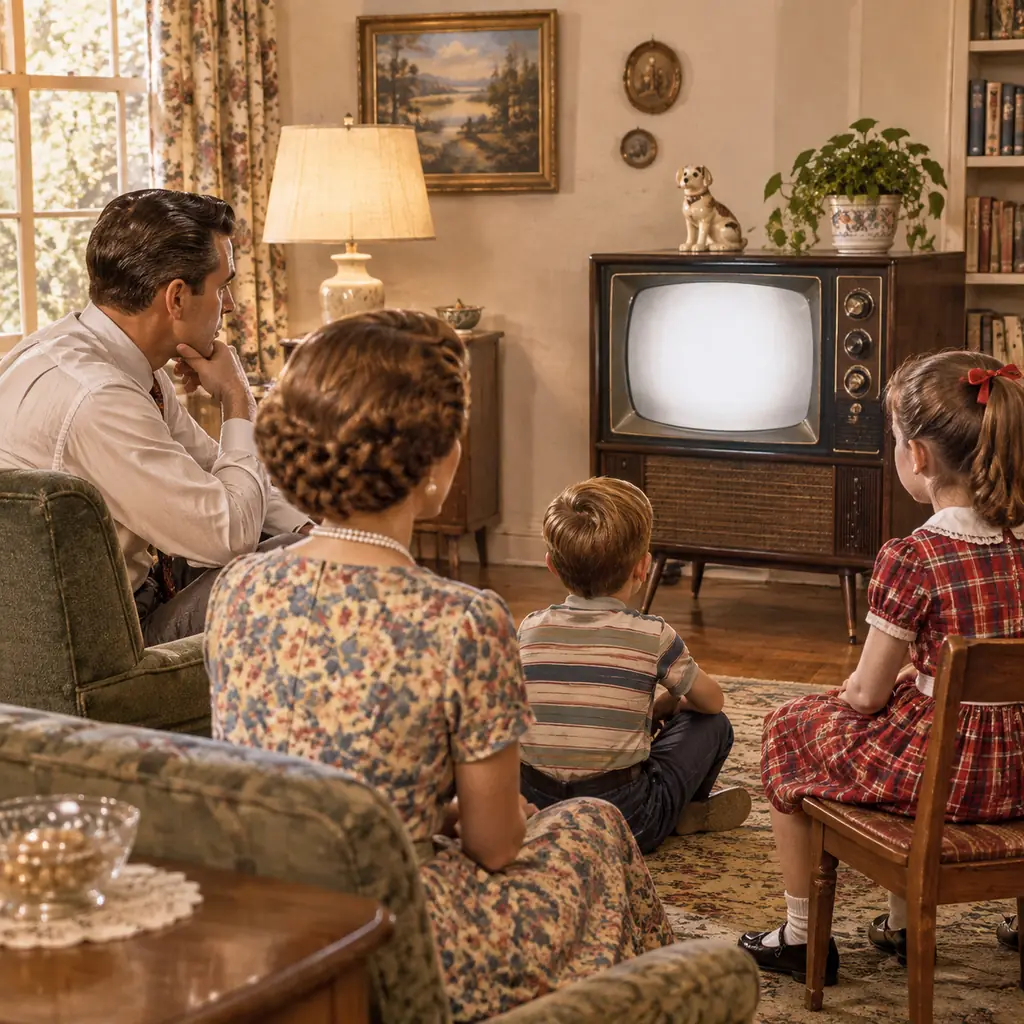
A television set asked the household to arrange itself around a small screen. A chair that had faced conversation could turn toward a cabinet, and a program’s starting time became a reason to finish another task.
The Census Bureau first collected television-ownership data in 1950, capturing a change that spread rapidly across the decade.
Its timing was uneven. Income, location, and reception affected when a family acquired a set, so a remembered 1950s living room might still revolve around a radio while another already had a nightly viewing routine. Earlier household purchases appear in the family life behind the Roaring Twenties.
Sources: US Census Bureau: Philo Farnsworth and the Invention of Television
Children could meet a toy on television before seeing it in a shop
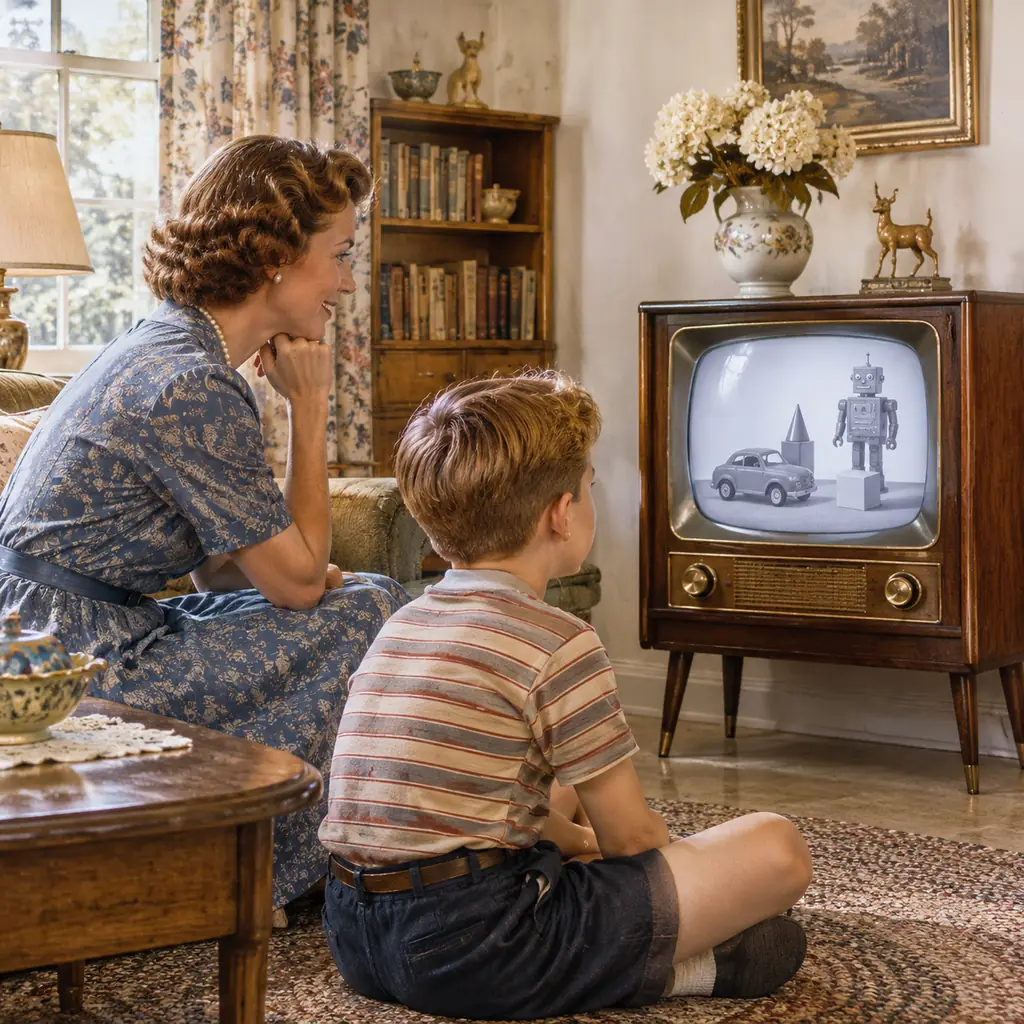
Television gave advertisers a way to show a toy doing something rather than leave it motionless on a shelf. Children could recognize a product before their parents took them to a store.
Programs such as Disneyland, introduced in 1954, and The Mickey Mouse Club, launched the following year, helped make scheduled viewing part of childhood.
The household consequence could arrive afterward as a request for a birthday or Christmas present. Recognition did not make the toy affordable, but it gave children another source of ideas about what they wanted. A home had taken on still other jobs in the household life of the 1910s.
Sources: National Park Service: Play in Post-World War II America
A comic book could start an argument about safety
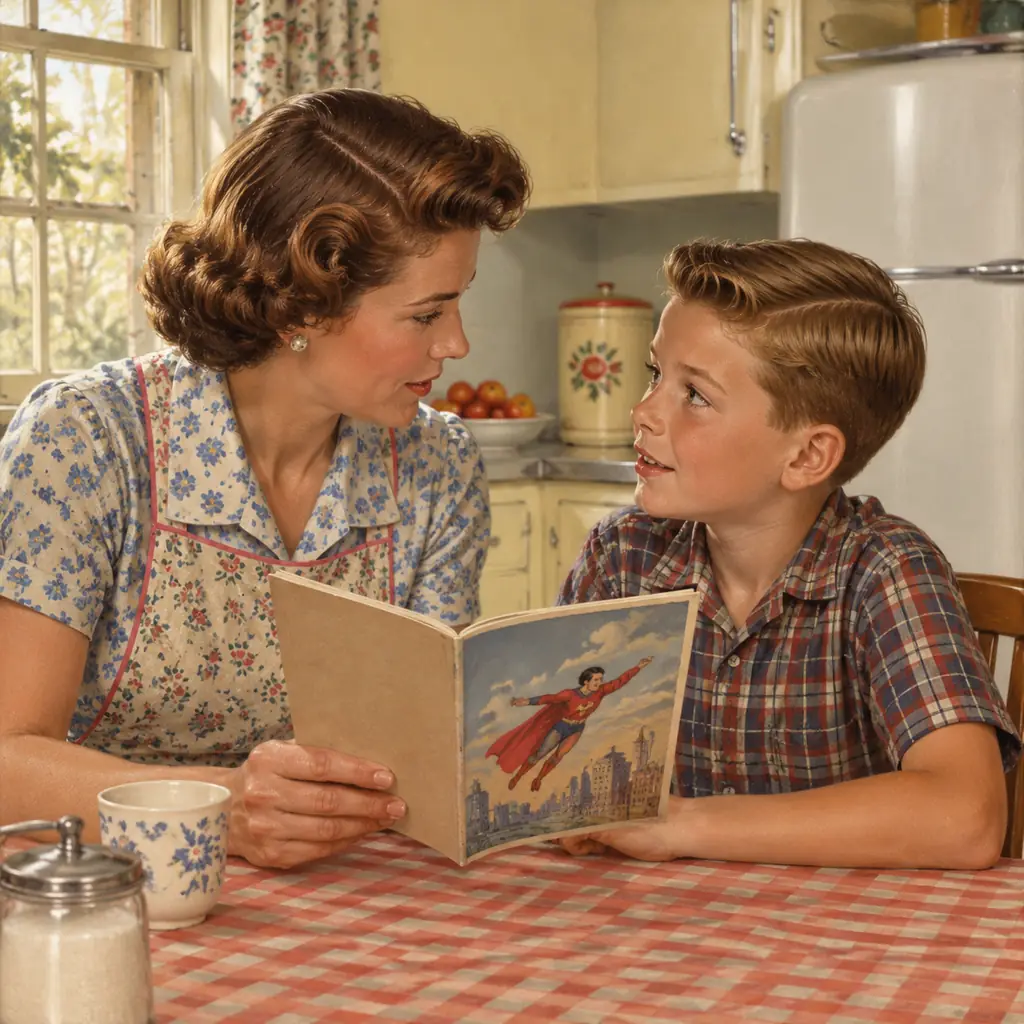
A comic brought home for entertainment could become something adults wanted to inspect. Concerns about crime and horror comics reached a Senate investigation in 1954.
The National Archives preserves the investigation’s documents and examples. The hearings show a public controversy about what children read; they do not establish that comic books caused delinquency.
Inside a family, the question could be simpler and more personal: was this issue allowed in the house? The debate belongs beside television and toys in the decade’s household life, rather than outside it as a separate political story.
Sources: National Archives: The 1954 Senate Comic-Book Investigation
Moving into a house did not guarantee being welcomed
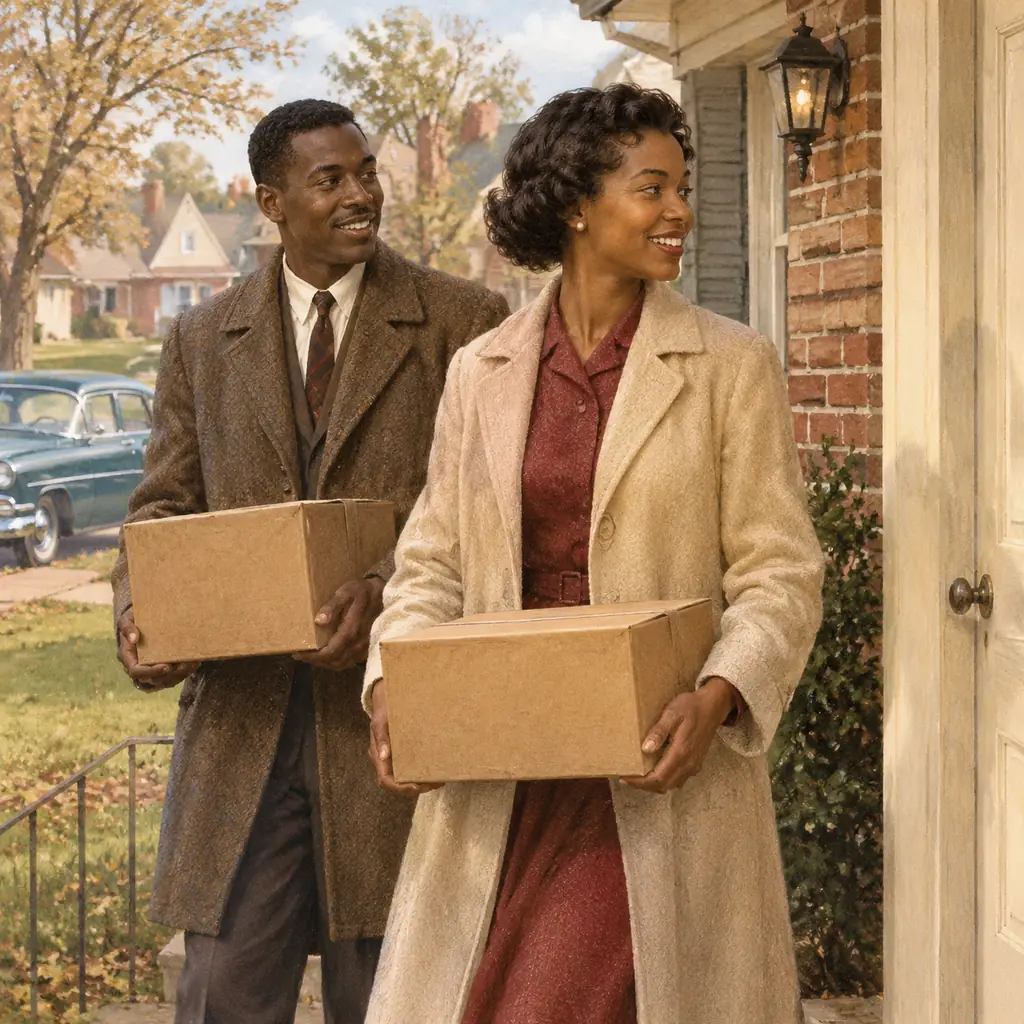
William and Daisy Myers bought a home in Levittown, Pennsylvania, in 1957. Their arrival in a previously all-white development brought racist harassment and violence rather than an ordinary introduction to the neighbors.
Pennsylvania’s historical records preserve letters and accounts of the episode, including the state’s response. The Myers family’s experience shows what the polished suburban picture left outside its frame.
A yard and a house key did not provide equal security to every family. For some, establishing an ordinary home required confronting people determined to prevent it. Another familiar picture becomes more specific in these accounts of 1930s family routines.
Sources: Pennsylvania Historical and Museum Commission: Civil Rights and Integration in Levittown,1957
A nearby school could still be a contested destination
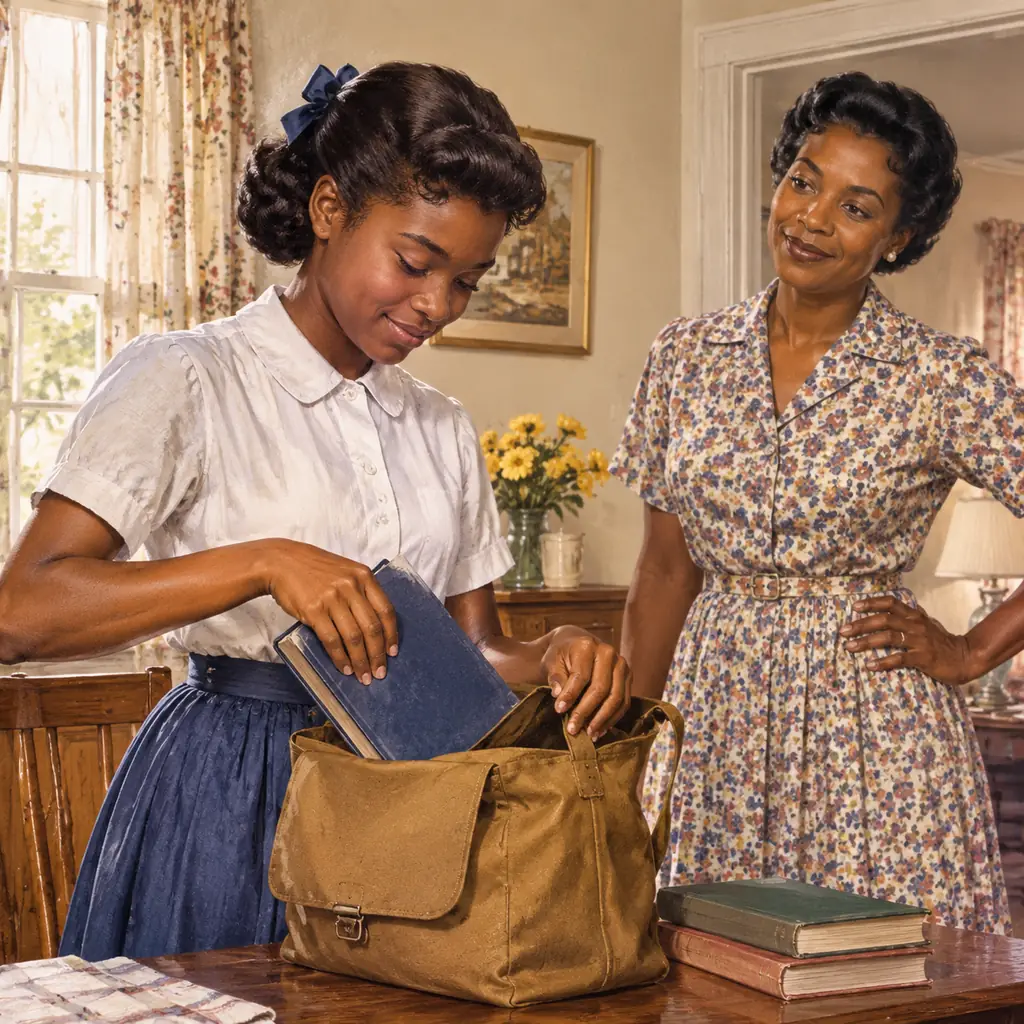
The Supreme Court’s 1954 Brown decision rejected racial segregation in public education, but it did not make every school equally accessible overnight.
In 1957, the Little Rock Nine faced organized opposition while integrating Central High School. For their families, the route to an ordinary classroom carried pressures that another child’s school-day memory might never include.
The contrast belongs within family life itself. Getting dressed, packing lunch, and leaving for class could require courage and preparation as well as the familiar morning reminders.
Sources: National Archives: Brown v. Board of Education,1954 · National Park Service: The Little Rock Nine
The family road map needed a second book beside it
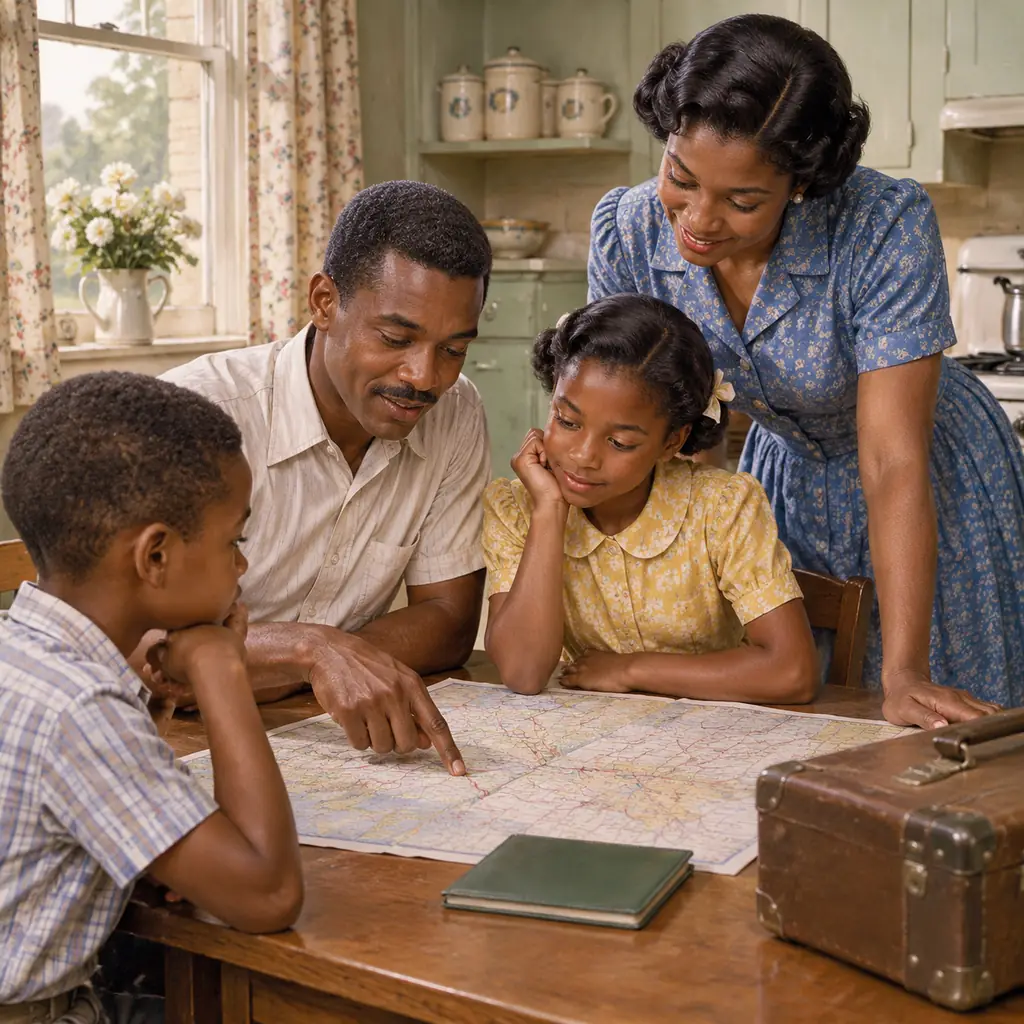
For Black motorists, choosing a route could also mean identifying where the family would be served. The Green Book supplied information about lodging, food, and other businesses during segregation.
The guide’s 1950s editions belonged to the same decade as expanding car travel and roadside attractions. The freedom associated with the family car was therefore not the same for everyone.
Planning could include a safe place for the next meal or night’s sleep before anyone loaded a suitcase. A map showed the road, while the guide answered a different household need. For an earlier view of what a family kept inside its home, explore everyday life in the 1890s.
Sources: National Park Service: Route66 and the Historic Negro Motorist Green Book