A father could give up new shoes, and a family letter could cross the ocean on film.
These wartime routines show how American households managed shortages, work, and separation, with very different choices available to different families.
A father could give up new shoes for his children
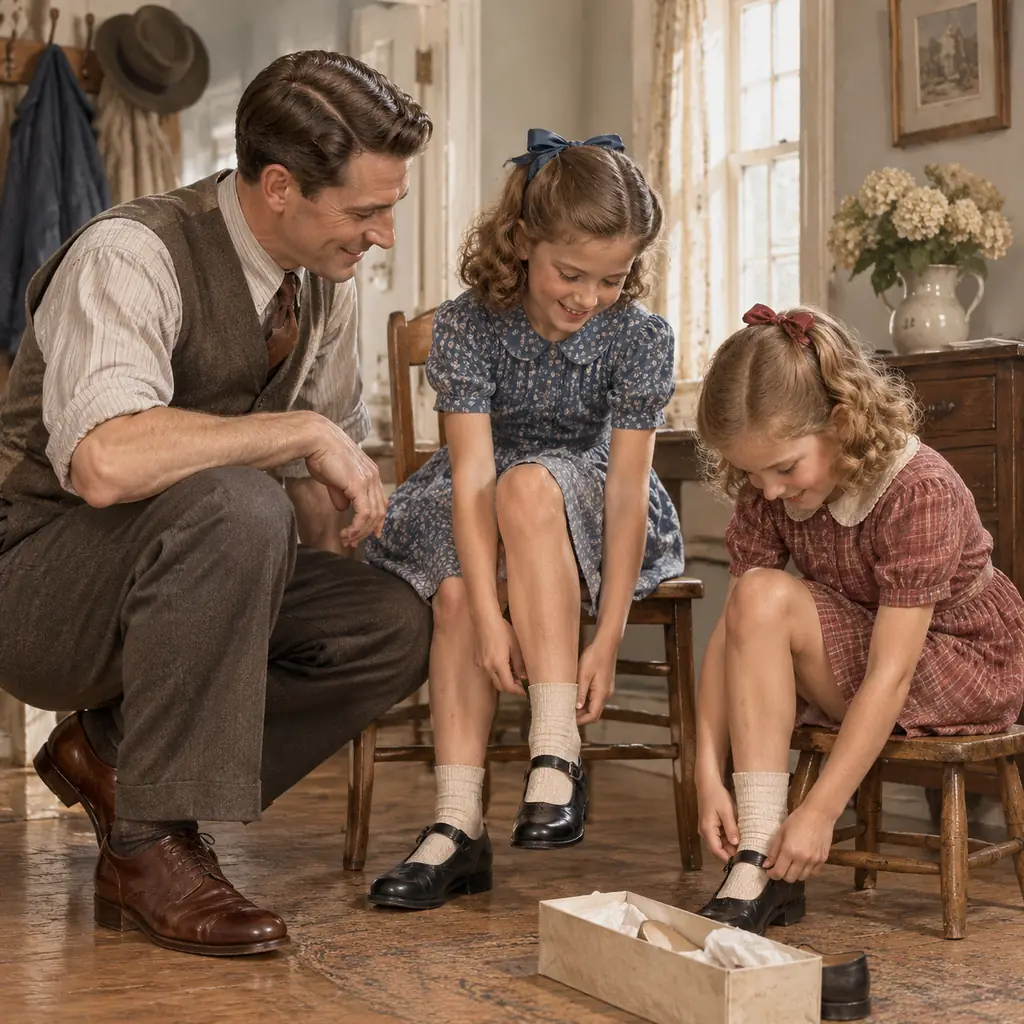
Christine Crist remembered that her father went without a new pair of shoes throughout the war. In her family, the chance to replace footwear went instead to two younger daughters whose feet were still growing.
Her recollection, recorded in 1990 and preserved by Dickinson College, turns shoe rationing into a family decision. Keeping an adult’s old pair going could matter more than its appearance when a child could no longer fit into hers.
It is one household’s account, rather than a rule that every father followed.
Sources: Dickinson College: Christine Crist’s World War II oral history
Some women painted their legs when stockings disappeared

A stocking shortage could change the final step of getting dressed. Crist recalled women using leg paint when nylon stockings became difficult to obtain during the war.
The aim was to keep a familiar finished appearance without the actual hosiery. Her account also describes students quietly asking about nylons after buying another item at a shop that had obtained a supply.
This was not the experience of every woman. It shows how an ordinary expectation about looking presentable could survive after the material needed to meet it had become scarce.
Sources: Dickinson College: Christine Crist’s World War II oral history
A family letter could cross the ocean on film
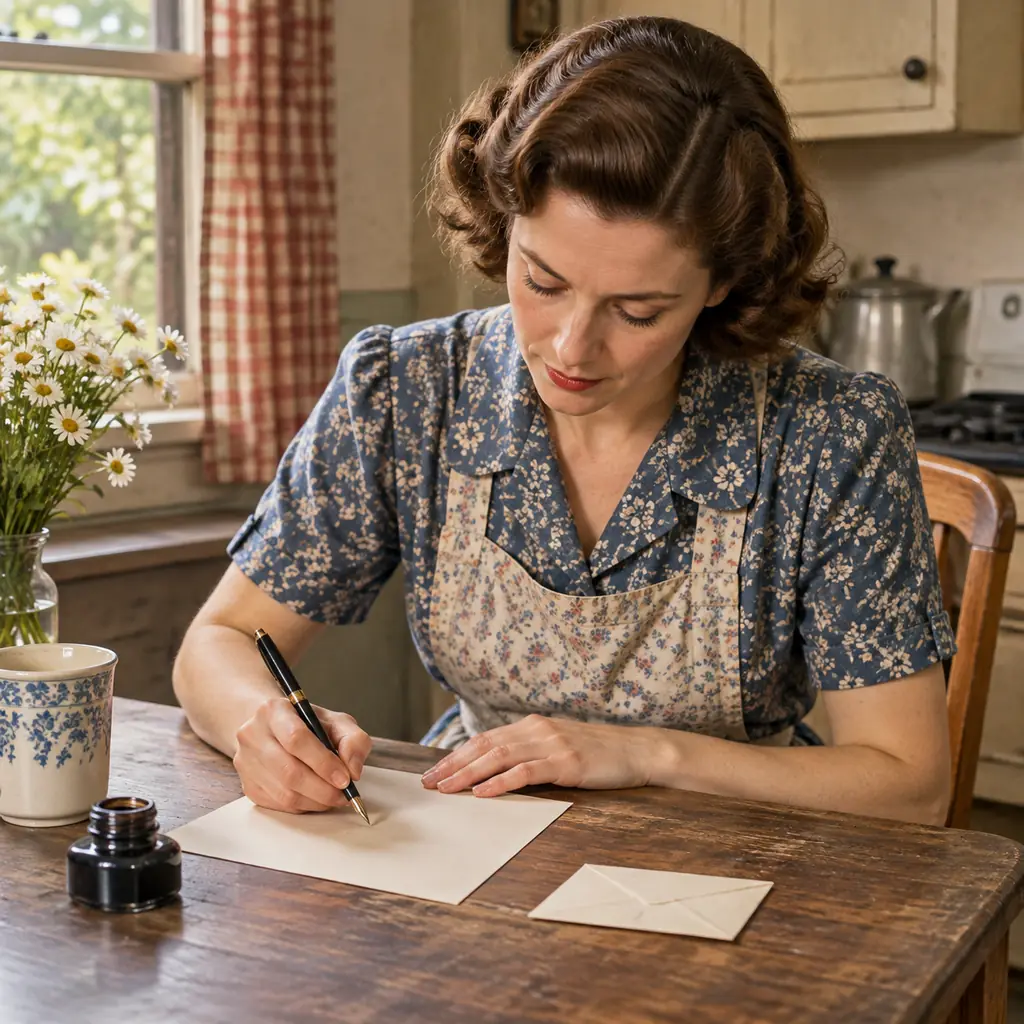
A V-Mail sheet offered only a small space for a message, but its journey involved more than an envelope. Postal workers could photograph the completed letter onto microfilm, send the film overseas, and produce a paper copy at the other end.
The recipient saw the writer’s handwriting in a reduced reproduction. The original sheet had not simply traveled through the same route.
For families, the space-saving system meant fitting news, affection, and reassurance onto a form designed for a crowded wartime transport network.
Cash was only one of the two shopping budgets
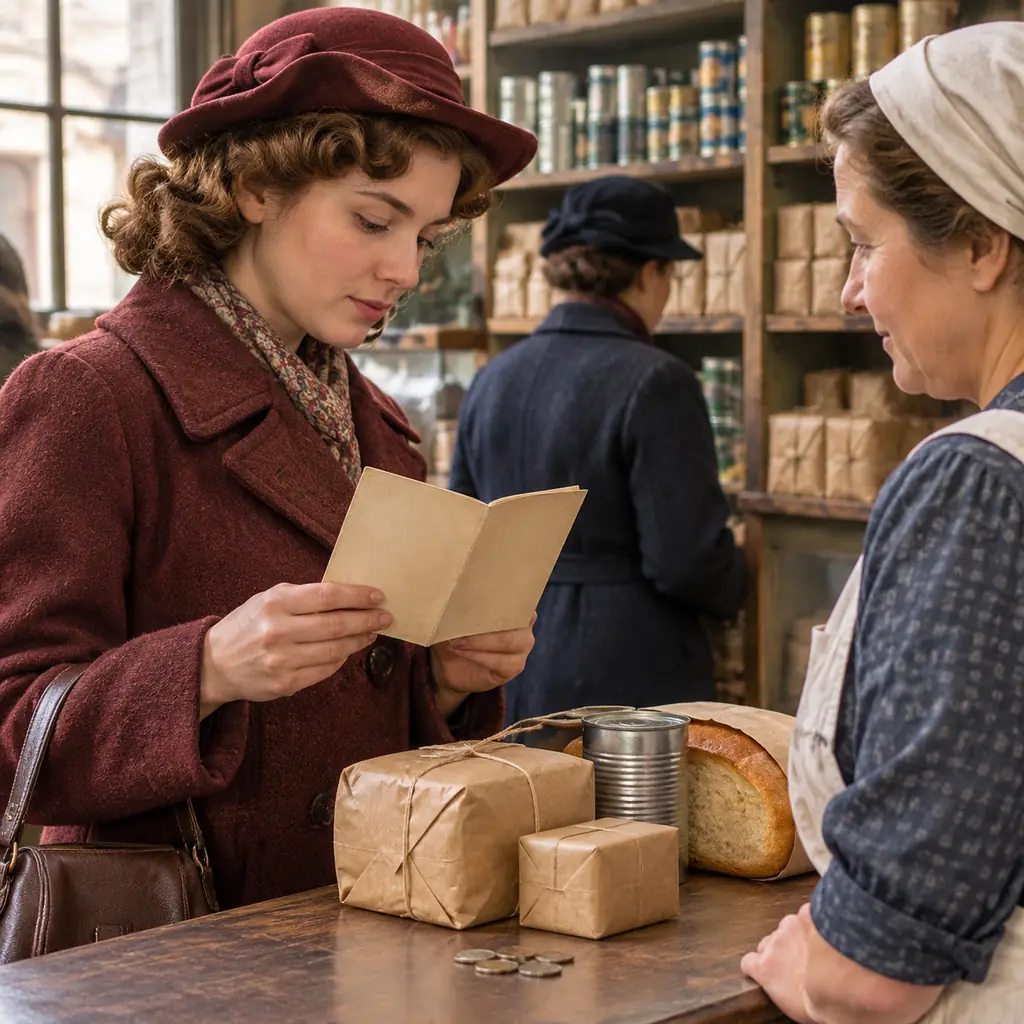
A shopper could have enough money for a purchase and still be unable to take it home. For rationed foods, the transaction also required the appropriate stamps or points.
That made a shopping list a calculation in two currencies. A cheaper cut of meat did not automatically solve a shortage of points, and the household needed to keep track of which stamps were valid.
The arrangement reached into meal planning. The food that fitted the cash budget was not always the food that fitted the ration book.
Sources: National Park Service: Food Rationing on the World War II Home Front
Tiny tokens came home with the grocery change
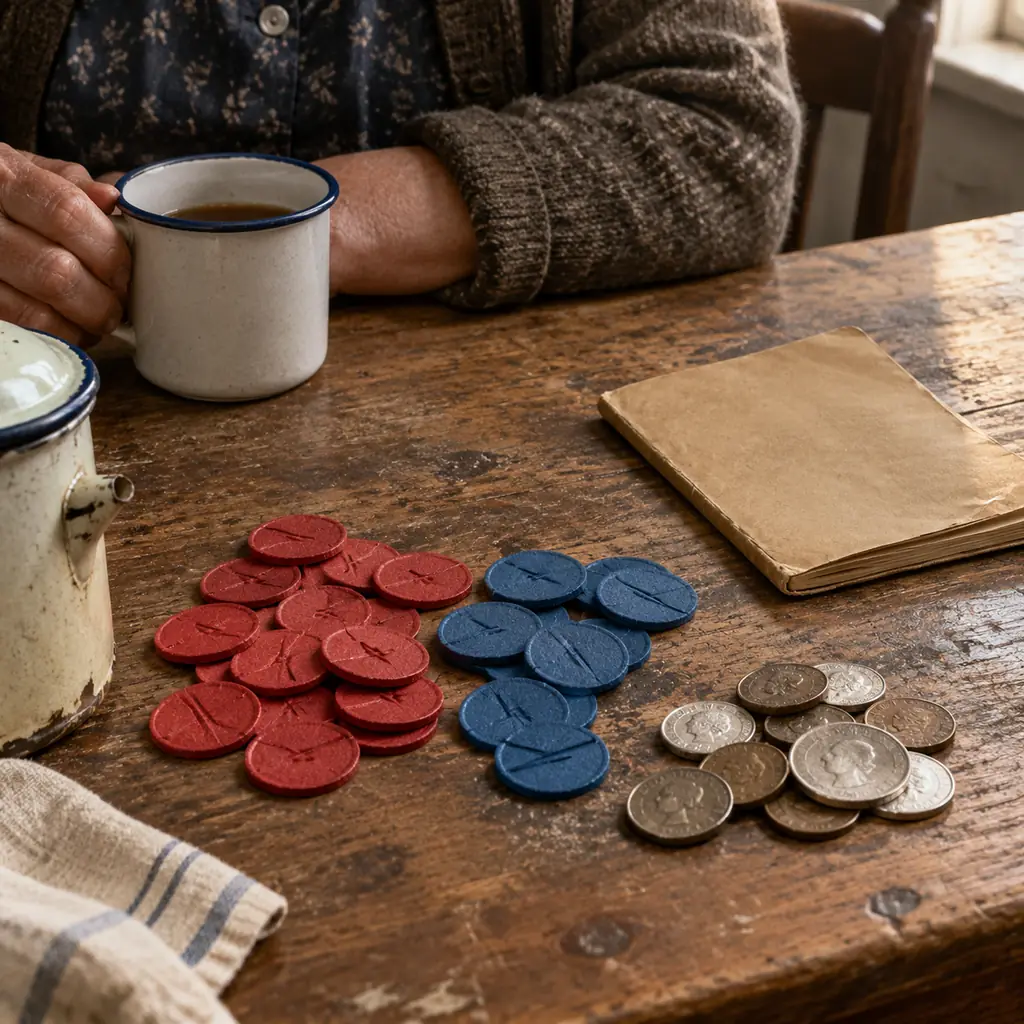
Red and blue ration tokens could sit beside coins in a purse or kitchen drawer. They helped shopkeepers give change in the food-point system, rather than serving as ordinary money.
The Office of Price Administration’s surviving record preserves these small pieces of wartime administration. A shopper needed to recognize which balance belonged to the household’s dollars and which belonged to its ration points.
A token was easy to misplace because it was so small. Its practical importance depended on the next purchase the family needed to make.
Sources: Office of Price Administration: Rationing in World War II, 1946
Childcare could follow the hours of a war job
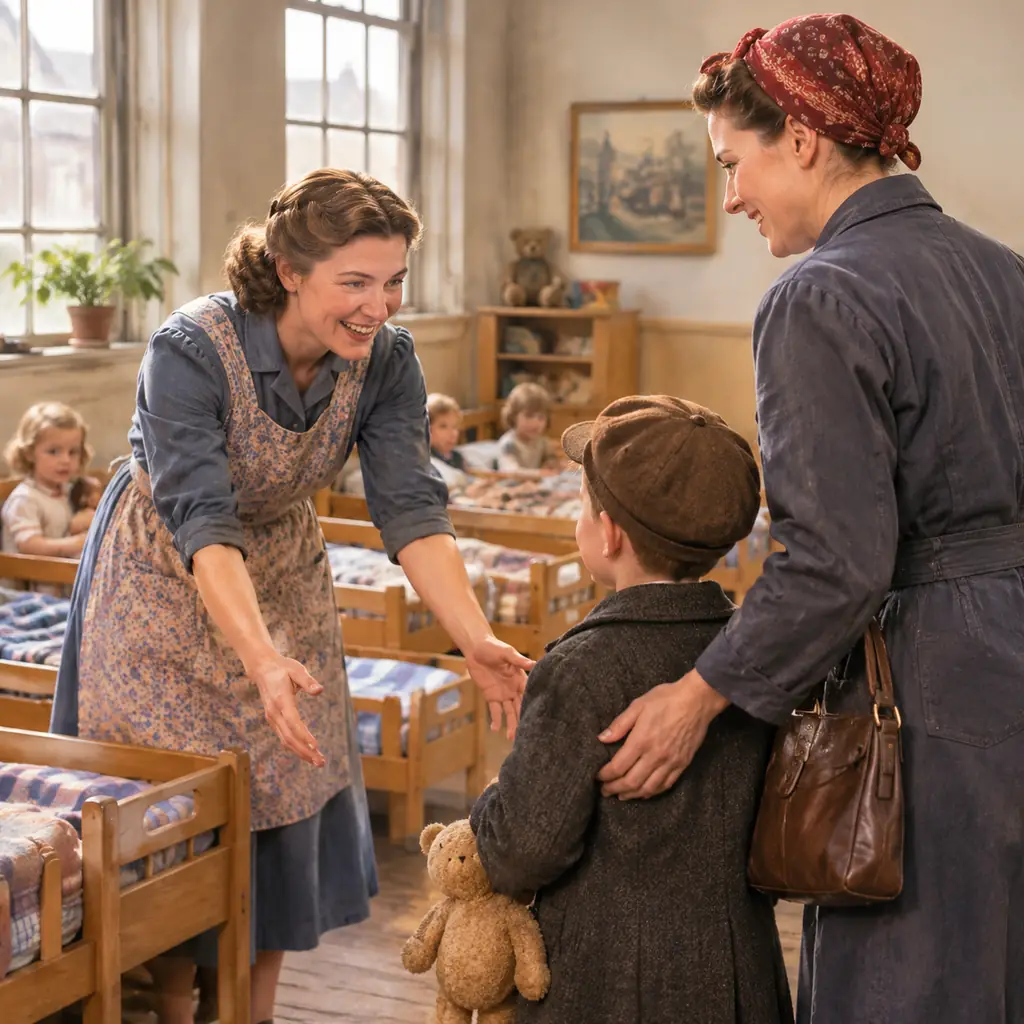
A factory job did not provide an answer to who would watch a young child. Some wartime communities used Lanham Act support to establish childcare centers for working parents.
The centers could provide meals, activities, and a place to rest while a parent worked. For a family with a place, the day acquired a new route between home, the center, and the workplace.
The program was neither available everywhere nor a guarantee of care for every child. Access could decide whether taking a job was practical at all.
Sources: National Park Service: Childcare on the World War II Home Front
Dinner could come home from the childcare center
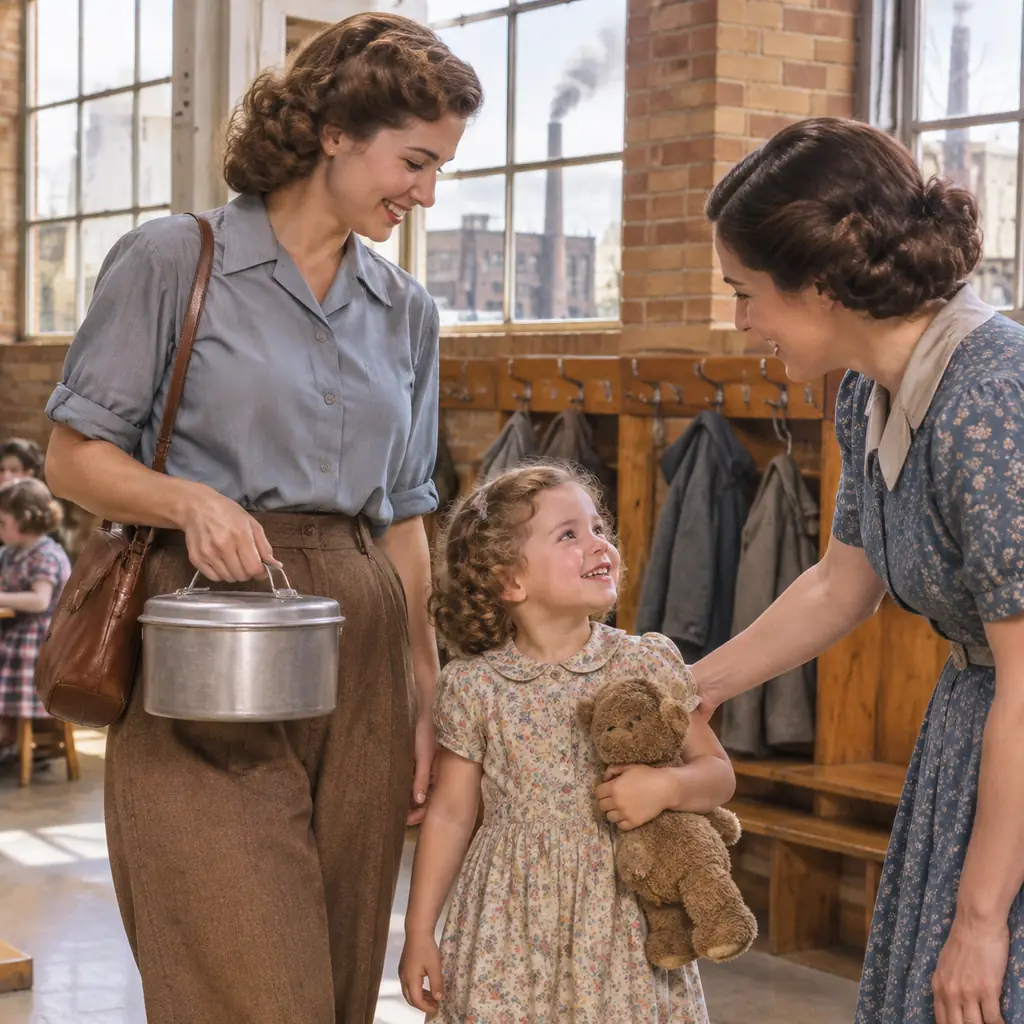
Some Kaiser childcare centers did more than care for children during a shift. Their Home Service Food program offered hot dinners that women could collect when they picked up their children.
That service joined two household tasks at the same stop. A parent could leave work, collect a child, and bring home a meal instead of beginning all the cooking after arriving.
It was a particular wartime program, not a standard service in every American nursery. Its design acknowledged how much work still awaited an employed parent at home. Earlier wartime campaigns also reached the kitchen in household life during the 1910s.
Sources: National Park Service: Childcare on the World War II Home Front
Cooking fat could make a second trip to the butcher
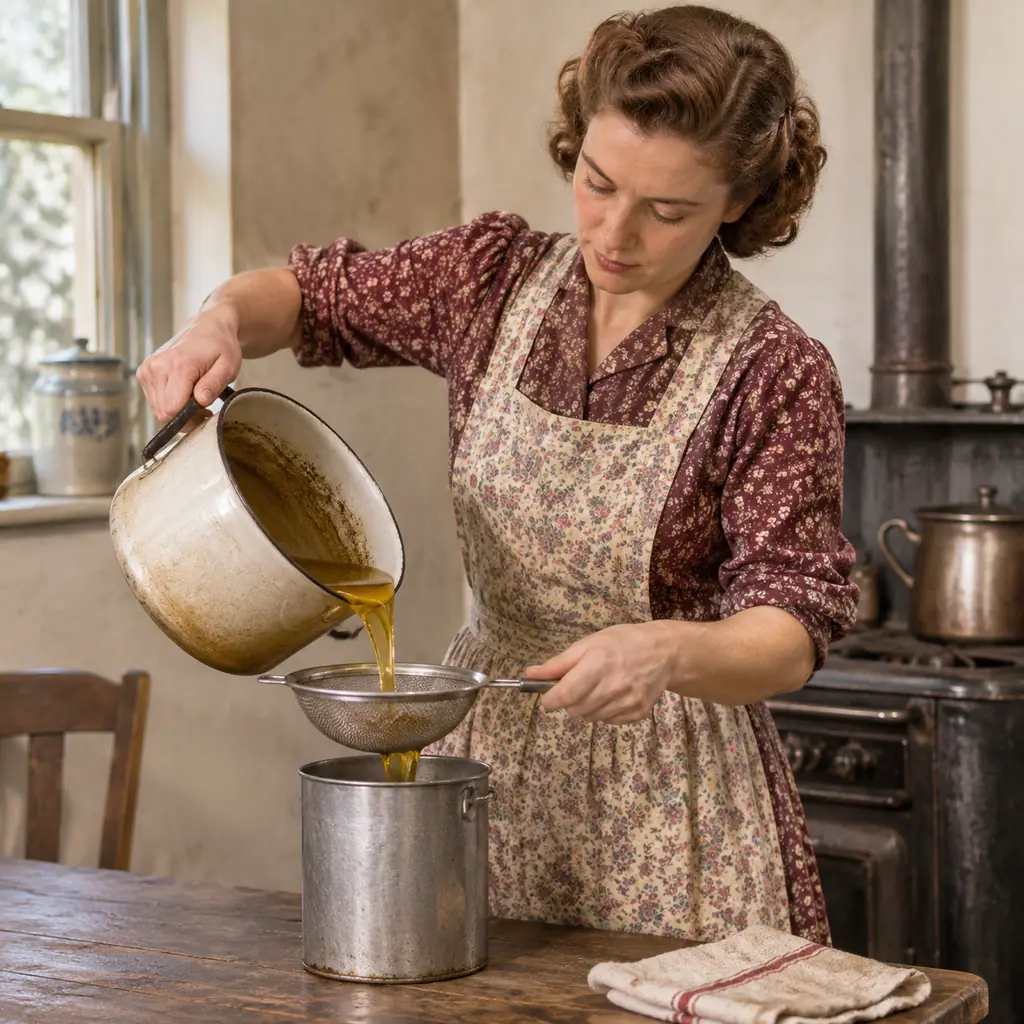
A jar of strained kitchen fat could become something to take back to a shop. Wartime collection campaigns asked households to save fats left from cooking and turn them in to butchers.
The collected material had industrial uses. The campaign also offered payments and ration-point incentives, linking a greasy kitchen leftover to the larger materials drive.
Keeping the fat required another small routine after a meal. Someone had to save it, find a container, and remember to carry it out rather than simply discard it.
Sources: National Park Service: Material Drives on the World War II Home Front
A feed sack could be selected for its next use
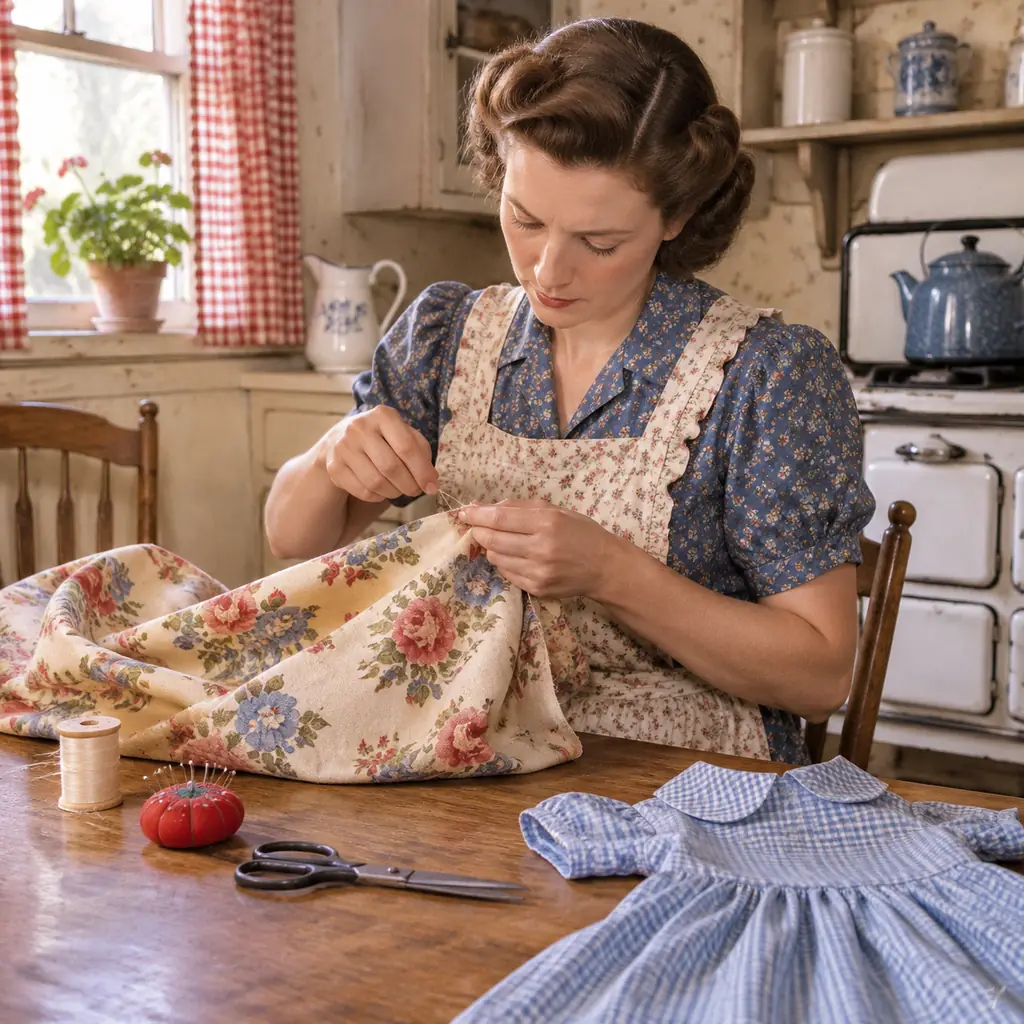
Printed cotton sacks carried feed, flour, and other goods, but their usefulness did not end when the contents ran out. Rural households could unpick the seams and turn the cloth into aprons, children’s clothes, curtains, or pillowcases.
The print mattered if several sacks were needed for one project. Matching a pattern could become part of buying something that originally had nothing to do with clothing.
The practice began before the war and continued afterward. It belongs to a longer household history of making usable material last. The following decade brought its own private concerns to American family life.
Sources: South Dakota Agricultural Heritage Museum: Sewing with Cotton Bags
Tires could be valuable enough to record their numbers
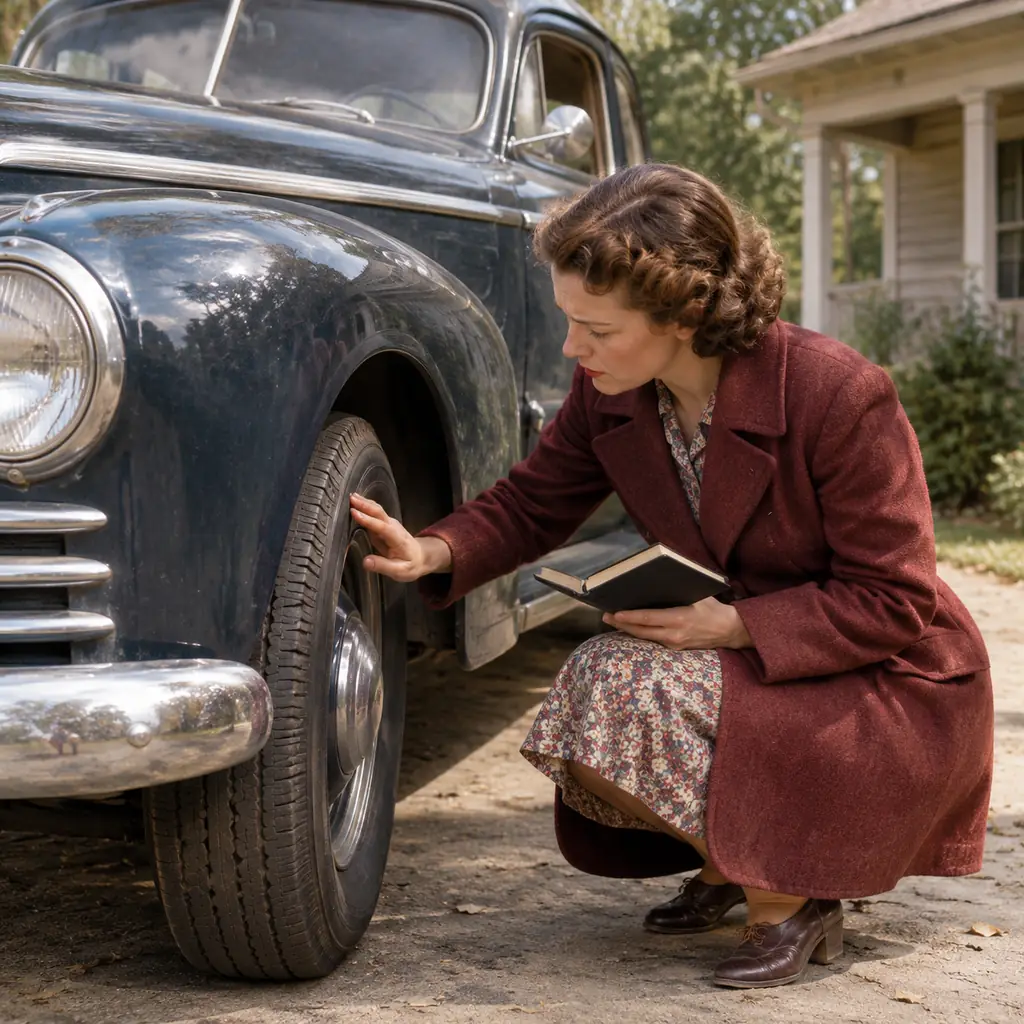
A usable tire was not merely a replaceable part during wartime rubber shortages. The National WWII Museum notes that ration boards advised motorists to record tire serial numbers in case the tires were stolen.
That advice makes the household stakes clear. Owning a car did not mean being able to replace worn equipment whenever money was available.
Families had reasons to combine errands, protect the tires already fitted, and think carefully about unnecessary driving. The car’s condition could place limits on plans before the gasoline calculation even began.
Sources: National WWII Museum: Rationing
A garden became another household food job
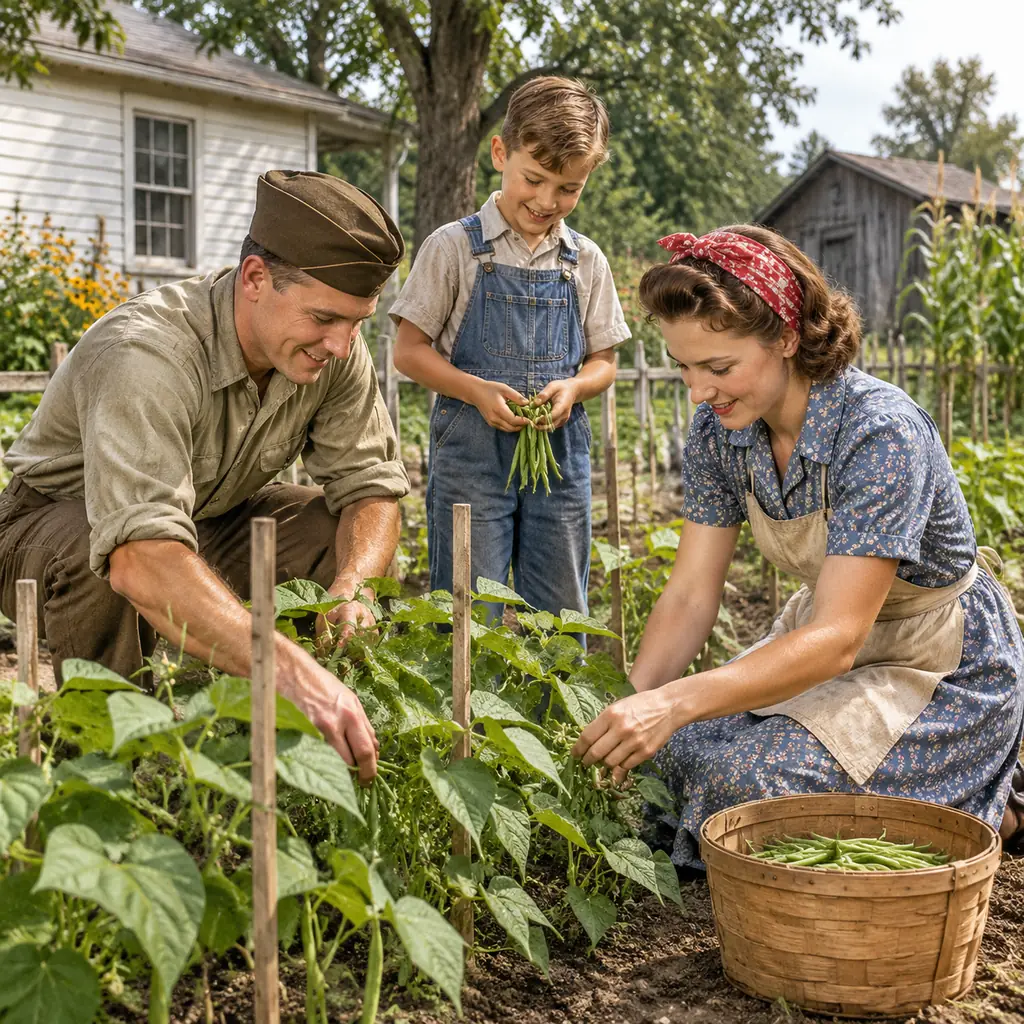
A victory garden could move part of the food supply into a backyard, school plot, or community space. The harvest helped households obtain fresh produce while rationing and wartime transport needs affected the stores.
The vegetables came with work that could not always wait. Seeds needed tending, weeds kept growing, and a ripe crop required picking whether the gardener had finished the day’s other tasks or not.
Gardens varied in size and success. A photograph of a full basket shows the result, while the daily care remained less visible. Resourcefulness also appears throughout the household routines of the 1930s.
Sources: National WWII Museum: Victory Gardens, Food for the Fight
Children could bring the materials drive into the house

Collection campaigns gave an old newspaper stack or discarded piece of metal a new destination. Children took part in drives that gathered materials for reuse during the war.
The requested material changed from one drive to another. A household might need to separate paper, metal, or rubber instead of treating everything as one pile to throw away.
The work could turn clearing a shed or carrying bundles into a shared neighborhood activity. It also made the war present in ordinary cupboards, yards, and school routines.
Sources: National Park Service: Material Drives on the World War II Home Front · Library of Congress: Wartime Saving and Collection Campaigns
A stamp album made a child’s war saving visible
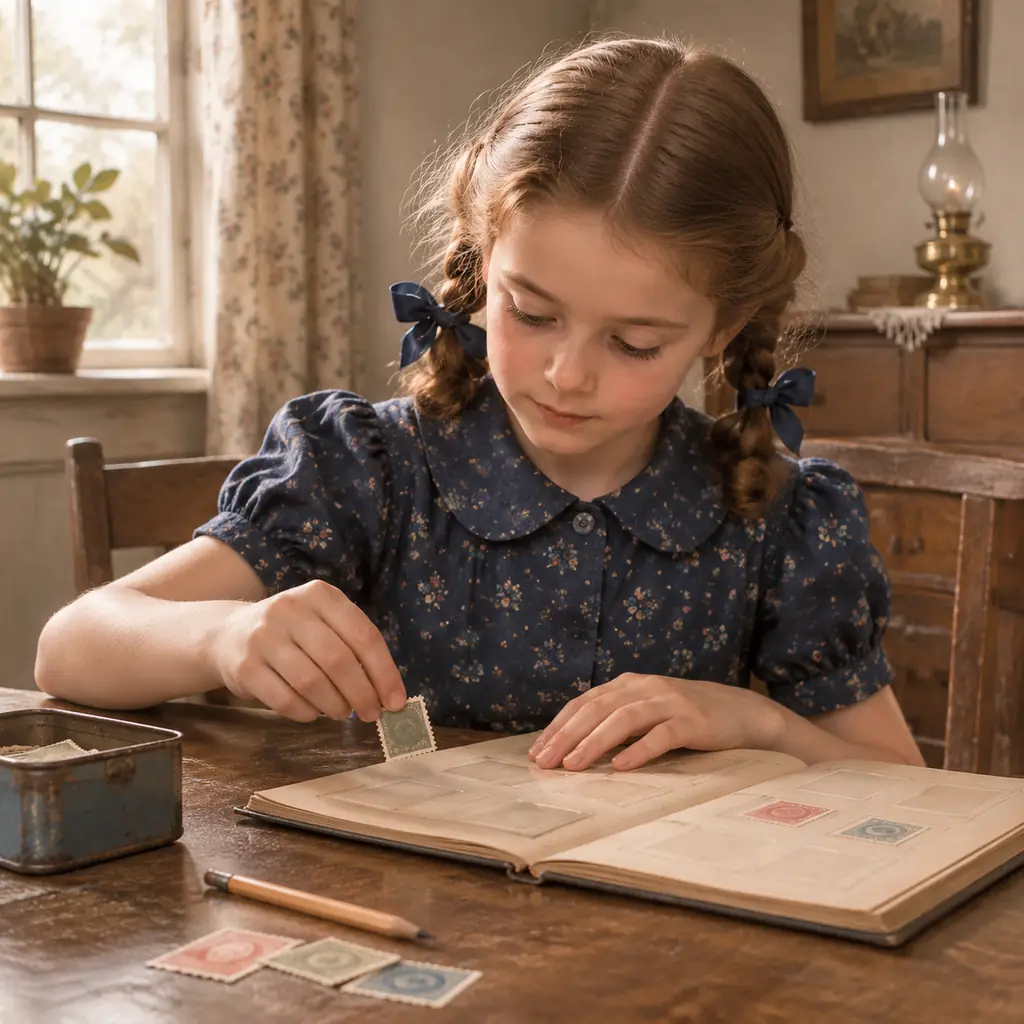
War savings stamps let children contribute smaller amounts toward the bond campaigns. An album recorded the gradual saving in spaces that could be filled over time.
The Library of Congress preserves posters that encouraged boys and girls to participate. The appeal connected an allowance or another small sum to the national war effort.
For a child, the half-filled album could make the process tangible. It was different from immediately buying a whole bond, and the family still had to decide what money could be spared.
Sources: Library of Congress: Wartime Saving and Collection Campaigns
A war job could arrive before suitable housing did
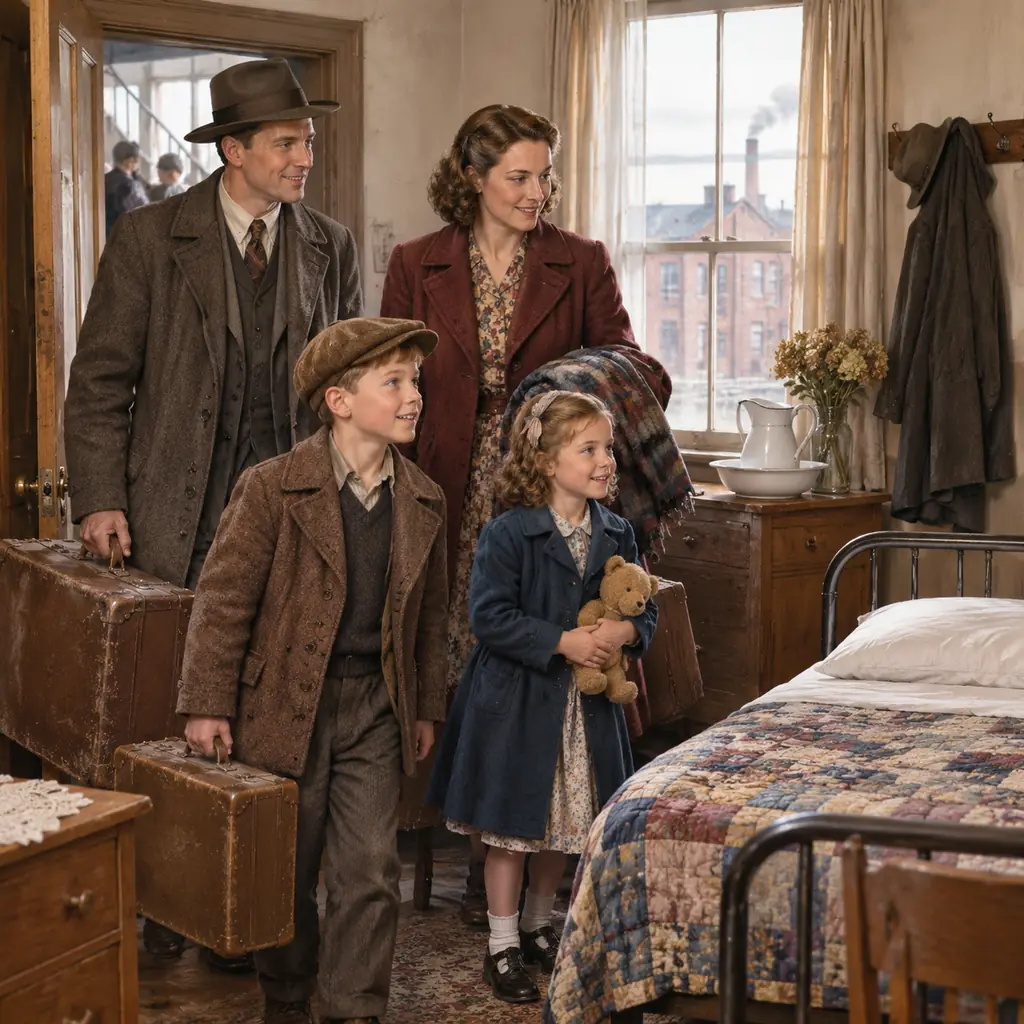
War industries drew workers and their families toward production centers. A new job could be available before a comfortable place to live, leaving people in crowded or temporary accommodation.
The household then needed to make space for sleep, belongings, and children within rooms that might already serve several purposes. A wage did not instantly produce privacy.
The National WWII Museum’s account of mobilization places this movement beside the factory story. For the family arriving with suitcases, the immediate question was where everyone would stay. Working women’s choices involved other restrictions discussed in this history of everyday decisions.
Some families lost the right to stay at home
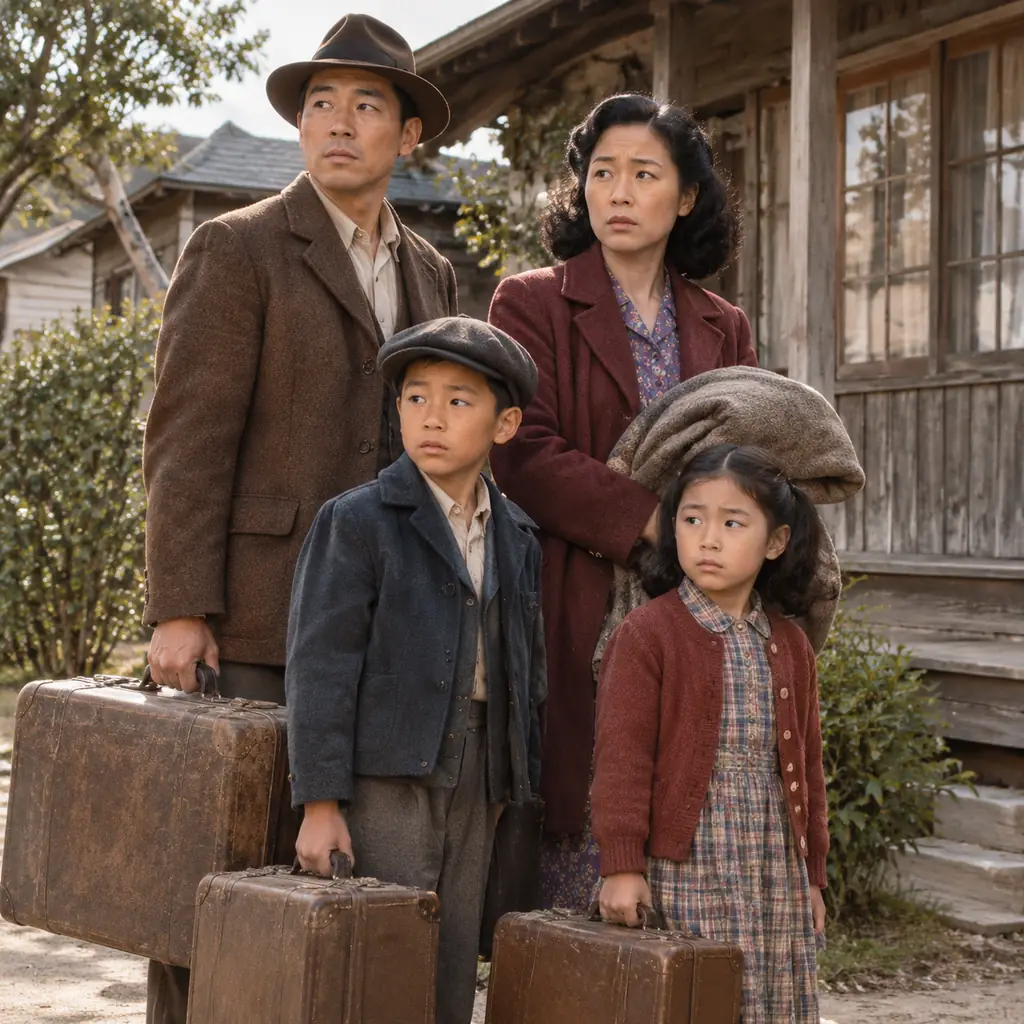
For Japanese American families removed from the West Coast in 1942, the disruption was imposed by the government. Forced removal and incarceration meant leaving homes, businesses, farms, and familiar neighbors.
Family life continued in confinement, but choices about space, meals, and privacy were restricted by camp conditions. This was not an ordinary move made to find better work.
Photographs and orders preserved by the National Archives show why a picture of wartime home life cannot include only families who remained free to organize their own homes.
Sources: National Archives: Japanese-American Incarceration During World War II
A road trip required information beyond the map
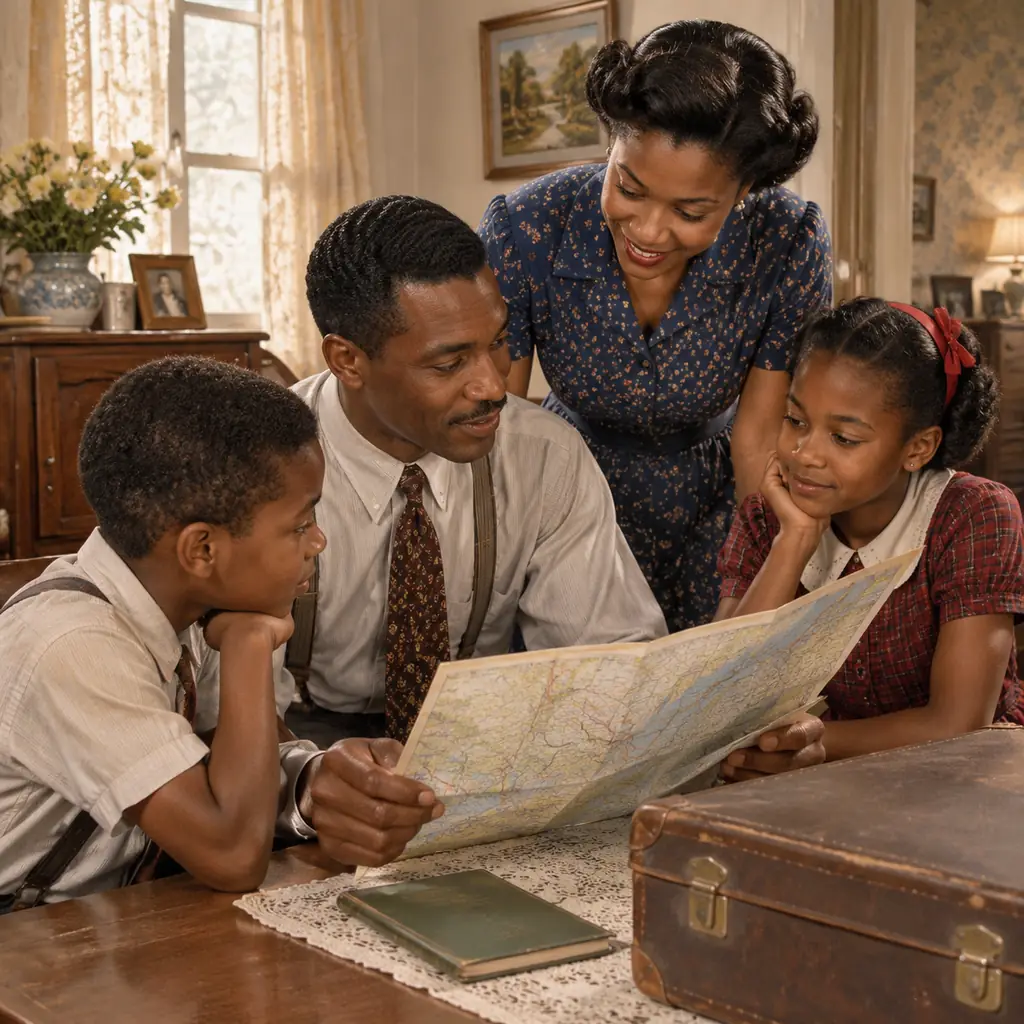
For Black families, a road map could show the route without showing a safe place to eat or sleep. Segregation made those ordinary stops part of the travel planning.
The Green Book listed businesses that welcomed Black travelers. A family could consult the guide alongside the distance and the car’s fuel needs, rather than assume every roadside door would be open to them.
The surviving editions preserve this practical work of preparation. A family’s access to a car did not give it equal access to the places along the road. Household work took different forms in these accounts of frontier families.
A birthday cake still had to fit the sugar allowance
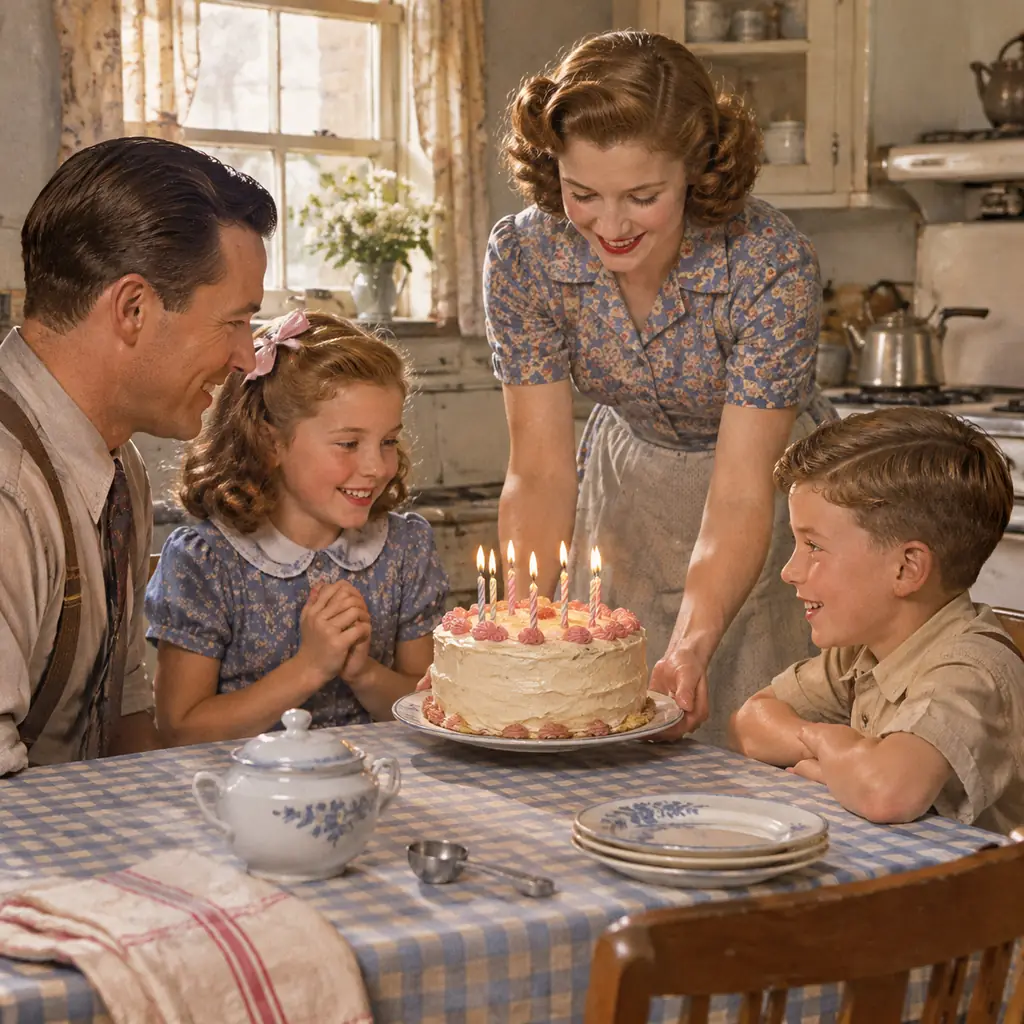
A birthday did not wait for rationing to end. Families planning a cake had to consider the sugar available, rather than assume every usual recipe could be made on demand.
Wartime food guidance and home-economics advice offered ways to stretch limited supplies. That could change what reached the table, even when the celebration itself remained important.
The adjustment belonged to the cook as well as the shopper. The finished cake was the visible part of a sequence of planning, saving ingredients, and choosing a recipe that the household could manage.
Sources: National Park Service: Food Rationing on the World War II Home Front
Sugar restrictions continued after the fighting ended
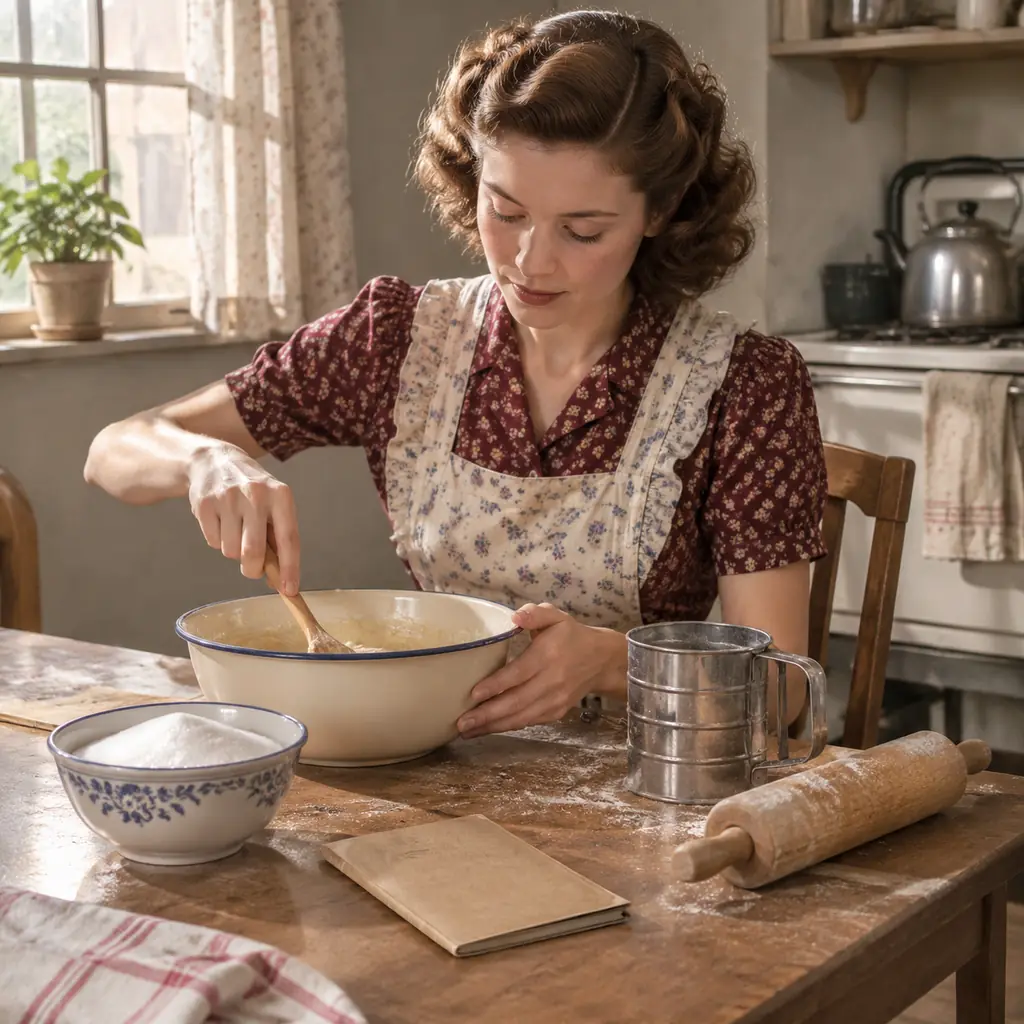
Peace did not turn every ration book into an immediate souvenir. In the United States, sugar rationing continued until June 1947, well after the end of the war.
A family could therefore celebrate a homecoming or plan a peacetime holiday while still keeping track of this ingredient. Other purchases had already been released from wartime controls.
The uneven ending matters. Memories of the late 1940s can contain relief, new purchases, and familiar restrictions at the same time, rather than one clean moment when the old household rules disappeared. For the domestic world before these wartime changes, explore family life in the 1920s.
Sources: National WWII Museum: Rationing