Family life in the 1920s included sleeping porches, complicated beauty appointments, private radio listening, and new ways to pay for things brought into the house.
These dated photographs, advertisements, and preserved homes reveal a domestic world that varied sharply with money, location, and the people sharing an address.
The Porch Could Hold the Family’s Beds
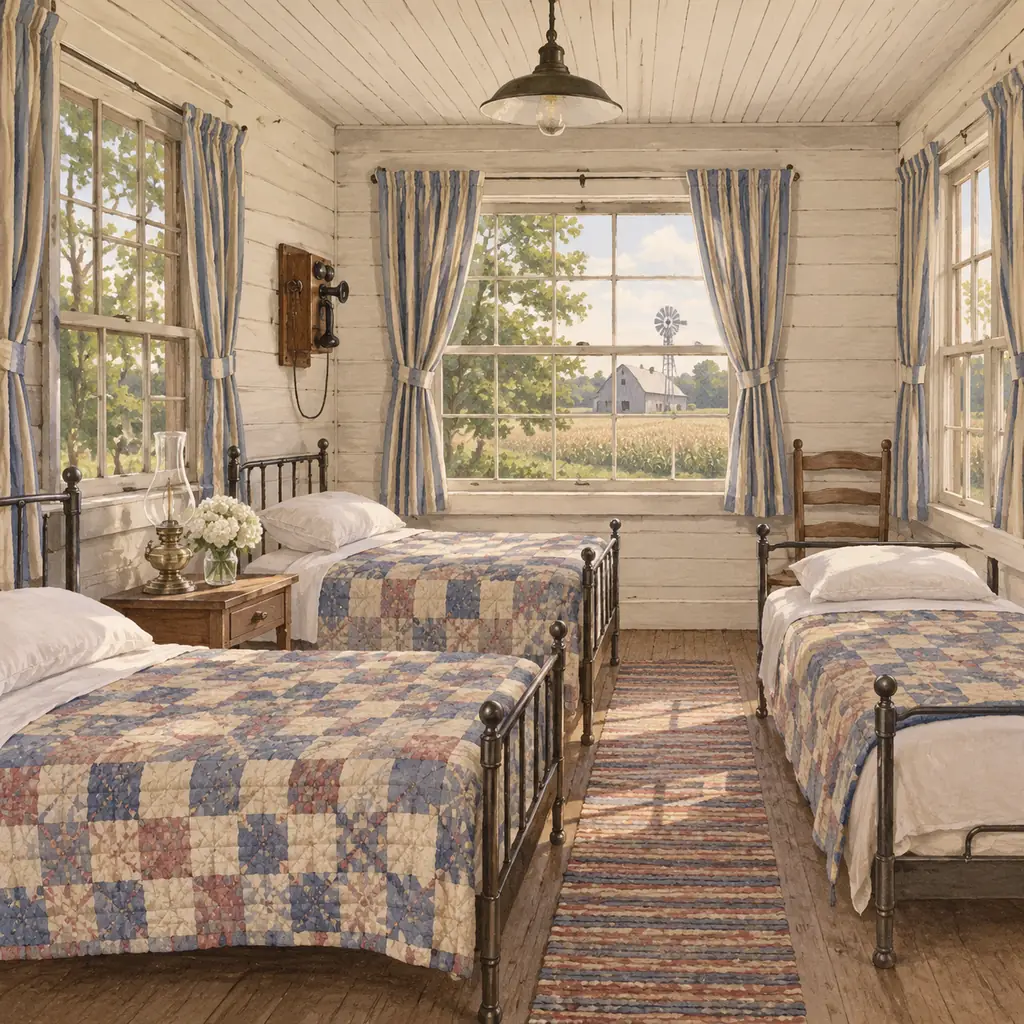
A 1925 photograph of the J. E. Joyce farmhouse in Indiana shows four beds lined along a sleeping porch. Open windows, striped curtains, and a telephone on the wall make it look like a furnished room exposed to the outside air.
This was a place prepared for sleeping, rather than a family simply dozing in porch chairs. The photograph preserves one household’s arrangement. It shows how the line between an indoor bedroom and an outdoor porch could be much less definite than it is today.
Homemade Wine Could Raise a Legal Question
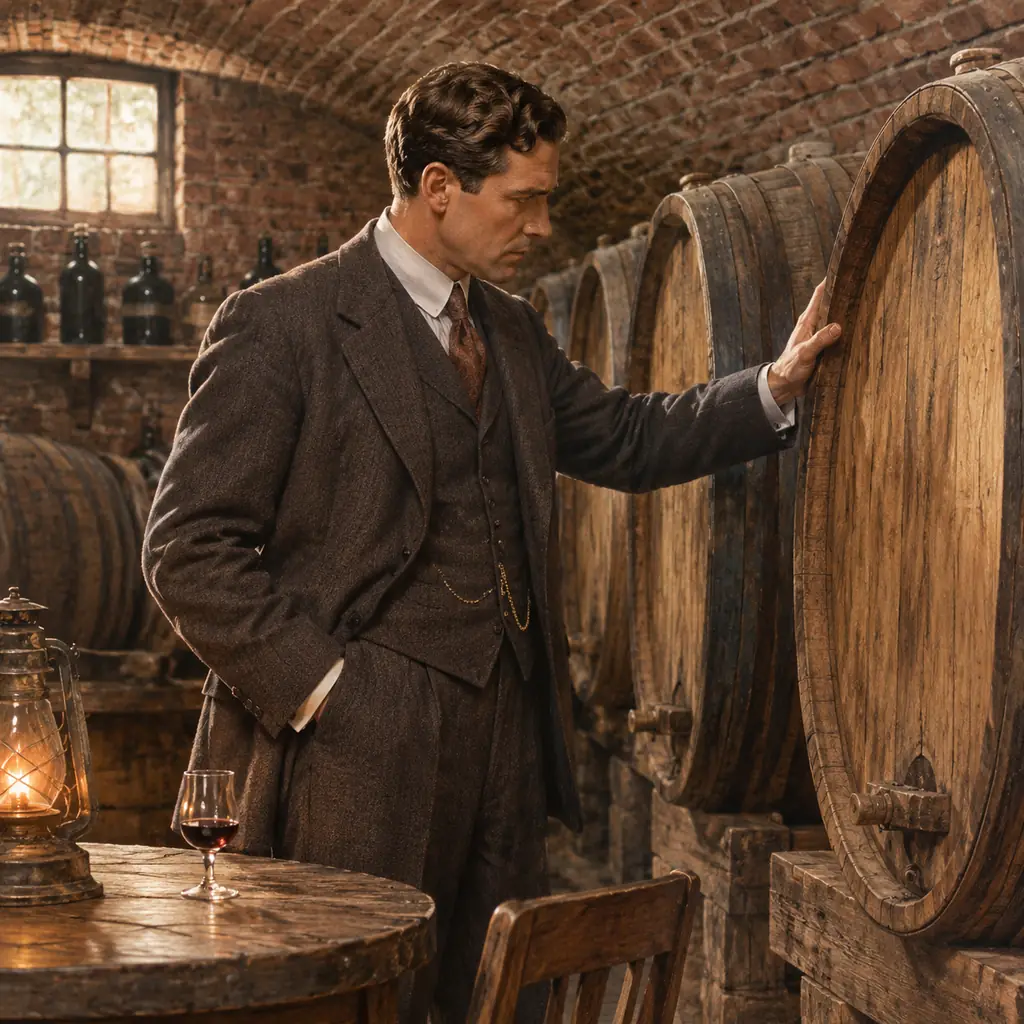
Prohibition did not turn every drink in a private house into the same legal issue. The Volstead Act included an exception from penalties for making nonintoxicating cider and fruit juices exclusively for home use, with the meaning of nonintoxicating disputed.
Baltimore congressman John Philip Hill tested the limits with cellar wine and a public cider party in 1923–24. A jury acquitted him in 1924. His case exposed an inconsistency in enforcement; it did not mean that any household could legally brew beer or sell homemade alcohol.
A Permanent Wave Could Mean Being Wired to a Machine
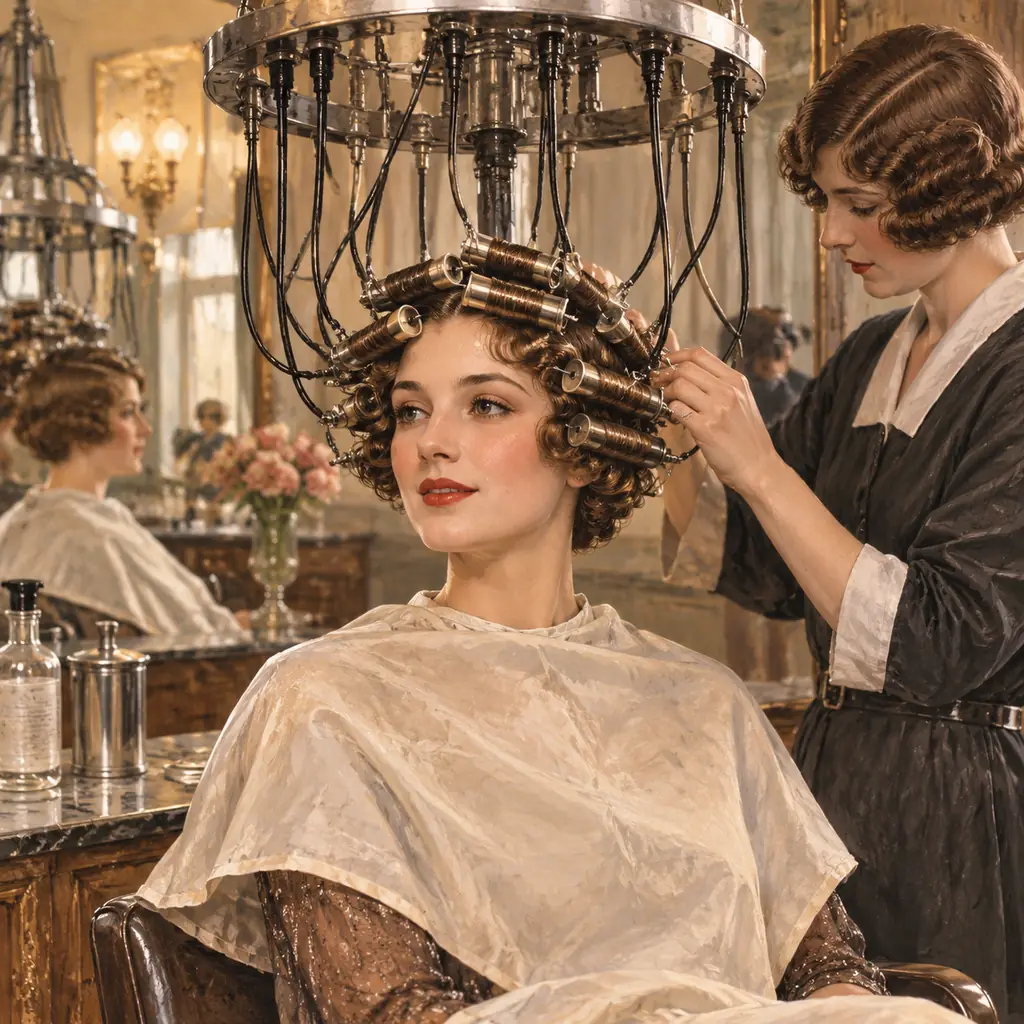
An October 1926 photograph shows Norma Smallwood, that year’s Miss America, with sections of her hair attached to electric permanent-wave equipment. The apparatus gives a different view of fashionable grooming than a finished portrait does.
Heat and machinery were involved in creating the desired curls. The photograph documents a particular salon treatment, not a beauty routine available to every woman. Behind the familiar image of short 1920s hair, a new look could require an elaborate appointment and considerable patience.
Sources: Miss America gets a permanent wave, October 14, 1926 — Library of Congress
A Borrowed Record Might Not Play on Your Machine
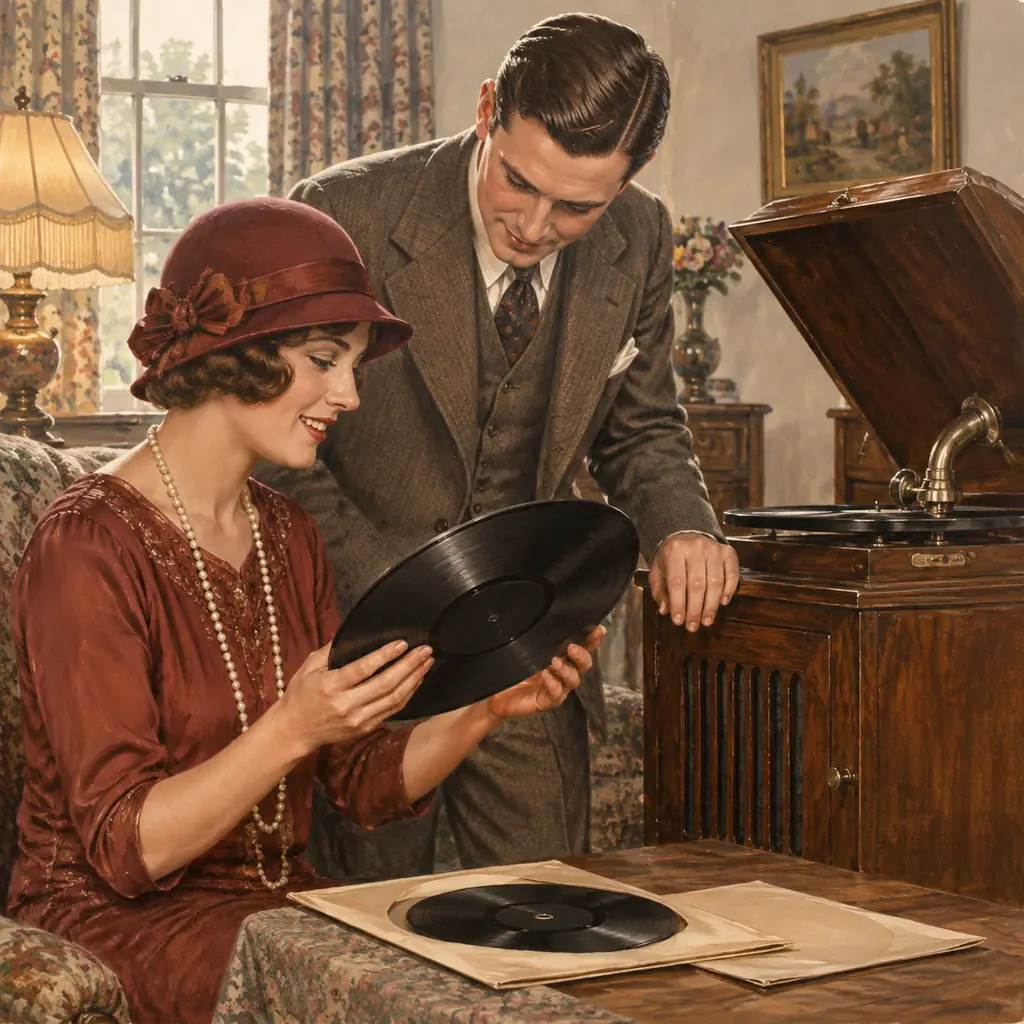
Having a record player did not mean that every record would work on it. Edison’s Diamond Discs and their phonographs formed a system that was incompatible with the discs and players made by competing companies.
The choice of machine could therefore shape the family’s later music purchases. A disc brought home or borrowed from a friend was not automatically useful. Edison continued this format into the 1920s before introducing a competing needle-record system in 1929, near the end of its recording business.
Sources: History of the Edison Disc Phonograph — Library of Congress
The Radio Aunt Was Played by Different Women
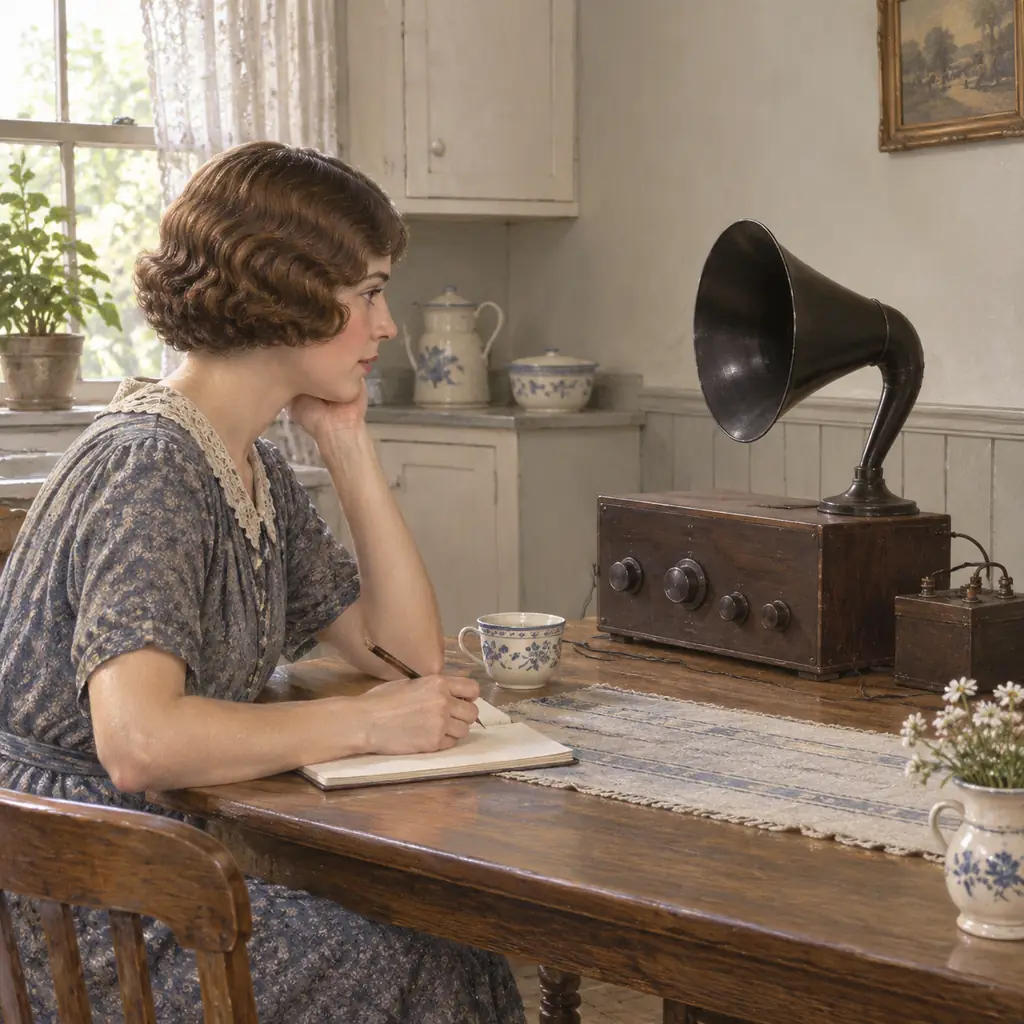
When the USDA began broadcasting Housekeeper Chat in October 1926, listeners met Aunt Sammy, a fictional counterpart to Uncle Sam. Different women performed the role at local stations, using scripts prepared for the program.
The friendly voice offered help with meals, clothing, furniture, and appliances. Listeners requested recipes, and the department compiled a book in 1927. A household could now receive advice that sounded like a personal visit from a practical aunt, although the words came through an organized government broadcasting service.
Sources: Aunt Sammy and Her Radio Recipes — National Archives, with 1926 broadcasts and 1927 recipe book
Marriage Did Not Necessarily Mean Moving Out
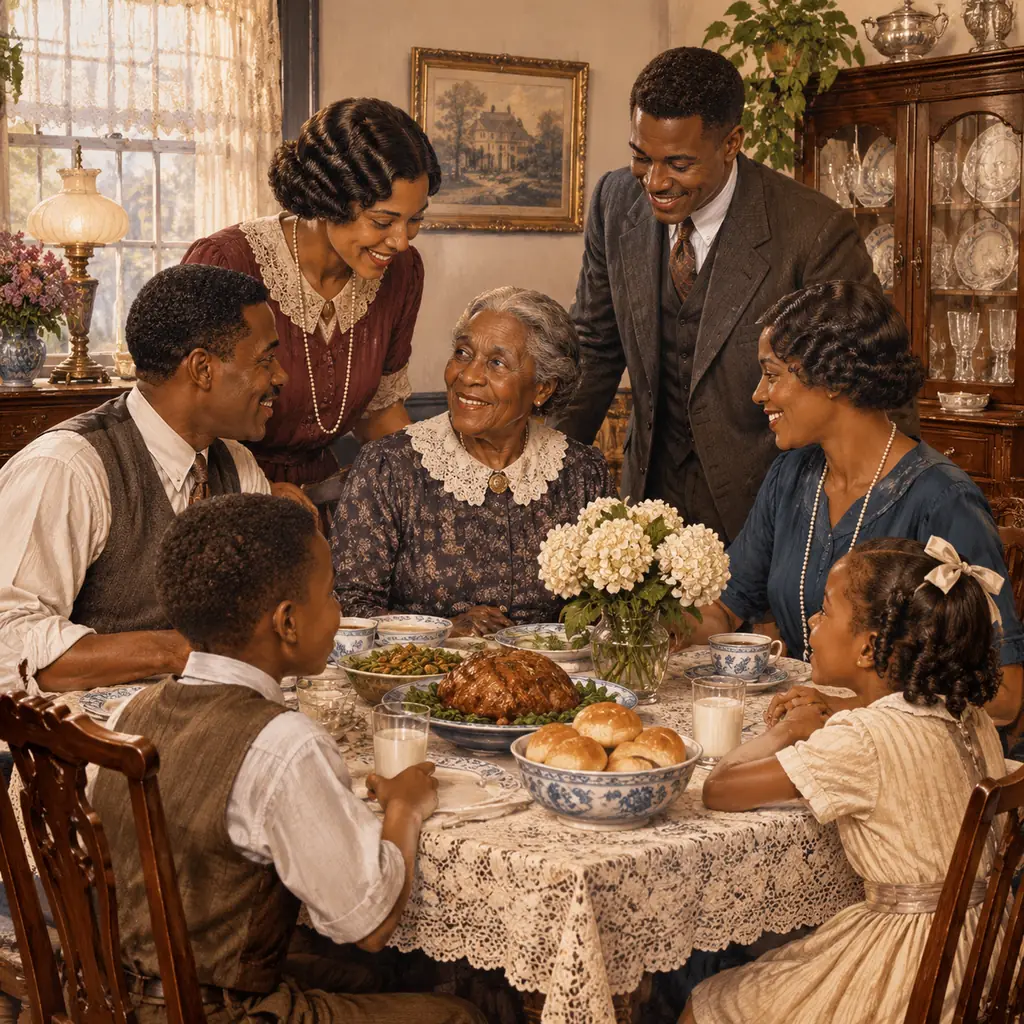
Maggie L. Walker’s Richmond house grew along with her family during the 1920s. Married children and grandchildren continued living at the same address, and additional rooms accommodated their changing needs.
Walker, a successful Black banker, could afford alterations that many families could not. Her home is a named example, rather than a national average. It shows that marriage and adulthood did not always produce a separate household or a new front door.
Sources: Walker Historic Home — National Park Service, documented 1920s room additions and 1928 elevator
Radio Listening Could Be a Private Activity
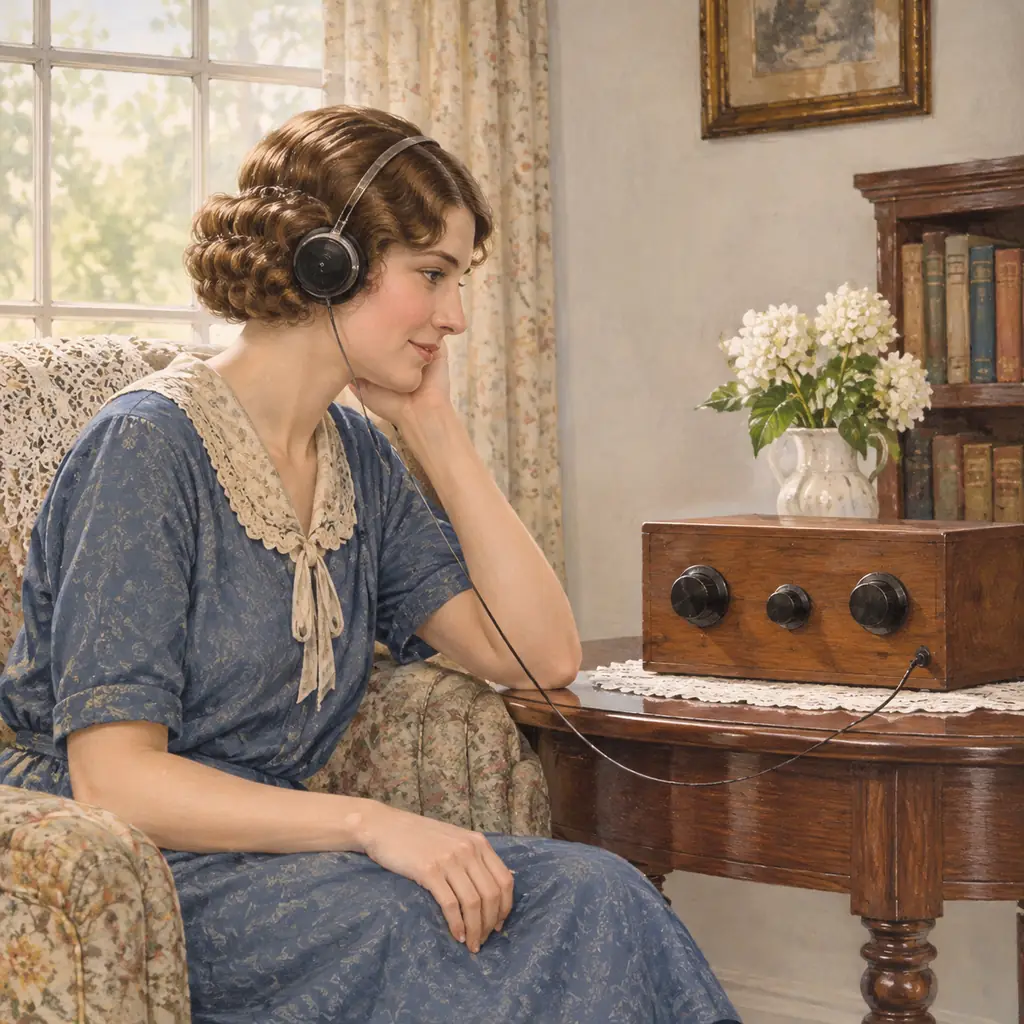
A photograph dated roughly 1920 to 1930 shows a woman beside a radio holding headphones to her ears. It challenges the familiar picture of an entire family listening to a large loudspeaker together.
The sound in this scene was delivered to the person wearing the headphones, rather than simply filling the room. The photograph cannot tell us which program she heard or how often she listened. It does show that bringing broadcasting into the home could create an individual listening moment as well as a shared one. The parlor had carried different expectations in family life in the 1890s.
A Kitchen Cabinet Could Combine Storage and a Workbench
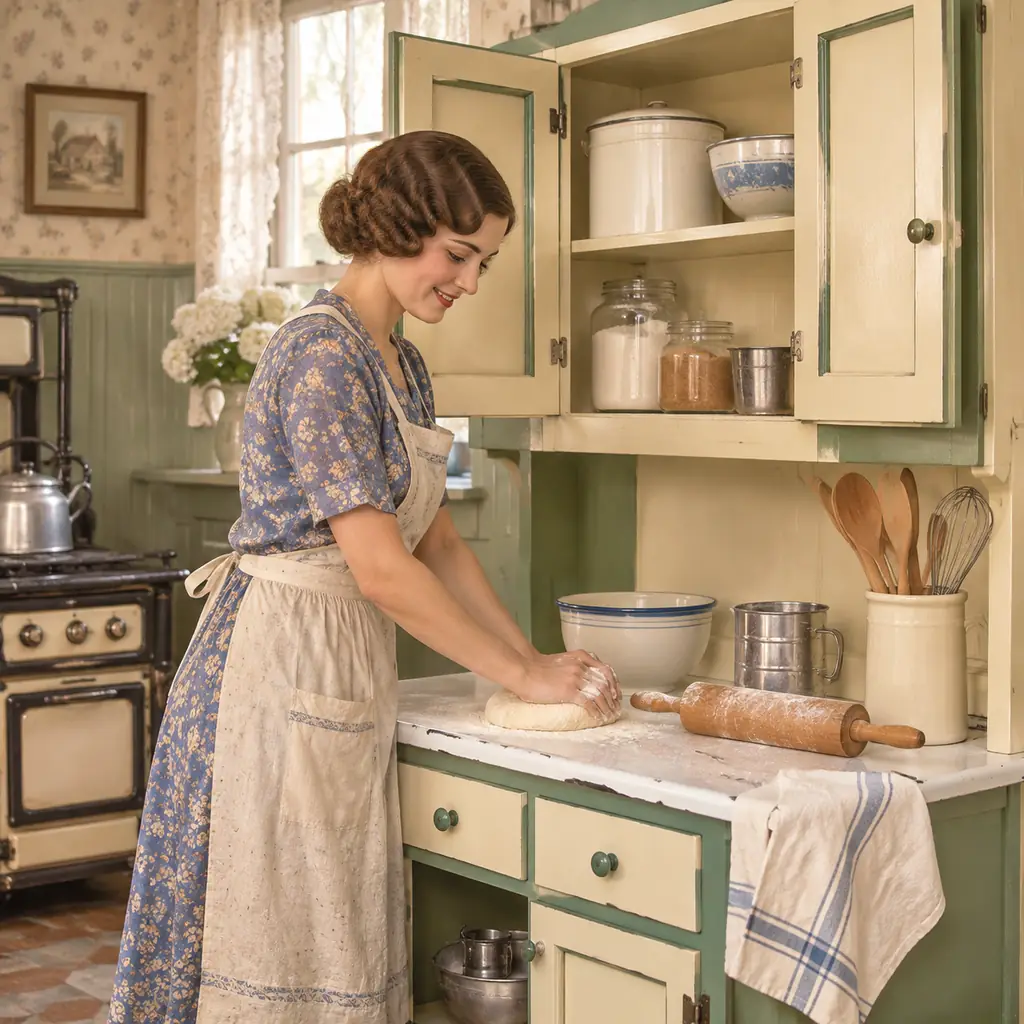
A Hoosier-style cabinet brought baking supplies, utensils, and a preparation surface into one piece of furniture. The Henry Ford’s example, dated 1915–1930, has a white enameled porcelain worktop that could be wiped clean after use.
The appeal was practical in a kitchen without extensive built-in storage. The cook could keep ingredients and tools close to the place where dough was mixed or food prepared. The cabinet carried ideas about efficient work into the home, without turning a household kitchen into a modern fitted one.
Family Movies Required More Than a Camera
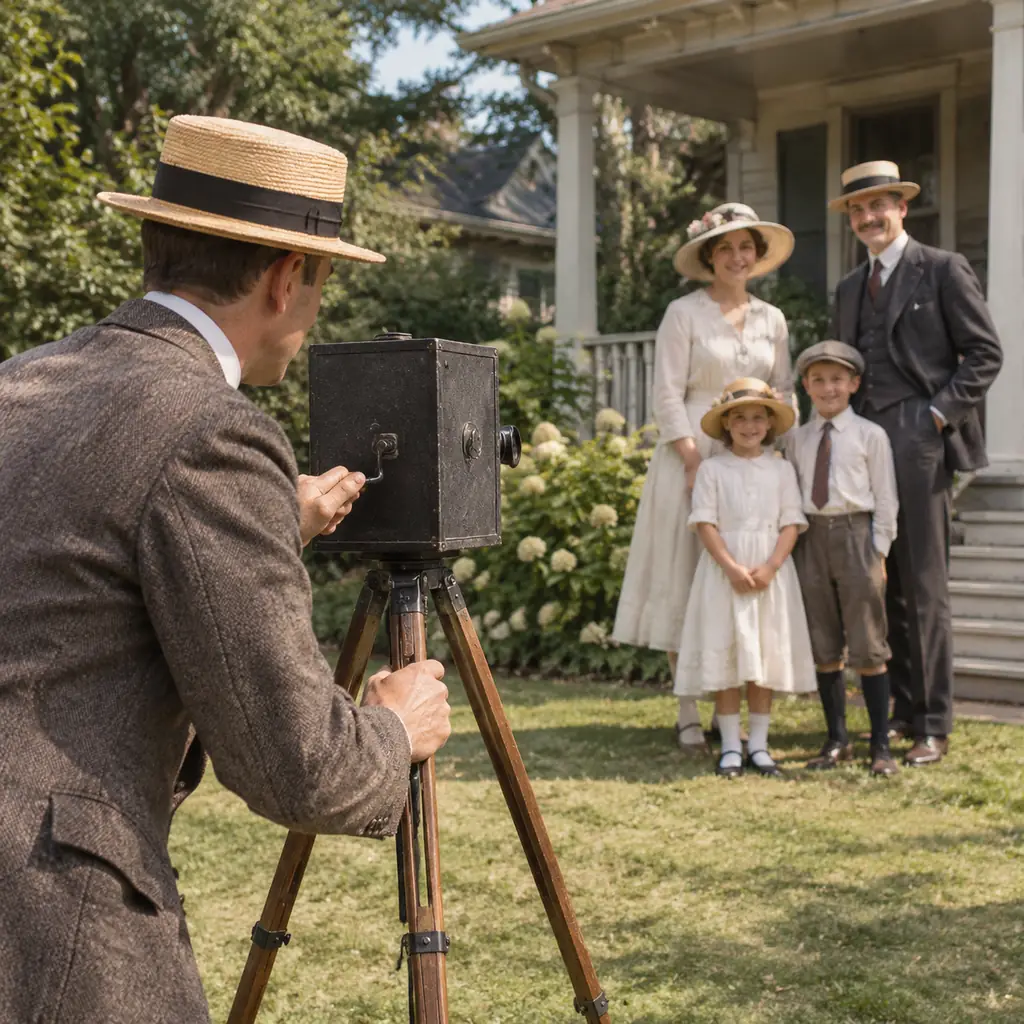
Kodak introduced its 16mm home-movie system in 1923 with equipment for making and showing moving pictures. The original package included a camera, tripod, projector, editing tools, and a screen.
For households able to afford it, recording family life was only the beginning. Someone also had to arrange a projection to watch the film again. The system used acetate safety film suitable for home use. It offered a new kind of family memory, but also brought a small production and viewing job into the house. A home’s working role is explored more closely in household life in the 1910s.
Sources: New Acquisition: Library Kodascope with Storage Cabinet — George Eastman Museum
A Movie Night Could Use a Film Subscription
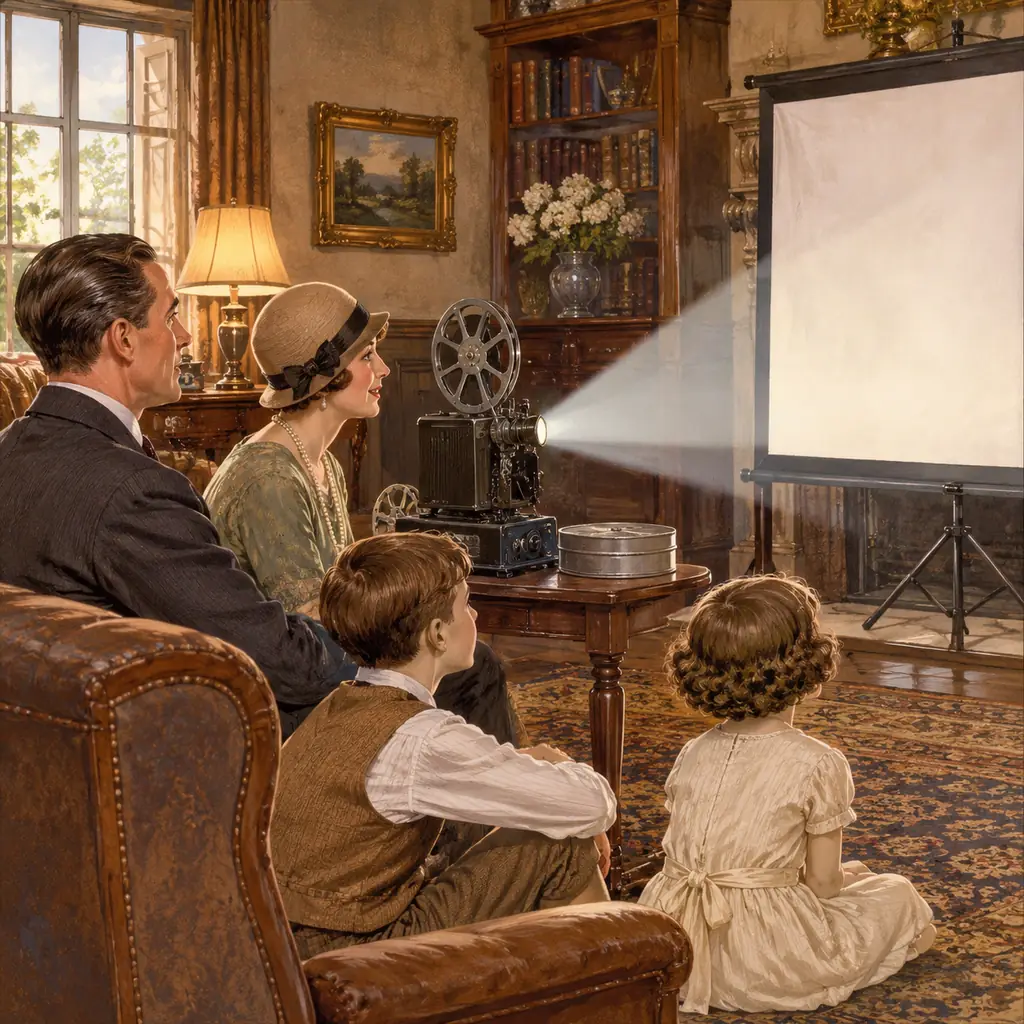
An owner of a home projector did not have to show only films taken by the family. During the 1920s, Kodak’s Kodascope Library gave subscribers access to movies they could project on their own equipment.
That service made the living room another possible place for a planned film evening. The household still needed the projector, a screen, and someone to run them. This was a costly option for a limited group of homes, rather than a substitute for the movie theater available to everyone.
Sources: New Acquisition: Library Kodascope with Storage Cabinet — George Eastman Museum
A Family Holiday Could End in a Field
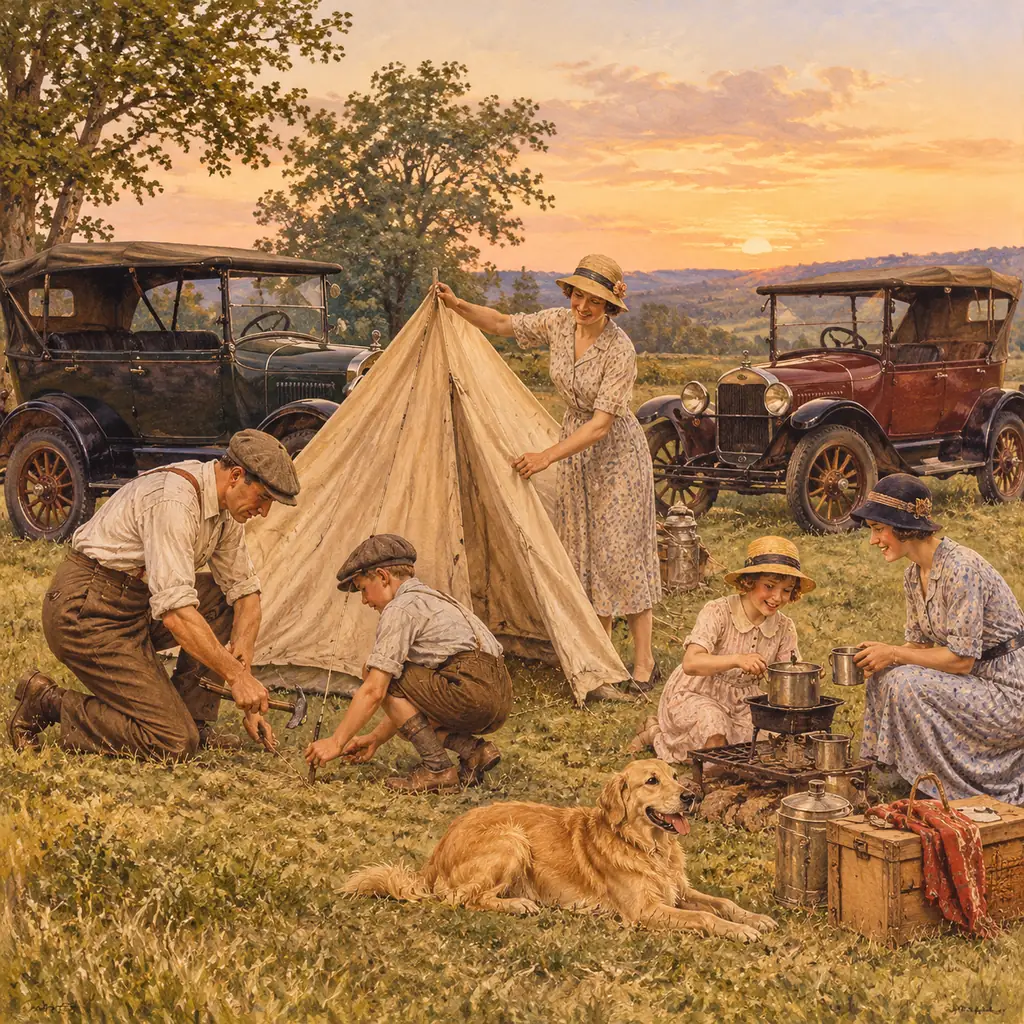
A photograph from around 1925 shows two couples, their children, and a family dog camping beside Ford Model T cars. They had carried the household’s overnight needs into an open field while touring.
Auto travelers could stop along a route or use newly established camps, instead of relying entirely on hotels. A holiday of this kind still involved setting up shelter and making practical arrangements for the evening. The car expanded the family’s choices while bringing familiar domestic jobs along for the ride. Later purchases and private worries appear in family life in the 1950s.
Sources: Makeshift Auto Camping with Ford Model T Cars, circa 1925 — The Henry Ford
Paper Dolls Could Help an Adult Choose Clothes
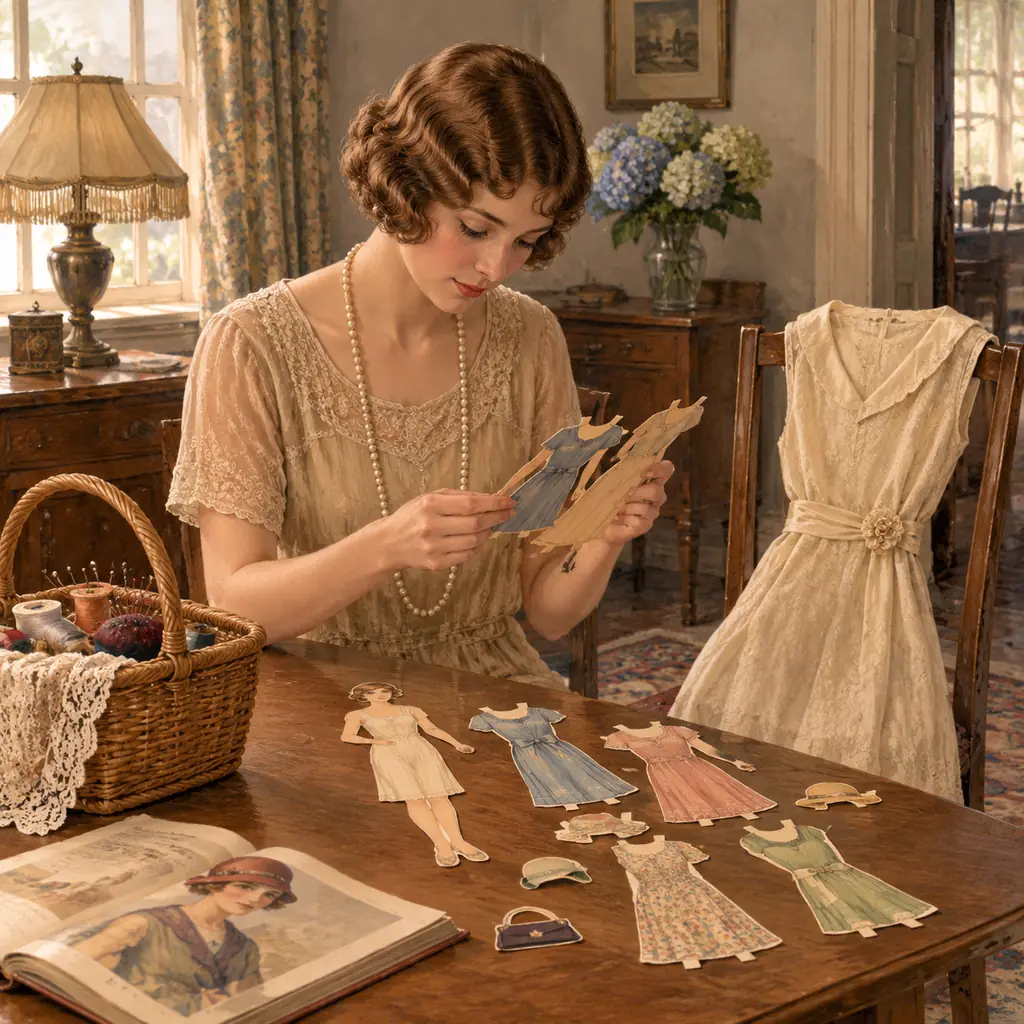
Paper dolls were not only children’s playthings. Magazines used them to present fashions, including outfits associated with silent-film star Clara Bow, to readers interested in copying a celebrity’s look.
The Smithsonian preserves examples in its Grepke Collection. A cutout dress could suggest a style to find in a department store or a less expensive ready-to-wear version. A family’s magazine might therefore contain a small fashion guide in toy form, connecting the movie screen to ordinary choices about what to wear. Personal decisions also met legal and social barriers in the choices American women fought to make.
An Appliance Advertisement Could Appear at the Movies
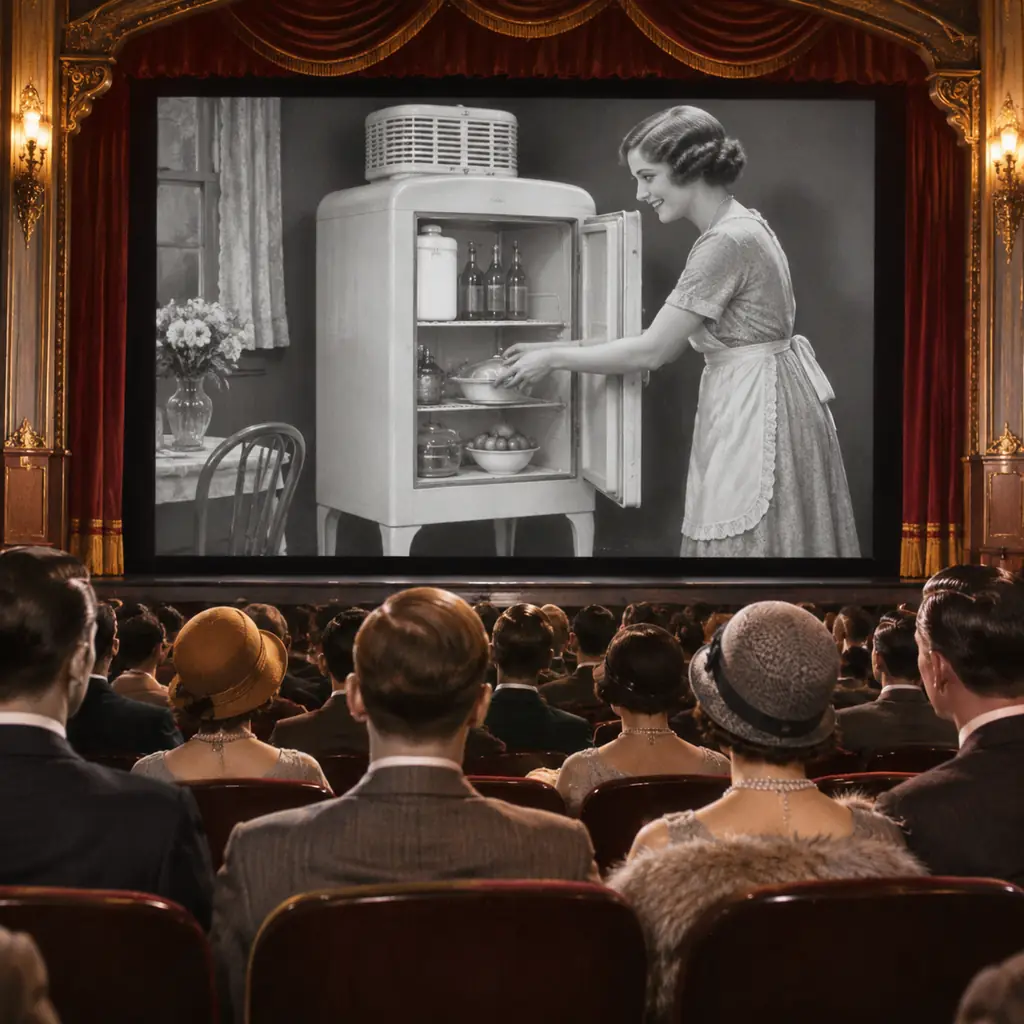
A surviving silent theater commercial promoted electric refrigerators and invited viewers to a refrigerator show in Pittsburgh. The Library of Congress dates the short film to probably 1926, with the uncertainty kept in its catalog.
The commercial pictured a woman taking a dish from a refrigerator and presented the appliance as convenient and economical. It shows how a household purchase could be marketed through an evening’s entertainment. Seeing the advertisement, however, did not mean that every viewer had the electricity or money to buy one.
Sources: Theater commercial: electric refrigerators, probably 1926 — Library of Congress
A Refrigerator Could Come With Future Payments
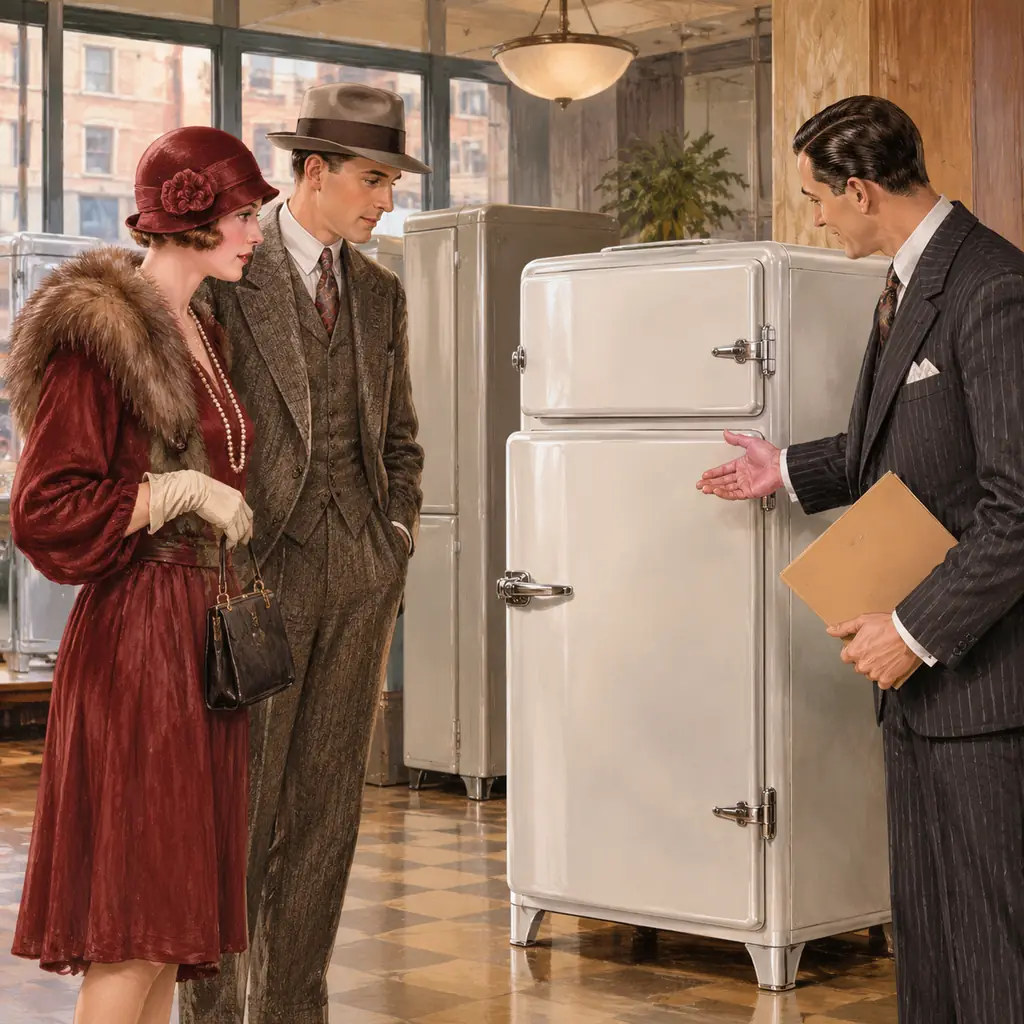
A 1929 General Electric advertisement offered a small-family refrigerator model priced at $215. The Museum of Innovation & Science records that the machines could be bought through an installment plan.
The appliance could enter a household before the purchase price had been paid in full. That changed the timing of the expense without making it disappear. A family considering a new refrigerator also had to consider the payments that would follow it into the kitchen, alongside its ordinary bills. Wartime shortages reshaped a later decade’s household routines.
A Porch Could Become a Room for Poker
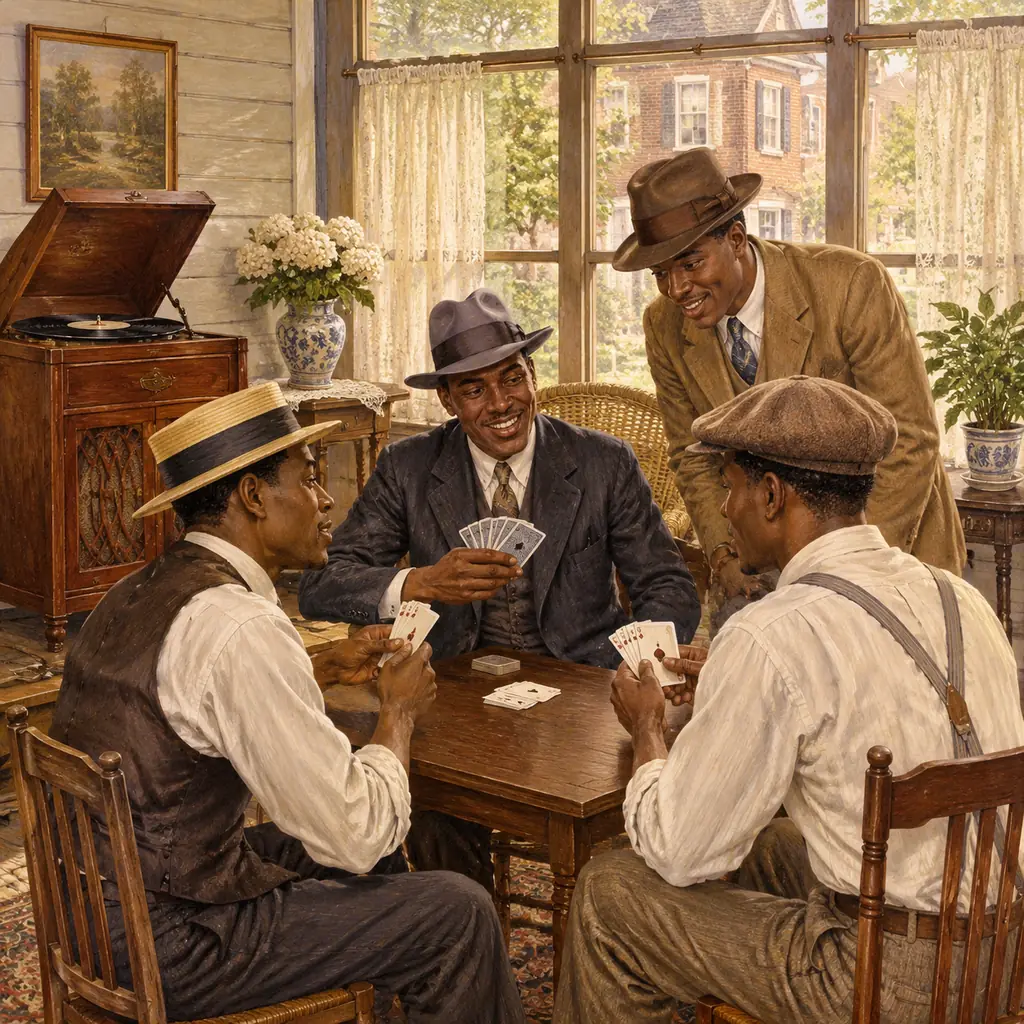
At the Walker house, a west-side porch became an enclosed room during the family’s 1920s expansion. The grandchildren called it Melvin’s Den, after the adult son who entertained his friends there.
Poker games and music from an electric Victrola gave this room a different purpose from the house’s sleeping and working spaces. In this particular busy multigenerational home, enclosing a porch created a place for adult company without requiring a separate address.
Sources: Walker Historic Home — National Park Service, documented 1920s room additions and 1928 elevator
An Elevator Could Keep a Family Home Usable
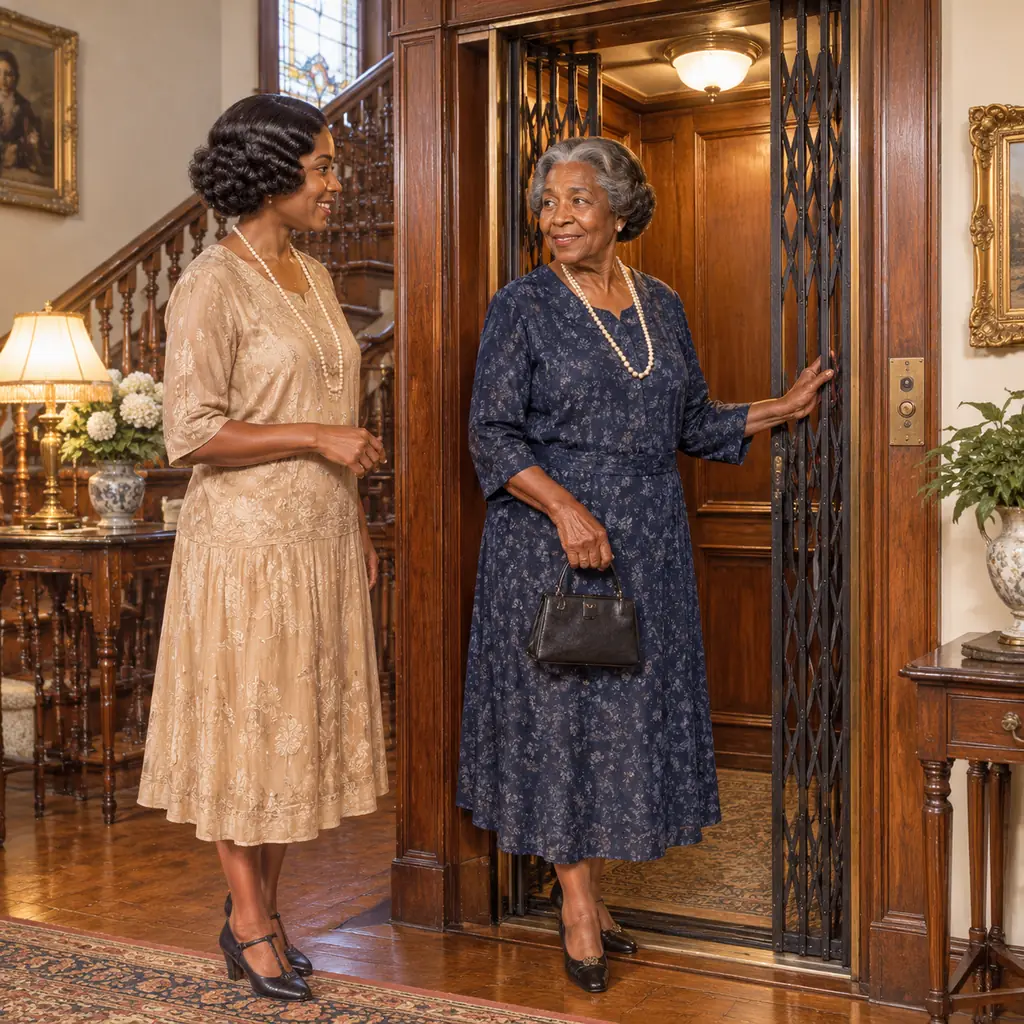
In 1928, Walker commissioned architect Charles T. Russell to design an elevator for her Richmond home. Weakness in her legs had made walking difficult, and the house needed to change with her mobility.
The installation was an individual response by a woman with considerable resources, not an ordinary feature of 1920s homes. It allowed the building to serve its owner as her circumstances changed, adding another chapter to a house already altered for several generations. For a much earlier setting, explore the work and privacy of everyday colonial life.
Sources: Walker Historic Home — National Park Service, documented 1920s room additions and 1928 elevator